


French Buttoned Armchairs
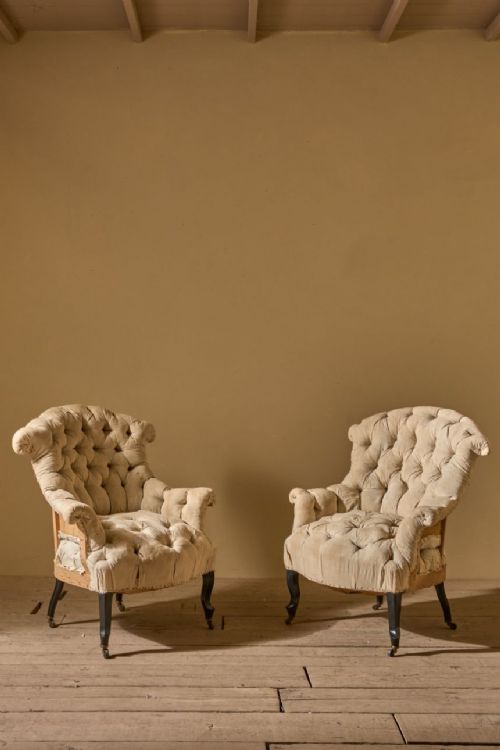
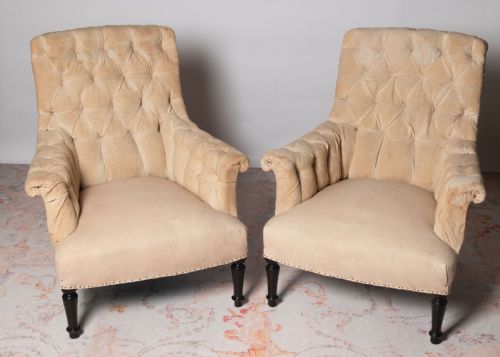
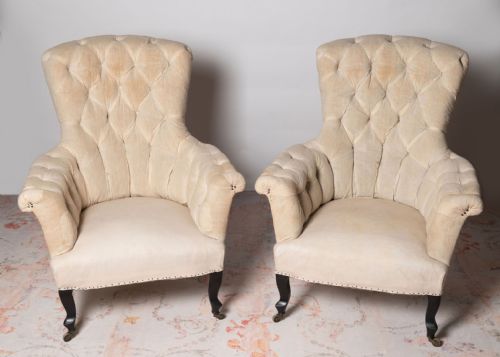
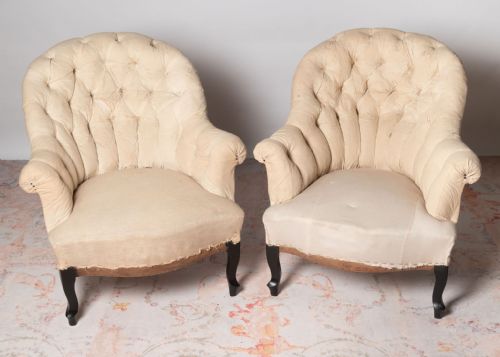
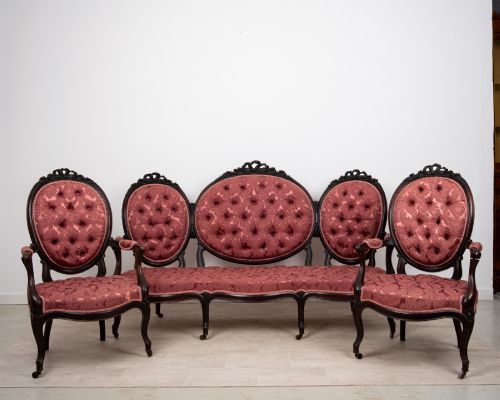
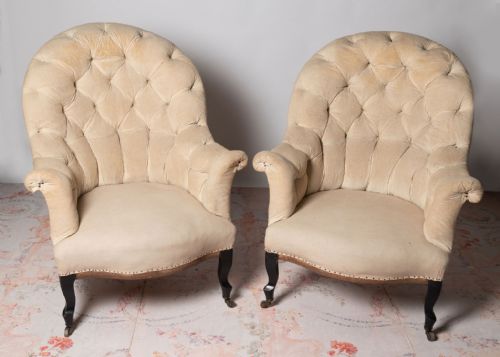
French buttoned armchairs bring tactile depth and rich nineteenth-century character to a room through their deep tufting and curved wooden frames.
French Buttoned Armchairs
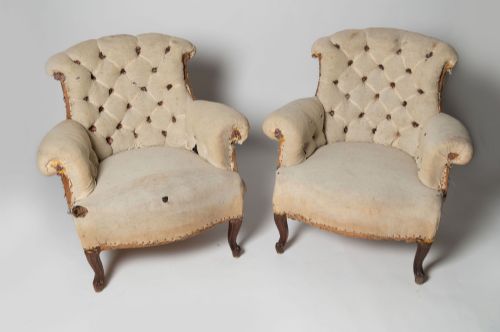
When you search for french buttoned armchairs, you encounter comfortable seating defined by padded upholstery pulled into tight folds with recessed tufts. These pieces span the nineteenth century into the early twentieth century, incorporating revival aesthetics such as Napoleon III and Louis Quinze styles alongside Victorian influences.
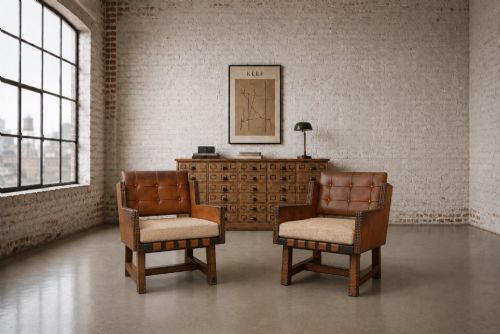
Frames take various forms, from low open armchairs to high curved backs and library seats upholstered in leather, velvet, silk, or calico. Walnut, mahogany, rosewood, and beech form the structural timber foundations beneath the elaborate upholstery.
How they were made
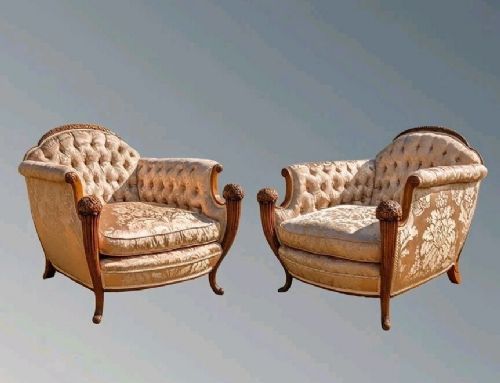
Cabinetmakers shaped dense hardwoods like walnut, mahogany, rosewood, and beech into flowing cabriole legs, open arms, and supportive frameworks. Giltwood, ebonised finishes, and carved details frequently adorn the visible wooden structures.
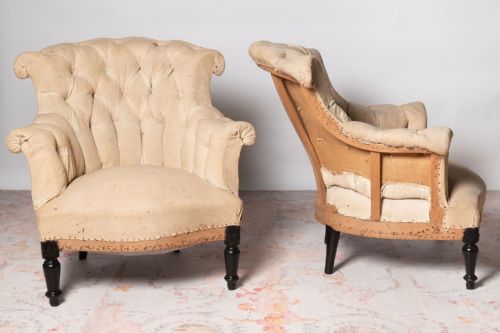
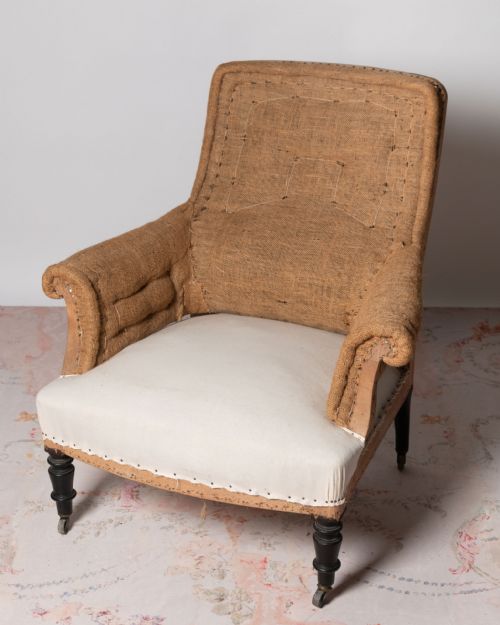
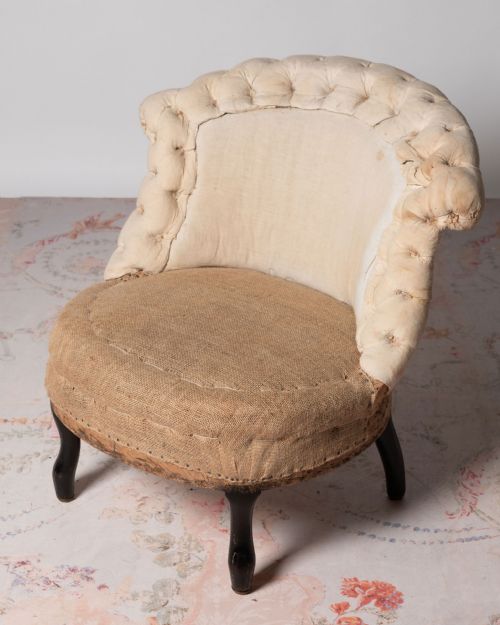
Upholsterers built deep padding using traditional stuffing materials secured by tensioned cordage before pulling the final fabric tight with buttons to create the characteristic tufted surface. Silk, velvet, leather, and calico were meticulously tacked to the frames by hand.
Several armchairs come accompanied by matching footstools, ensuring nineteenth-century feet enjoyed proper elevation.
What varies in quality
The refinement of the carved wooden frame dictates the distinction between standard production and exceptional craftsmanship. Crisp detailing in the timber work, whether giltwood or polished walnut, separates superior pieces from simpler workshop output.
The integrity of the upholstery execution also defines worth, visible in the precision of the buttoning grid and the selection of textile. Premium examples retain luxurious fabrics like silk or supple leather that complement the sweeping curves of the period design.
Holland And Sons
The French Buttoned Armchairs Glossary
- Napoleon III
- A nineteenth-century French design period known for eclectic revivals, comfort, and elaborate button-tufted upholstery. It draws heavily on earlier monarchical styles while embracing modern nineteenth-century leisure.
- Buttoned
- An upholstery technique where twine pulls fabric deep into the padding to secure rows of fabric-covered or leather buttons. This creates a distinctive padded diamond pattern across the backrest.
- Fauteuil
- An open-arm armchair with exposed wooden armrests and framework originating in France. The sides remain open beneath the padded arm supports.
French Buttoned Armchairs: Frequently Asked Questions
What defines a Napoleon III armchair?
Napoleon III armchairs originate from nineteenth-century France and emphasise deep comfort combined with ornate upholstery. They frequently showcase button-tufted backs and seats supported by curved wooden frames.
Cabinetmakers of this era blended historical revival themes with plush padding, creating chairs intended for relaxed domestic salons.
Are these chairs comfortable for daily use?
These pieces were designed for comfortable lounging in nineteenth and early twentieth-century drawing rooms and libraries. Their deep padding and supportive backrests make them well-suited for sitting.
Upholstery construction varies depending on the specific decade, with many examples offering robust spring or stuffed support suitable for regular living spaces.
How do I identify a nineteenth-century piece?
Nineteenth-century examples typically display dense hardwood frames made from walnut, mahogany, or beech with hand-carved detailing. The joinery and timber patination reflect traditional workshop methods of the period.
Stylistic cues such as high curved buttoned backs and giltwood or ebonised finishes also point directly to nineteenth-century French and Victorian manufacture.