





French Bronze Sculpture Light
French bronze sculpture light pieces combine figural casting with functional illumination, offering buyers dramatic period presence and sculptural grace.

French Bronze Sculpture Light
A French bronze sculpture light brings together decorative casting and practical illumination, drawing heavily on classical mythology, allegorical figures, and romantic subjects. Buyers seeking these works will encounter table lamps, floor lamps, candelabra, and night lights spanning the eighteenth century through the twentieth century. The selection ranges from severe neoclassical torchères to sinuous Art Nouveau maiden lamps and geometric Art Deco animal studies.
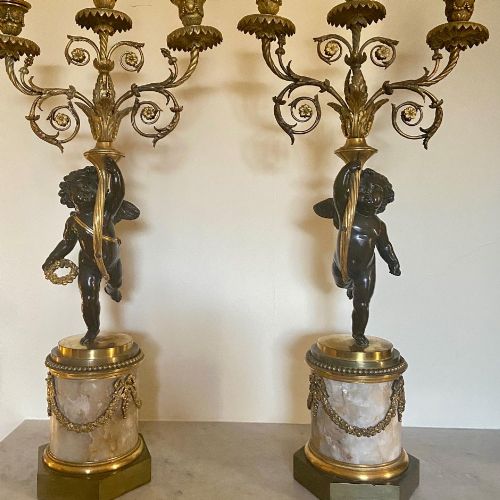
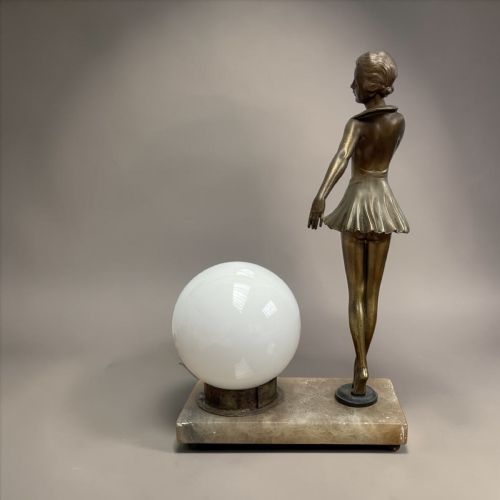
Nineteenth-century examples dominate the offerings, frequently taking the form of patinated or gilt bronze figures mounted on marble plinths. These pieces frequently depict putti, classical deities, and allegorical characters created by renowned French sculptors. Art Deco interpretations shift the focus toward stylised human figures and hounds mounted on marble bases, reflecting changing domestic tastes across the decades.
Materials and Technique
Foundries utilised traditional lost-wax or sand-casting methods to shape bronze into complex figural compositions. Artisans then applied patination, gilding, or silvering to achieve varied surface textures and tones on the metal.
Many sculptures incorporate secondary materials such as marble for heavy architectural plinths, alongside glass, fabric, and metal for the illumination components. Spelter appears as an alternative metal medium, offering a lighter, more malleable option for sculptural lamp bases.
Listings feature works spanning the eighteenth to the twentieth centuries, utilising bronze, spelter, marble, and glass across various lighting formats.
Quality Variations
The sophistication of the casting work dictates the visual success of the piece, separating crisp, finely chased details in the hair and drapery from softer, generalised contours. Superior examples display careful hand-finishing on the bronze surface, whereas lesser items show blunt edges and simplified tool marks.
The integrity of the material combination dictates overall excellence, notably the quality of the marble plinths and the fidelity of the original patination. Pieces that retain their genuine surface treatments and early mounting hardware command greater artistic interest than heavily altered or later assembled units.
Emile Picault·Jean-Jules Cambos·H. Moreau·Aug. Moreau·François-Christophe-Armand Toussaint·Coutan·P.Sega·Henri Honore Ple·Adrien Gaudez·Auguste Moreau
The French Bronze Sculpture Light Glossary
- Patinated bronze
- Bronze treated with chemical solutions to produce a darkened or coloured surface finish. This technique enhances sculptural depth and protects the metal from oxidation.
- Ormolu
- Gilding technique involving the application of finely ground gold-mercury amalgam to a bronze base. It creates a brilliant, durable golden finish characteristic of luxury furnishings.
- Spelter
- A zinc alloy utilised as an economical substitute for bronze in decorative figures and lamps. It is softer and lighter than genuine bronze.
- Torchère
- A tall ornamental stand or candlestick adapted to hold lights. In these listings, they often take the form of classical figures bearing a light source.
- Grand Tour
- Cultural travel undertaken by nineteenth-century elites who acquired classical bronzes as souvenirs. These pieces often emulate ancient statuary.
French Bronze Sculpture Light: Frequently Asked Questions
Are these lamps wired for modern use?
Many antique lamps arrive with historical wiring that may not meet current electrical standards. Buyers should plan to have a qualified electrician inspect and rewire the fixture before regular use.
Retaining original fitments is possible while upgrading internal cables for safety. Consult a specialist to preserve antique lamp holders where appropriate.
How do I date a bronze sculpture lamp?
Dating relies on stylistic markers such as the flowing botanical lines of Art Nouveau or the clean geometric symmetry of Art Deco. Signatures etched into the bronze base often link the sculpture to a known nineteenth-century or early twentieth-century artist.
Associated materials like marble plinths and casting techniques further narrow the production era. Comparing the foundry marks with historical records provides additional chronological precision.
What is the difference between bronze and spelter?
Bronze is a robust copper alloy prized for its durability, fine casting capabilities, and capacity for rich patination. Spelter is a zinc-based metal that is softer, lighter, and more prone to wear.
Spelter figures often received a bronze-coloured coating to simulate true bronze. Examining the underside or weight of the piece usually reveals which metal was used.