





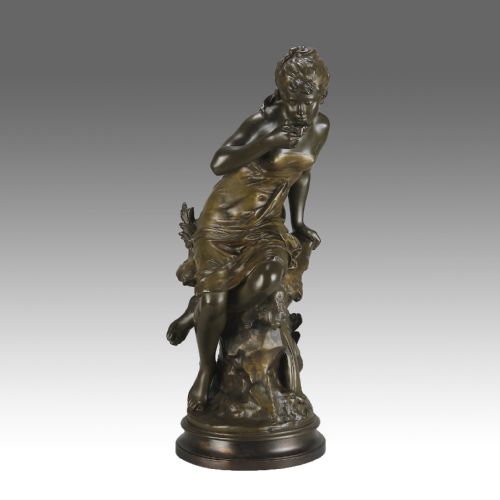

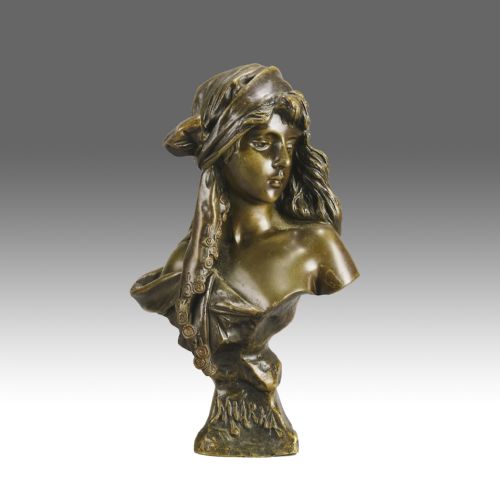
French Bronze Female Figures
French bronze female figures bring classical grace, mythological presence, and theatrical movement into a room through enduring metal.
French Bronze Female Figures
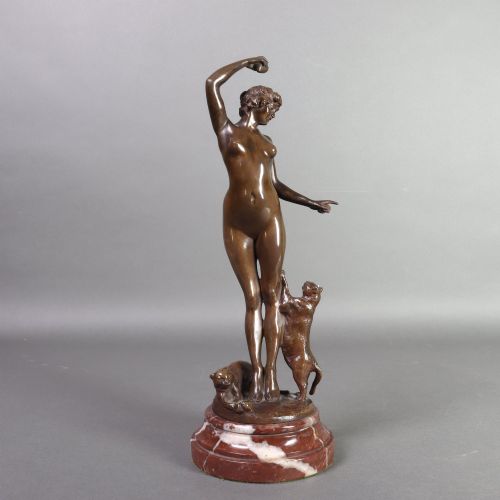
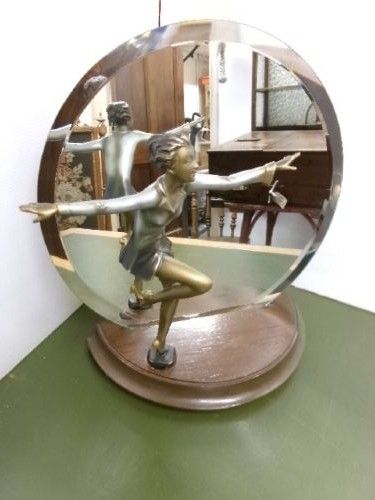
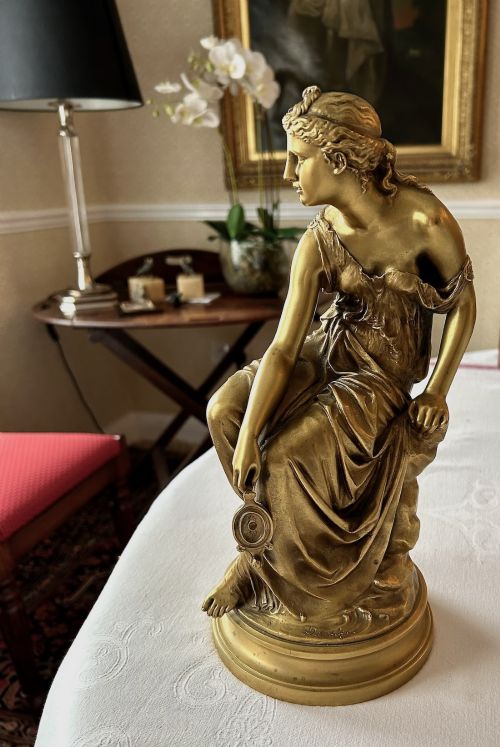
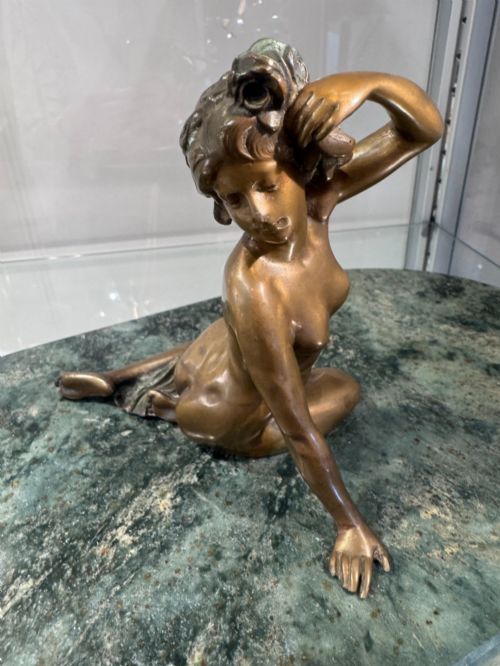
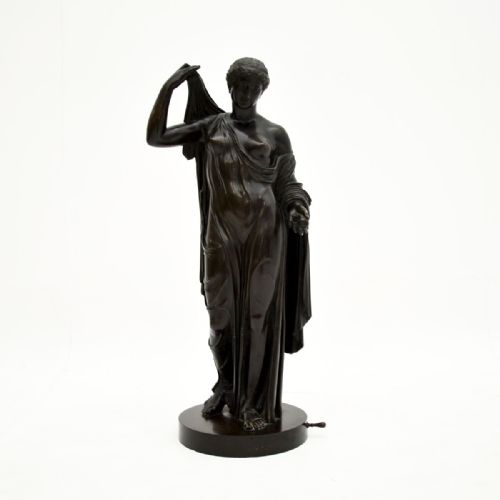
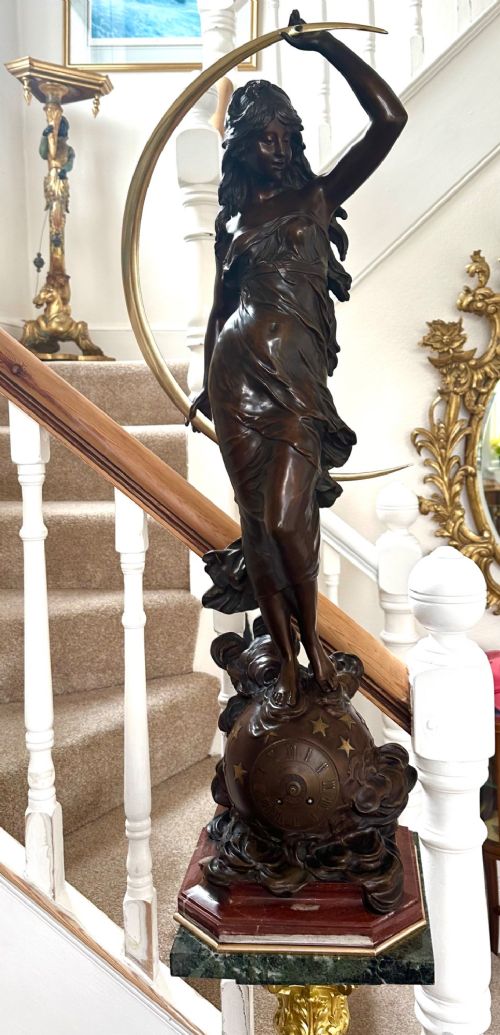
When searching for french bronze female figures, a buyer encounters sculptures, statuettes, and busts depicting classical maidens, mythological deities, dancers, and allegorical subjects. These pieces span the nineteenth century and the early decades of the twentieth century, shifting from severe neoclassical dignity to flowing art nouveau curves and geometric art deco stylisation.
The objects take many forms, from diminutive tabletop figurines to large gallery sculptures, often incorporating bases of marble, onyx, or wood. Common subjects include robed ladies, nymphs, historical portraits, and performers captured mid-movement.
Most examples originate from French foundries and studios active during the victorian, belle epoque, and interwar periods. They served as interior ornaments, architectural displays, and occasionally advertising figures.
How they were made
Foundries produced these pieces using traditional metal casting techniques, primarily the lost wax method or sand casting, which allowed for intricate detail in drapery and hair. Molten bronze was poured into moulds and subsequently finished by hand.
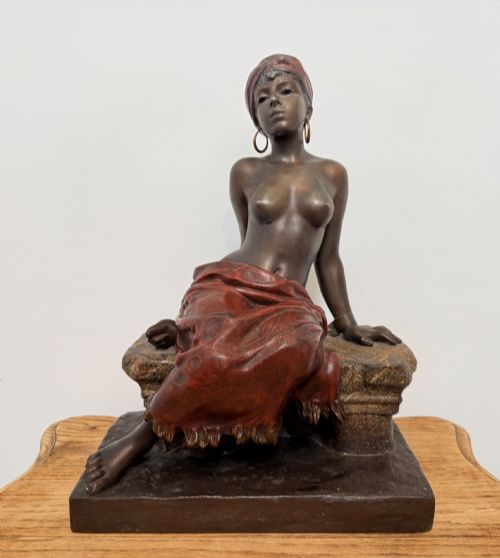
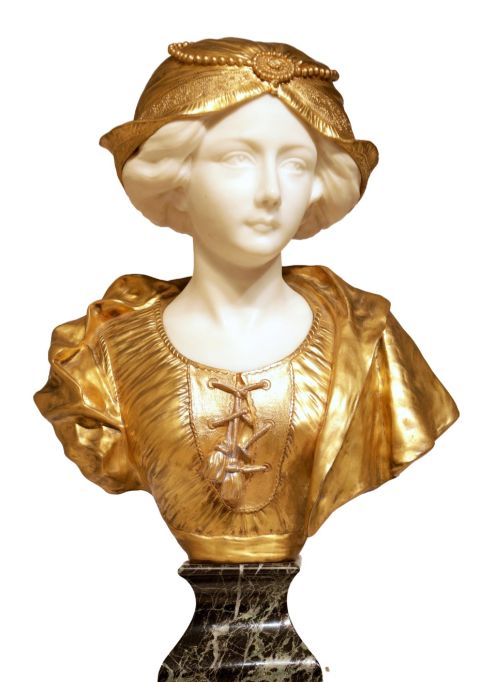
Surface treatments define the visual character of the metal, employing chemical patination to achieve dark brown or green tones, or applying fire gilding to create bright golden surfaces. Some pieces combine patinated bronze with cold painting or incorporate carved marble, onyx, and glass elements.
Several figures hold harps, lift wheat sheaves, or strike dance poses, capturing historical performers and mythological deities in permanent metal.
What varies in quality
Quality rests in the crispness of the chasing and the precision with which the metal is finished after casting. Superior examples retain sharp facial expressions, distinct finger articulation, and finely textured drapery without smoothed details.
The integration of mixed materials also distinguishes the range, where dense veined marble or custom onyx bases match the proportion and weight of the metal figure above.
Etienne-Henri Dumaige·Ferdinand Barbedienne·Pierre le Faguays·August Moreau·Emmanuel Villanis·Demetre Chiparus·Henri Godet
The French Bronze Female Figures Glossary
- Patinated bronze
- Bronze treated with chemical solutions to produce a specific surface colour, most commonly shades of brown, green, or near-black.
- Spelter
- A zinc alloy frequently used as a less expensive alternative to bronze during the nineteenth and twentieth centuries.
- Cold painting
- The application of paint to a metal object without subsequent firing or heat treatment, a technique often seen on decorative figures.
- Chasing
- The manual refinement of a cast metal surface using hammers and punches to sharpen details and remove casting flaws.
- Lost wax casting
- A method of metal casting in which a molten metal is poured into a mould that has been created by melting away a wax model.
French Bronze Female Figures: Frequently Asked Questions
How do I identify a cast?
Examine the underside of the piece and the transition points where the figure meets its base for threaded bolts, casting seams, or foundry stamps. Closer inspection of the surface texture reveals whether the lines were hand-chased after casting or cast uniformly from a secondary mould.
Heavier weight and cold-to-the-touch metal generally point toward traditional bronze rather than lighter alloy substitutes. Foundry marks and signatures inscribed directly into the metal provide further clues to origin.
Where were they displayed?
These figures typically decorated nineteenth-century drawing rooms, libraries, and salons as focal points on mantelpieces, pedestals, or side tables. Later art deco examples often sat upon architectural wooden or marble furniture.
Public spaces and commercial premises also utilised specific forms, including advertising mannequins and large display sculptures placed in shop windows.
How do I care for bronze?
Dust the surface regularly with a soft, dry cloth to prevent particulate accumulation within the recesses of the casting. Avoid liquid cleaners, oils, and abrasive polishes that can strip away the original chemical patina.
Keep the sculpture away from direct sunlight and high humidity to protect any integrated marble or onyx bases from staining and structural stress.
How do I date a figure?
Stylistic indicators offer the most reliable starting point for dating, separating nineteenth-century neoclassical realism from flowing art nouveau curves and angular art deco geometries. Costume, hairstyle, and the typographic style of signatures or foundry stamps also align with specific manufacturing decades.
Materials provide additional context, as certain alloy compositions, marble types, and mounting techniques correspond to distinct periods of production.