

French Brass Mounted Desk
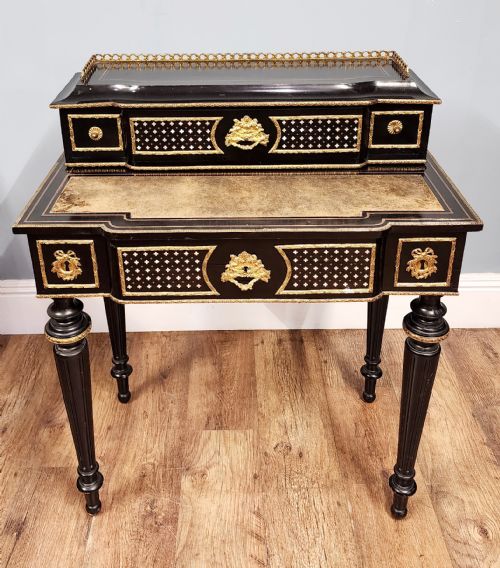
A french brass mounted desk brings nineteenth-century Continental craftsmanship into a room with rich woods, polished metal trims, and functional writing surfaces.
French Brass Mounted Desk
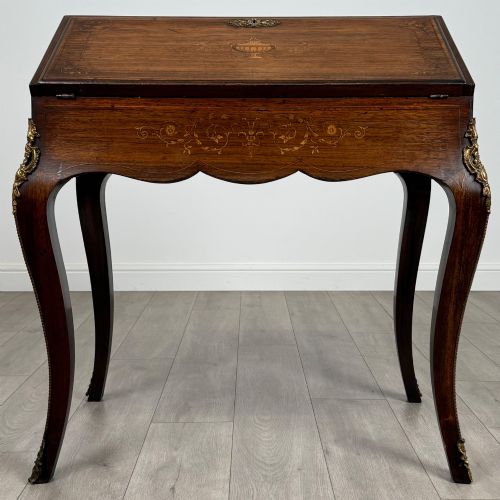
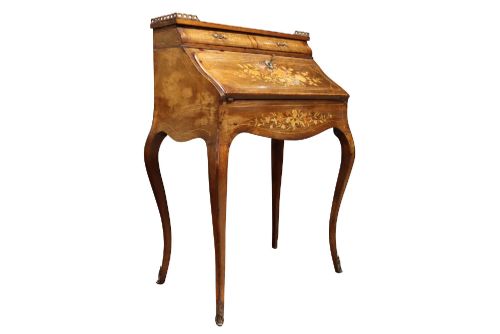
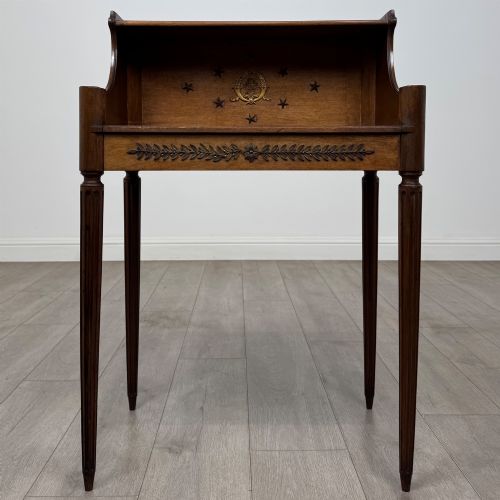
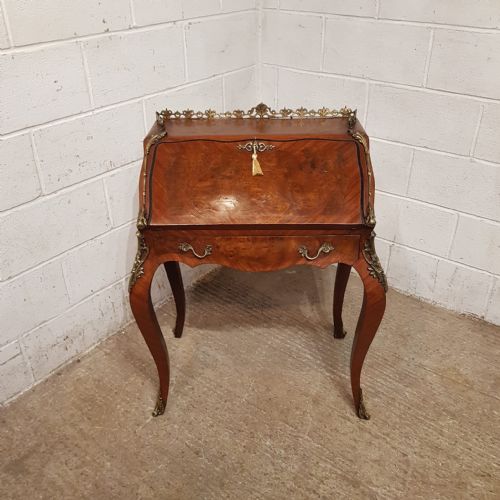
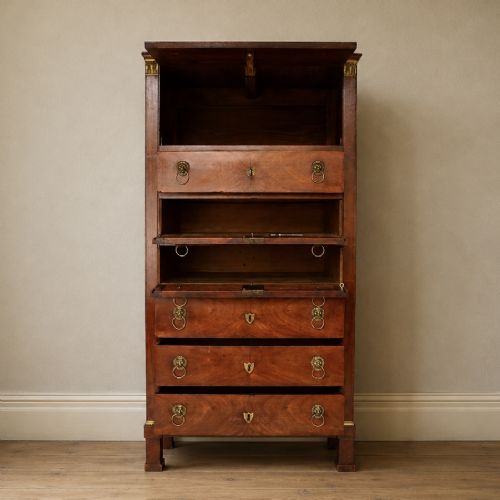
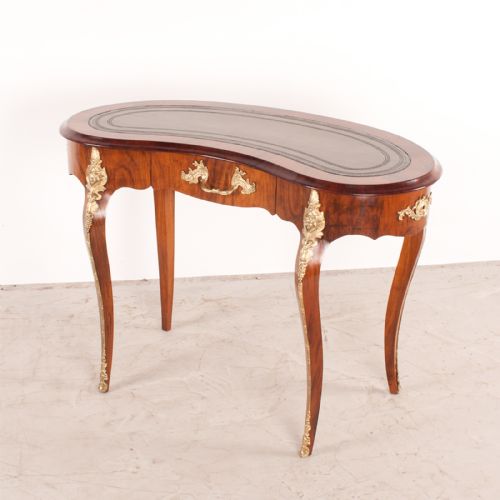
A french brass mounted desk typically combines a timber body of walnut, mahogany, rosewood, kingwood, or ebonised wood with cast metal mounts applied to corners, legs, and aprons. Buyers encounter forms ranging from writing tables and bureau plats to elaborate bonheur-du-jour cabinets dating across the nineteenth century.
Many examples adhere to revival aesthetics, drawing inspiration from Louis XV, Louis XVI, Empire, and Napoleon III periods. These pieces frequently feature shaped tops, inlaid marquetry, or leather inserts designed for practical correspondence.
Materials and construction
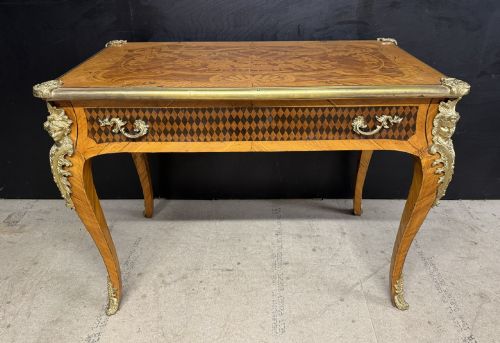
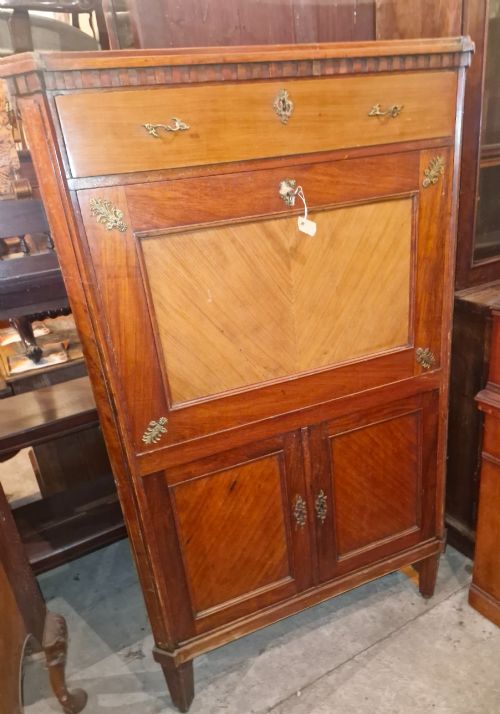
Cabinet makers built these desks using sturdy timbers like mahogany and walnut as a carcase, often applying veneers of rosewood, kingwood, or tulipwood in geometric parquetry or floral marquetry patterns. Ormolu or cast brass mounts were secured to corners and drawer fronts to accent the structural lines.
Surface treatments included French polish to highlight the grain of the wood, alongside tooled leather writing panels inset into the top surfaces. Ormolu elements were typically cast, chased, and fire-gilded to produce a lasting metallic lustre.
Listings feature nineteen-century periods including Victorian, 1860, 1870, 1880, 1890, 1900, and 1910 alongside materials like brass, ormolu, leather, walnut, rosewood, mahogany, glass, and kingwood.
Judging quality and execution
The precision of the cabinet work and the crispness of the brass or ormolu mounts set finer examples apart from standard production pieces. Superior items display finely hand-chased metalwork, tightly fitted veneer patterns, and secondary timbers of matching quality inside the drawer linings.
Proportion and balance also define the upper tier of these desks, where structural details such as shaped aprons and cabriole legs integrate harmoniously with the decorative metal mounts rather than appearing merely appended.
Donald Ross·Maison Millet·Linke
The French Brass Mounted Desk Glossary
- Ormolu
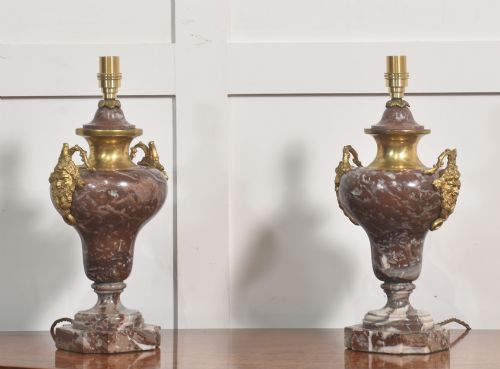
- Gilded bronze or brass applied as a decorative mount on furniture and clocks. It provides a bright golden contrast to darker woods like mahogany and ebonised finishes.
- Bureau plat
- A freestanding writing table with a rectangular top and one or more drawers in the frieze. These pieces are finished on all sides to allow placement in the centre of a room.
- Bonheur-du-jour
- A small, light lady's writing desk featuring a tiered superstructure with shelves, drawers, or a small cabinet above the main writing surface.
- Marquetry
- The art of applying pieces of veneer to a structure to form decorative patterns or pictorial scenes. Craftsmen often utilised contrasting exotic timbers for visual depth.
French Brass Mounted Desk: Frequently Asked Questions
Where should I place a bureau plat?
A bureau plat is finished on all four sides, making it well-suited for placement in the middle of a study or library rather than pushed against a wall.
This allows the brass mounts and detailed timber veneers to be viewed from every angle.
How do I care for the leather writing surface?
The inset leather surface benefits from occasional dusting and treatment with appropriate leather balms to prevent drying and cracking over time.
Avoid using harsh chemical cleaners or excess moisture near the surrounding brass mounts and wooden veneers.
What is the difference between a bureau plat and a bonheur-du-jour?
A bureau plat is a flat-topped writing table with drawers beneath the surface, designed primarily for open workspace.
A bonheur-du-jour incorporates a raised cabinet or shelving superstructure at the back of the desk, offering compartments for stationery and small items.
How can I identify a Napoleon III desk?
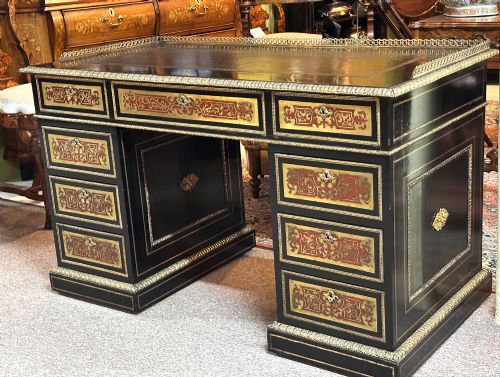
Napoleon III desks often showcase ebonised finishes paired with intricate gilt bronze mounts, reflecting the eclectic revival tastes of the Second French Empire.
They frequently incorporate marquetry or boulle work inspired by earlier seventeenth and eighteenth-century royal French aesthetics.