
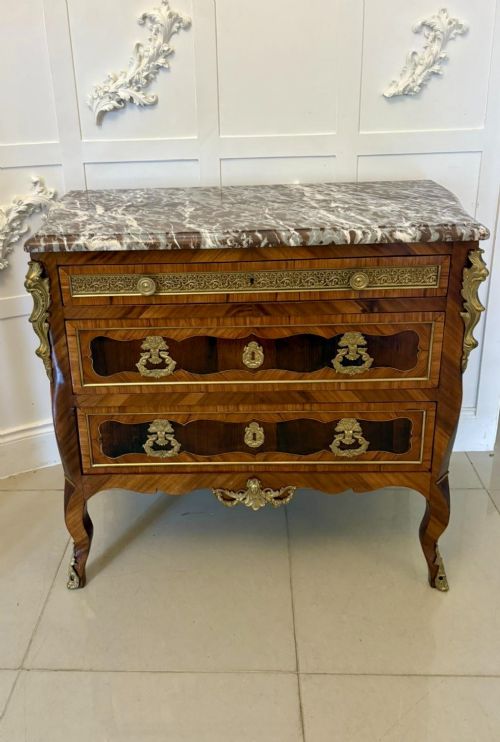


French Brass Mounted Chest
A French brass mounted chest brings rich timber and bright metalwork together, offering both grand presence and useful storage for a refined interior.
French Brass Mounted Chest
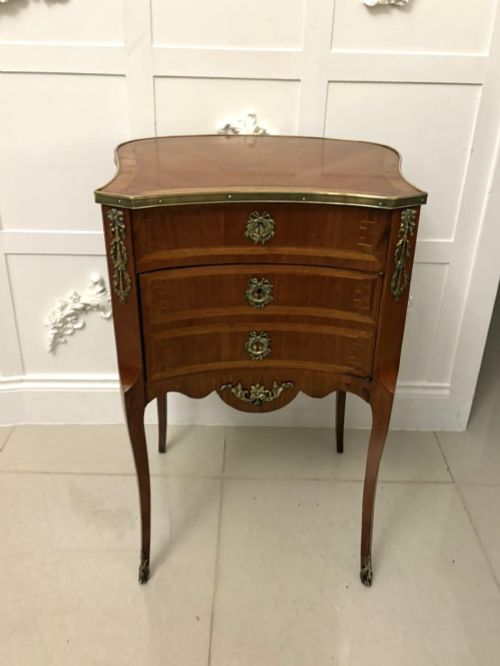
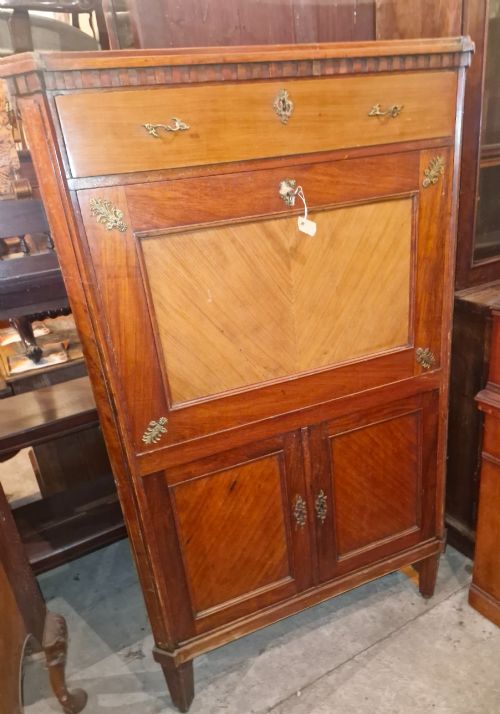
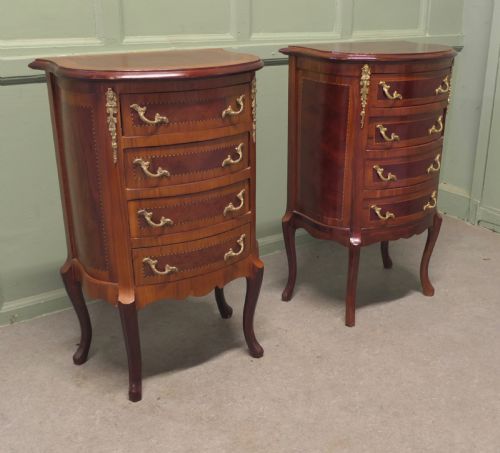
A French brass mounted chest is a practical storage piece defined by metal mounts, handles, and escutcheons, most frequently appearing as a commode, bedside table, or side cabinet. These pieces span centuries of design, with examples stretching from the eighteenth century through to the nineteenth and twentieth centuries.
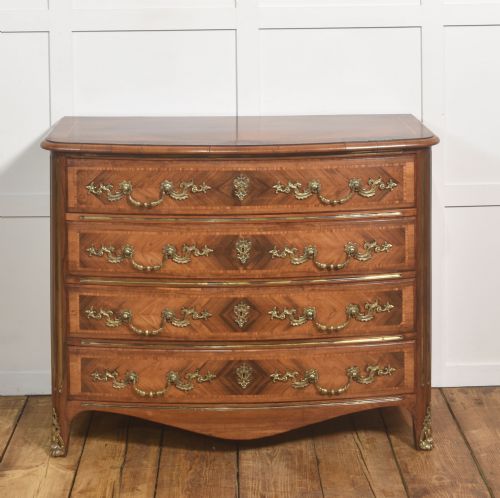
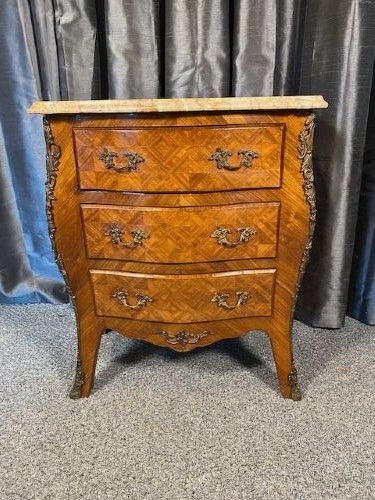
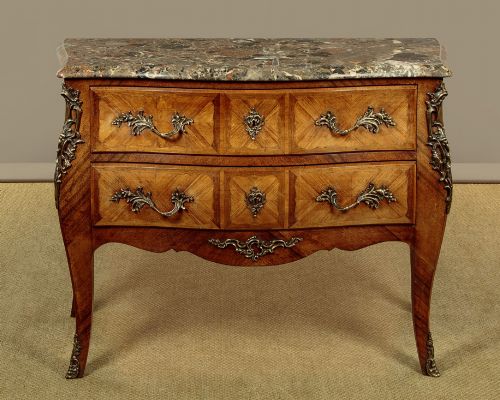
The most common forms on this page include serpentine and bombé commodes alongside smaller bedside chests and side cabinets. Buyers encounter both provincial walnut pieces and sophisticated marquetry or parquetry creations.
Stylistic influences range from Louis XV and Louis XVI periods to French Empire, Rococo, and Provincial designs. These variations provide options ranging from restrained neoclassical lines to ornate, curved surfaces.
Materials and Construction
Makers utilised a foundation of solid timbers such as walnut, mahogany, cherrywood, and oak, often overlaying them with decorative veneers like kingwood, rosewood, and burr walnut. These woods provided stable carcasses and rich canvases for intricate marquetry and parquetry patterns.
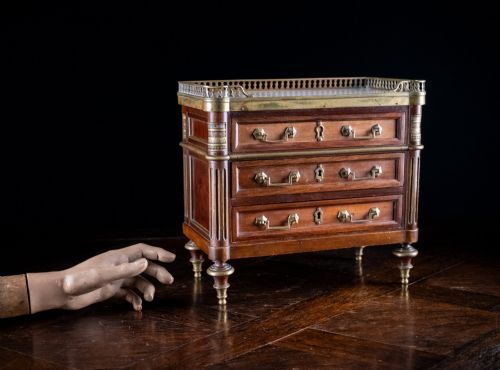
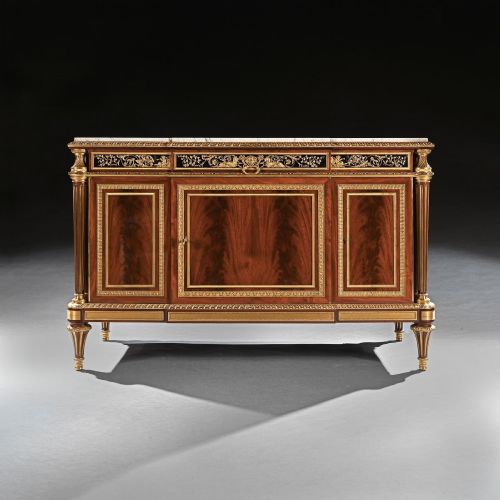
Metalwork played a defining structural and decorative role, employing brass and ormolu mounts to edge drawers, protect corners, and accentuate the silhouette. These metal elements were cast, chased, and secured to the timber frames with precision.
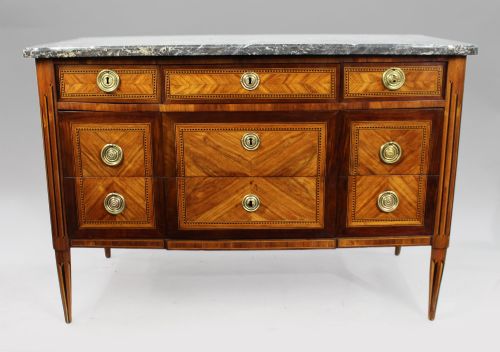
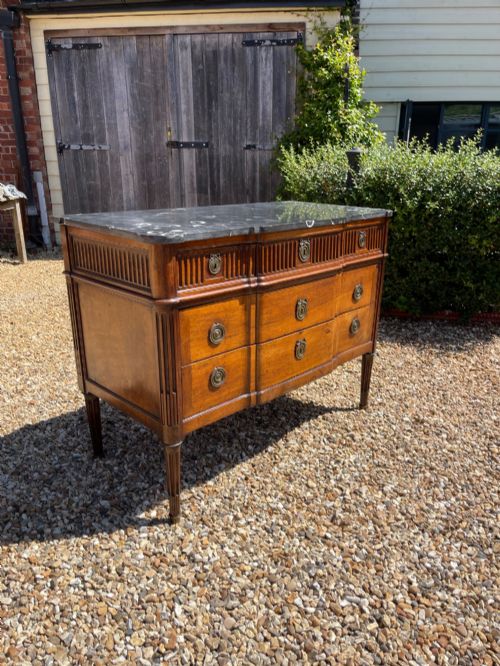
Many surfaces received finishing touches from polished marble tops in shades of grey and other tones, adding weight and a cool tactile contrast to the warm timber below.
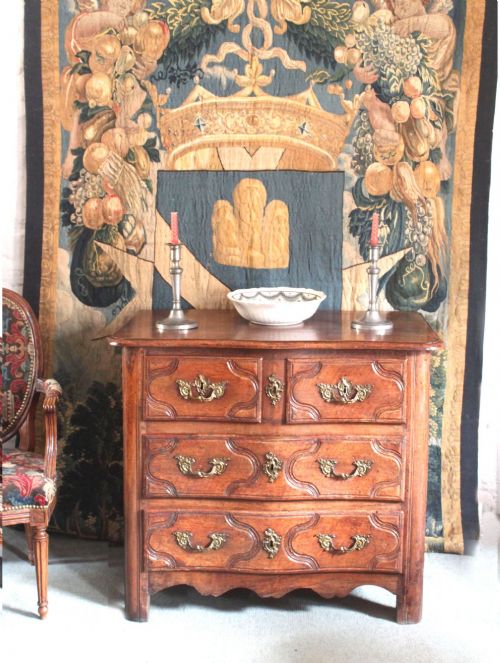
An eighteenth-century walnut commode shares shelf space here with a nineteenth-century ballot box.
Assessing Craftsmanship
Quality rests heavily on the crispness of the brass and ormolu mounts and how cleanly they integrate with the timber contours. Superior pieces display finely chased metalwork that sits flush and secure against the wood.
The precision of the timber veneers and inlay work distinguishes finer examples from simpler provincial items. Tighter grain matching, seamless parquetry geometry, and well-executed marquetry indicate higher workshop standards.
Structural integrity of the drawers, internal carcase joints, and the fit of the stone top reveal the underlying skill of the maker. Smooth drawer action and substantial timber thickness mark the upper tier of production.
Henry Dasson·Weisweiler
The French Brass Mounted Chest Glossary
- Commode
- A low chest of drawers, typically decorative and standing on relatively tall legs. They originated in France and often feature marble tops.
- Ormolu
- Gilded bronze used for furniture mounts and decorative accents. The technique involves applying a gold amalgam to bronze.
- Marquetry
- Inlaid wood veneers arranged to form decorative pictures or geometric patterns. Craftsmen cut various coloured woods to fit together precisely.
- Parquetry
- Geometric wood inlay patterns such as cubes, lozenges, or chevrons. It differs from marquetry by focusing on repeating geometric motifs rather than pictorial scenes.
- Bombe
- A swollen or bulging convex shape found on the front and sides of furniture. This contour requires advanced woodworking skill to execute correctly.
- Semainier
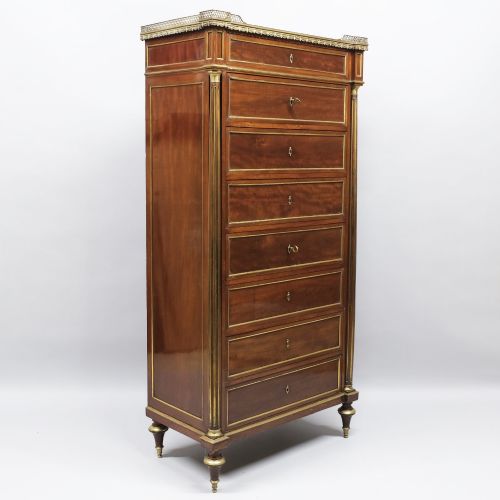
- A tall, slender seven-drawer chest traditionally used to hold a week's worth of clothing. It offers vertical storage with a small footprint.
French Brass Mounted Chest: Frequently Asked Questions
How do I tell Louis XV from Louis XVI style?
Louis XV furniture is characterised by curved serpentine lines, bombé contours, and asymmetric rococo mounts. The overall aesthetic feels flowing, organic, and soft.
Louis XVI style moves toward straight lines, symmetry, and neoclassical restraint. You will notice fluted legs, rectangular panels, and classical architectural motifs.
Where should I place a commode at home?
A commode serves well as a statement piece in a hallway, living room, or dining space. Its flat top provides a surface for lamps, mirrors, or decorative objects.
Smaller bedside tables and cabinets fit naturally beside a bed or in a reading nook. Their enclosed storage keeps everyday items hidden while adding period character to the room.
How do I care for antique wood and marble?
Maintain wood surfaces by dusting with a soft, dry cloth and applying quality wax occasionally to nourish the timber. Avoid placing them in direct sunlight or near heat sources.
Marble tops require prompt wiping of liquid spills to prevent staining. Clean them gently with mild soap and water, avoiding acidic cleaners that etch the stone.