







French Brass Inkwell
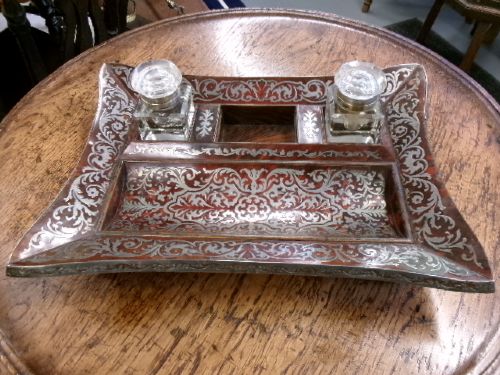
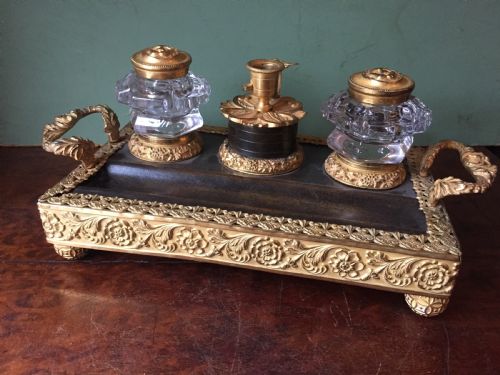
A french brass inkwell brings nineteenth-century elegance to a writing desk, combining functional utility with sculptural metalwork.
French Brass Inkwell
A french brass inkwell serves as a refined desk accessory, appearing in forms ranging from single vessels to grand desk stands and multi-piece sets. Buyers seeking a french brass inkwell encounter pieces shaped by nineteenth-century design, alongside earlier eighteenth-century examples and later interpretations.
The selection encompasses diverse configurations, including standalone inkwells, marble-mounted stands, and combinations featuring porcelain insets, glass inserts, or letter holders. Many pieces integrate sculptural elements such as lions, figural busts, and animal motifs within styles spanning French Empire, Napoleon III, and Louis XV.
While brass forms the core of many items, the category frequently embraces gilt bronze, ormolu, and champleve enamel, reflecting the decorative ambitions of period desk sets. These accessories range from compact single inkwells to elaborate architectural desk stands designed for prominent display.
Materials and construction
Metalworking techniques define these pieces, utilising cast brass, gilt bronze, and ormolu to create structural mounts and decorative vessels. Artisans combined these metallic elements with contrasting bases and insets made from marble, wood, porcelain, tortoiseshell, and glass.
Specialised decorative methods such as champleve enamel and Boulle work inlay enhance specific desk sets, displaying detailed craftsmanship on brass and tortoiseshell surfaces. Component parts were assembled to hold glass or porcelain ink inserts securely within heavy metal bases.
French Brass Inkwell Retail Price Guide 2026
Typical asking prices for french brass inkwell among the pieces listed under this phrase on Sellingantiques today, from the lower quarter to the upper quarter. They describe what is for sale here now, not the wider market.
Cats, kittens, and French bulldogs occasionally keep guard over the ink.
Quality differences
Quality in these desk accessories rests upon the crispness of the metal casting and the weight of the supporting base, particularly in marble and ormolu combinations. Superior examples display refined chasing on gilt bronze and brass surfaces, whereas simpler items exhibit standard commercial production.
The integration of mixed media, such as hand-painted porcelain panels, champleve enamel work, or figural bronzes like sculpted lions and dogs, elevates a piece above basic utilitarian forms. Complete multi-piece desk sets and works incorporating intricate Boulle work represent the higher tier of the category.
The French Brass Inkwell Glossary
- Ormolu
- Gilded bronze applied to decorative objects and furniture mounts. This technique was widely utilised in nineteenth-century French desk accessories to provide a brilliant gold-coloured finish.
- Champleve enamel
- A technique where troughs are carved into a metal surface and filled with vitreous enamel before firing. It creates colourful decorative patterns on brass ink stands.
- Encrier
- A French term for an inkstand or portable writing set. These vessels typically house one or more inkwells alongside pen trays.
- Boulle work
- Elaborate marquetry incorporating tortoiseshell and brass inlay. Named after French cabinetmaker André-Charles Boulle, it appears on high-end nineteenth-century desk sets.
- Napoleon III style
- A nineteenth-century French design movement known for eclectic revivals of past royal styles. Pieces from this era often mix brass mounts with exotic woods and bold ornamentation.
French Brass Inkwell: Frequently Asked Questions
What is a french brass inkwell?
A french brass inkwell is a desk accessory designed to hold writing ink, typically produced in France during the nineteenth century. These items range from simple lidded vessels to elaborate stands incorporating marble and gilt bronze.
Many examples function as part of larger desk sets that include pen trays, letter holders, or matching candlesticks. They reflect historical design movements such as the French Empire and Napoleon III styles.
How do I identify the period?
Dating relies on examining the materials, decorative style, and construction methods used in the piece. Nineteenth-century examples often feature ormolu, champleve enamel, or vert marble bases reflecting prevailing French aesthetics.
Earlier eighteenth-century items and later pieces from around nineteen hundred show shifts in manufacturing techniques and artistic motifs. Comparing the decorative style, such as art nouveau copper or classical Empire elements, helps narrow the date range.
Were these inkwells used daily?
These pieces served practical roles on writing desks before the widespread adoption of fountain pens and ballpoints. Owners dipped quill or steel nib pens directly into the glass or porcelain inserts housed within the brass frames.
Desk sets were standard equipment in offices and home studies for correspondence and record-keeping. Their sturdy construction allowed them to withstand regular daily use.
How do I clean the metal?
Maintenance requires gentle dusting with a soft cloth to protect aged metallic surfaces and applied gilding. Aggressive polishing agents should be avoided, as they can strip ormolu and damage delicate patinas on brass and bronze.
If the piece includes marble, wood, or tortoiseshell components, care must be taken to use cleaning methods appropriate for those specific materials. Preserving the original finish maintains the historical character of the desk accessory.