





French Brass Inkstand
A french brass inkstand brings desk organisation into focus, offering heavy gilt bronze and marble forms built for nineteenth-century writing.
French Brass Inkstand
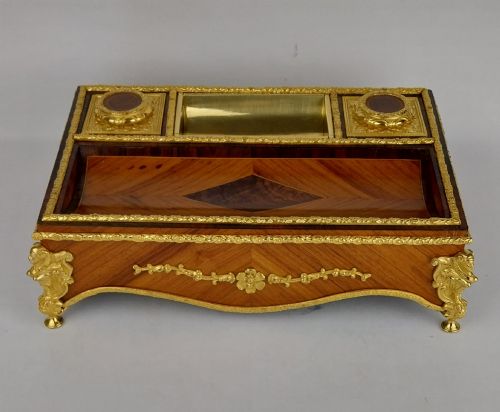
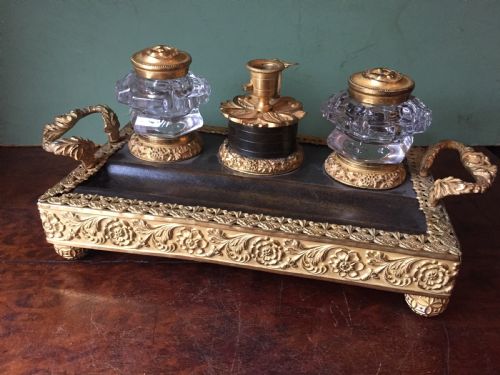
A french brass inkstand combines heavy cast metal with inkwells and stone bases, originating largely from the nineteenth century across periods such as Napoleon III and the French Empire style. Buyers encounter pieces ranging from simple brass stands to elaborate gilt bronze desk sets incorporating marble, porcelain, and glass.
Forms span single inkwells, multi-piece desk sets with letter holders, and decorative caskets or boxes designed for the nineteenth-century writing desk. Many examples pair brass or ormolu mounts with contrasting materials like tortoiseshell, mahogany, or vert marble.
Continental workshops and Paris makers produced these accessories in styles including French Rococo Revival and Art Nouveau. The selection reflects varied desk accessories intended for functional writing and grand desktop display.
What varies in quality
The weight and crispness of the cast bronze or brass define the upper tier, where finer chasing brings out details in sculptural elements like lions or playing cats. Heavier mounts and solid marble or mahogany foundations separate substantial desk sets from lighter constructions.
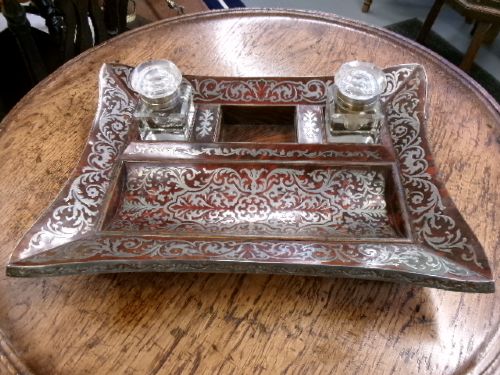
The presence of secondary materials such as hand-painted porcelain inserts, champlevé enamel, or tortoiseshell Boulle work distinguishes more ambitious pieces from standard brass inkstands.
French Brass Inkstand Retail Price Guide 2026
Typical asking prices for french brass inkstand among the pieces listed under this phrase on Sellingantiques today, from the lower quarter to the upper quarter. They describe what is for sale here now, not the wider market.
Listings feature materials including tortoiseshell, champlevé enamel, and hand-painted porcelain alongside brass and marble.
Paris Maker·Moser
The French Brass Inkstand Glossary
- Ormolu
- Gilt bronze mounted or cast for decorative hardware and desk stands. The technique involves applying a gold amalgam to bronze.
- Boulle work
- Marquetry of tortoiseshell and brass popular in nineteenth-century desk sets. This decorative technique creates intricate surface patterns on wood bases.
- Champlevé enamel
- Sinking cells into a metal surface to receive enamel colours before firing. It appears on select Paris-made desk stands.
- Vert marble
- Green marble frequently used as a heavy contrasting base for gilt bronze inkwells. The stone provides a stable foundation for desk accessories.
- Napoleon III style
- A nineteenth-century French revival aesthetic combining multiple historical influences on desks and boxes. It draws on Boulle work and opulent mounts.
French Brass Inkstand: Frequently Asked Questions
How do I date a desk set?
Dating relies on observing stylistic markers such as Napoleon III Boulle work, French Empire ormolu mounts, and Art Nouveau copper forms. Materials like vert marble and specific casting techniques also indicate the nineteenth-century period of manufacture.
Examining the construction of the inkwells and the patination of the brass helps narrow down the decade.
Were these items used daily?
Desk sets and inkstands were essential working tools in nineteenth-century offices and homes where correspondence required dipping pens into liquid ink. The inclusion of letter holders and multiple wells accommodated active daily writing.
Wealthy households also used grander gilt bronze and marble sets as formal desk ornaments rather than working tools.
How do I care for marble and brass?
Maintaining these pieces involves dusting the cast brass and gilt bronze gently with a dry cloth to preserve the metal surface. Harsh polishes should be avoided on antique ormolu and marble to protect the original finish.
Marble bases require simple wiping with a soft, damp cloth and immediate drying to prevent moisture damage.