


French Brass Hearth Guard
A french brass hearth guard protects the room from escaping embers while bringing nineteenth-century metalwork into the hearth.
French Brass Hearth Guard
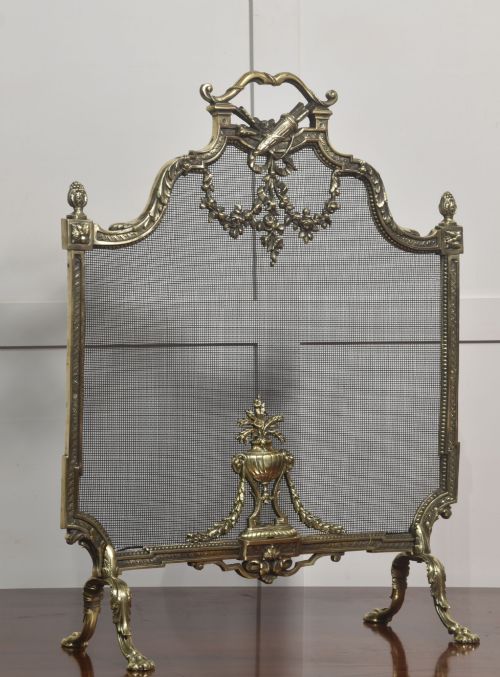
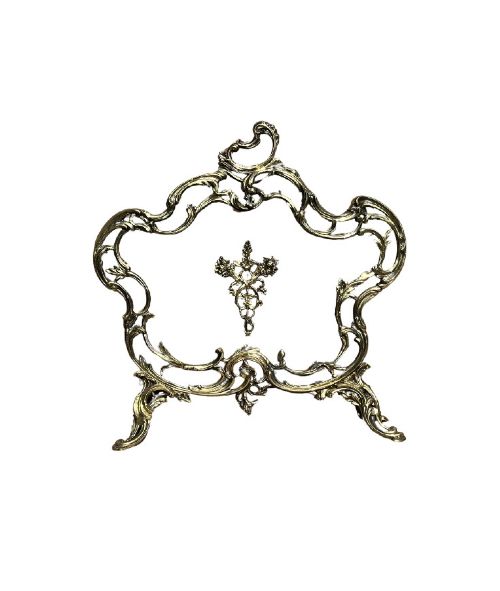
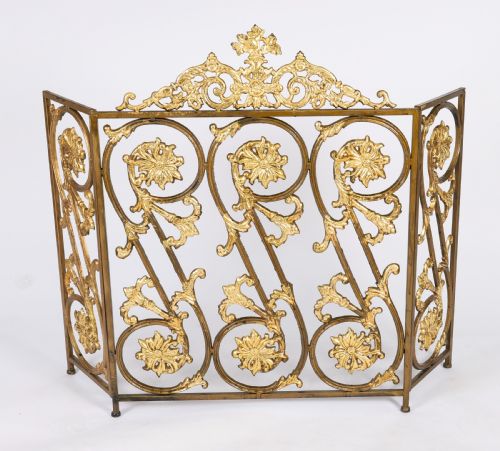
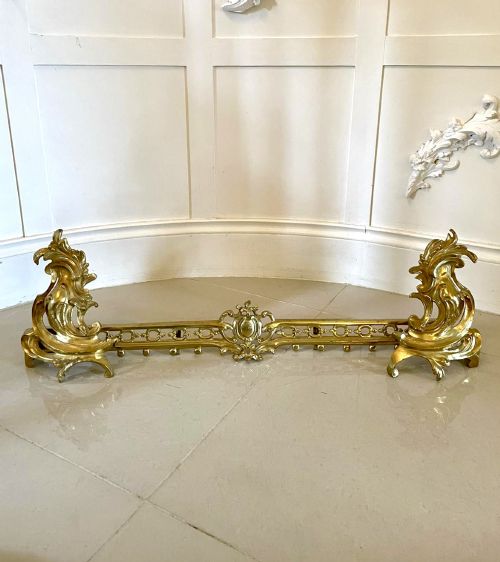
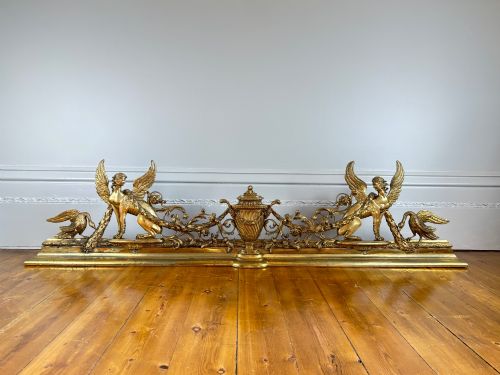
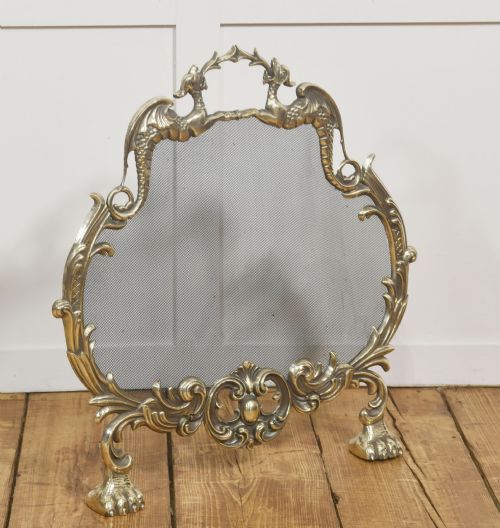
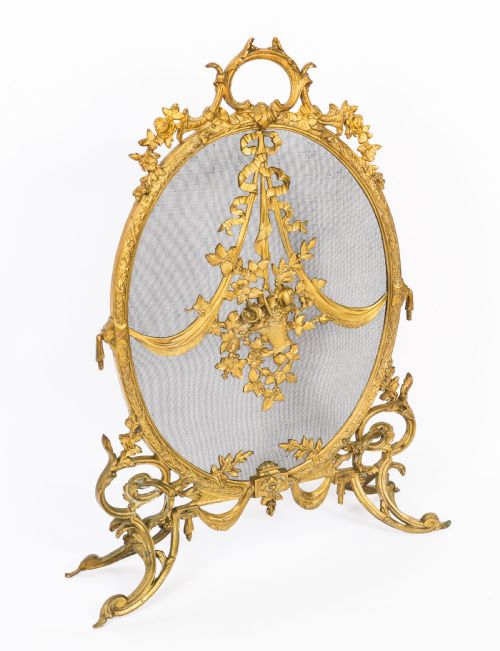
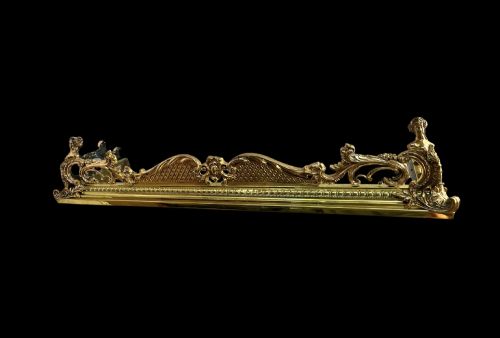
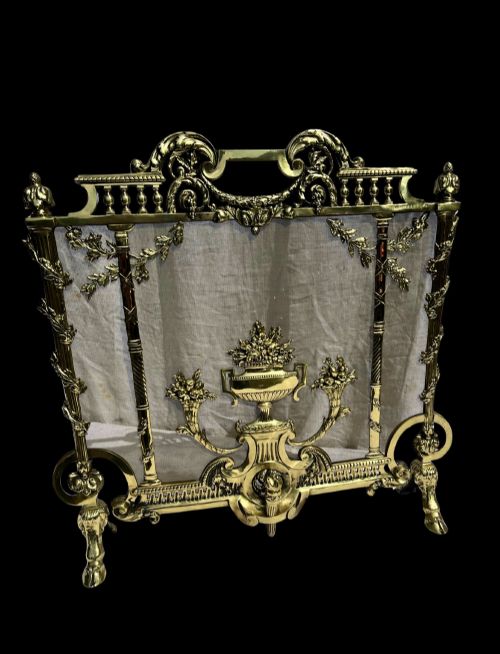
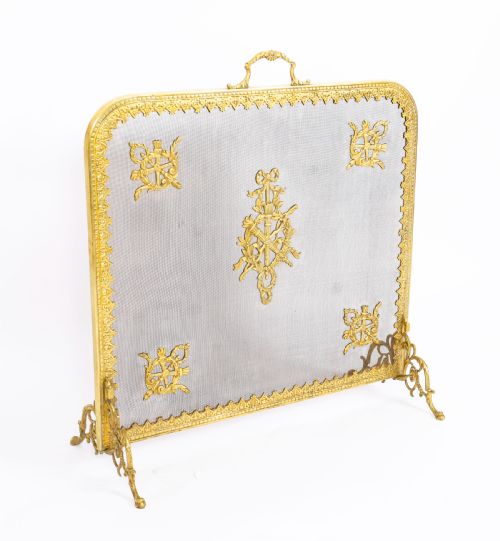
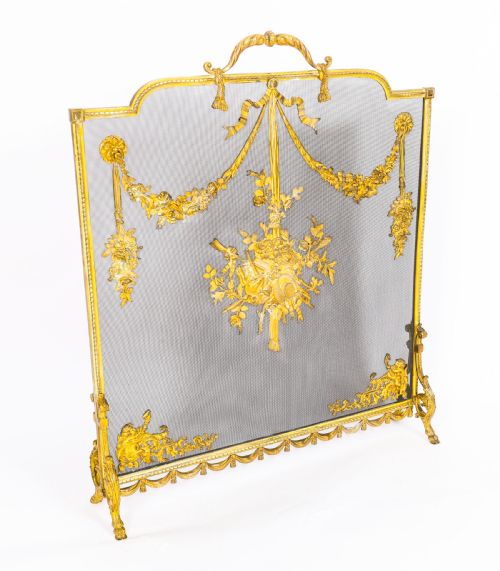
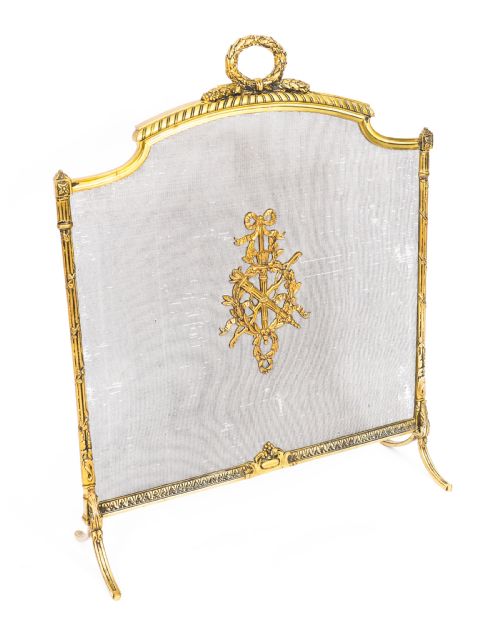
A french brass hearth guard takes the form of folding fire screens, extending fenders, and spark guards designed for nineteenth-century fireplaces. The selection spans the Victorian era through the early twentieth century, drawing heavily on French Rococo Revival, Louis XV, and Louis XVI styles.
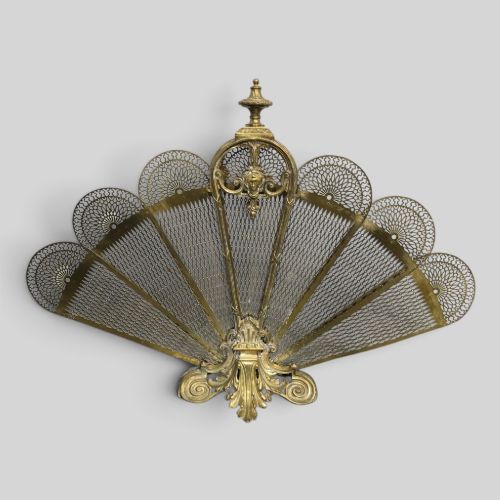
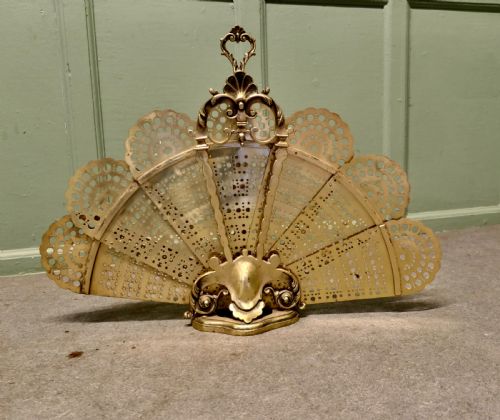
Most examples function as freestanding screens or adjustable fenders made to surround the hearth opening. Pieces incorporate wire mesh panels, folding peacock tail designs, or solid cast frames decorated with musical trophies and classical motifs.
What varies in quality
Quality rests on the depth of the casting and the precision of the chased surface detail, separating standard production from finely worked gilt bronze. Heavier gauges of brass and well-executed rococo ornamentation indicate superior workshop output.
The sophistication of the decorative motifs, such as classical trophies, dolphins, or floral scrollwork, distinguishes finer examples. Fully articulated folding mechanisms and well-preserved fire gilding further elevate the standing of a piece.
Some fireside screens deploy folding metal feathers to fan out like a peacock across the hearth.
E F Caldwell New York
The French Brass Hearth Guard Glossary
- Ormolu
- Gilded bronze, typically produced by applying a mercury and gold amalgam to a bronze base. This finish provides a rich golden lustre characteristic of fine nineteenth-century French metalwork.
- Chenet
- An alternative term for firedog, used to support logs in a fireplace. These metal supports often match or complement the design of the hearth guard.
- Fender
- A low metal guard placed around the hearth to contain sparks and rolling embers. Extending versions can be adjusted to fit various fireplace widths.
- Rococo Revival
- A nineteenth-century design style that revived the asymmetrical scrolls, shell motifs, and curving lines of the eighteenth-century French movement. This style dominates many of the fire screens and fenders found here.
- Spark screen
- A mesh or wired barrier positioned in front of an open fire to catch flying sparks. Folding variants allow the guard to adjust around the hearth opening.
French Brass Hearth Guard: Frequently Asked Questions
How do I choose the right size fender?
Measure the width and depth of your fireplace opening before selecting a fender. Extending models offer flexibility if you require adjustment for different hearth dimensions.
Consider whether you need a freestanding screen to cover the entire opening or a low fender to frame the hearth floor.
What is the difference between a fire screen and a fender?
A fire screen stands upright to block radiant heat and sparks from entering the room. Screens often feature folding panels or wire mesh.
A fender sits low on the floor around the hearth perimeter to keep logs and rolling embers contained within the fireplace area.
How do I clean brass and gilt bronze hearth guards?
Dust the metal gently with a soft dry cloth to remove surface soot and debris. Avoid harsh chemical polishes, particularly on gilt bronze or ormolu surfaces where abrasive cleaning can remove the delicate gold layer.
Consult a specialist conservator if the piece requires deep cleaning or restoration of the metal finish.
How can I tell the period of a hearth guard?
Examine the casting quality, fastening methods, and stylistic revival cues. Pieces from the nineteenth century frequently exhibit Louis XV or Rococo Revival styling executed in cast brass or gilt bronze.
Look for evidence of period manufacturing techniques, such as hand-chased surface details and traditional hinge construction on folding screens.