



French Brass Gallery Stand
A french brass gallery stand brings continental display elegance to your interior, marrying fine timber with polished metal mounts.
French Brass Gallery Stand
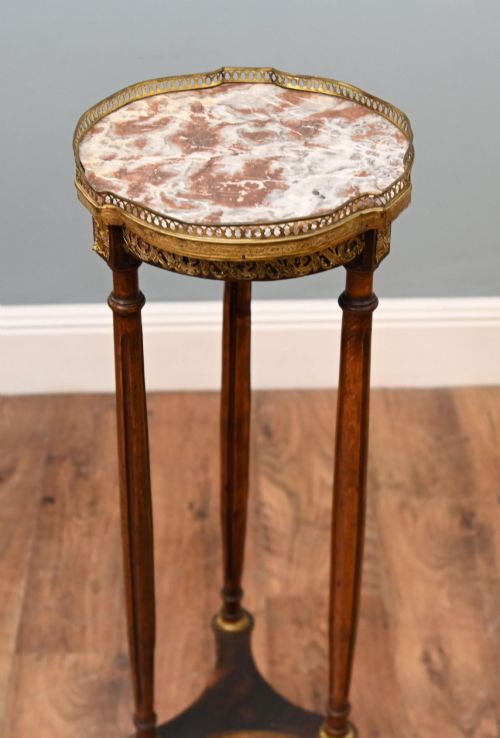
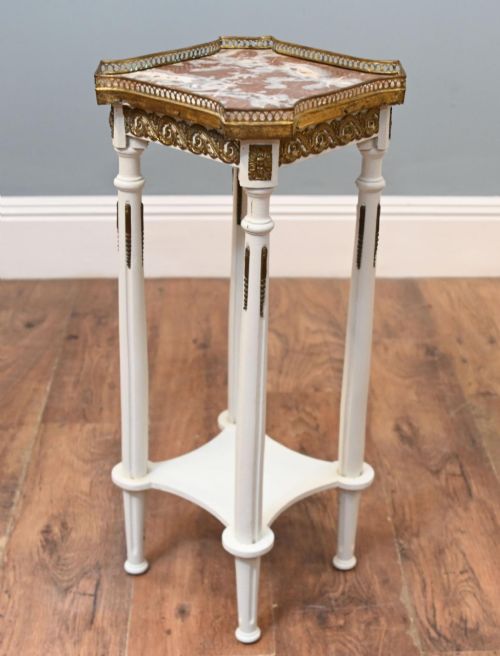
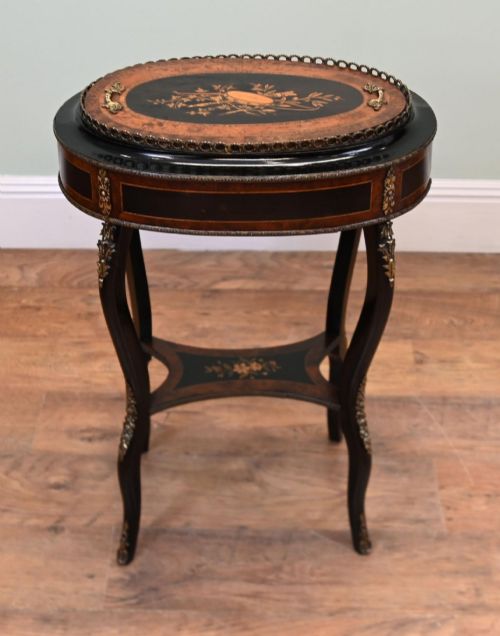
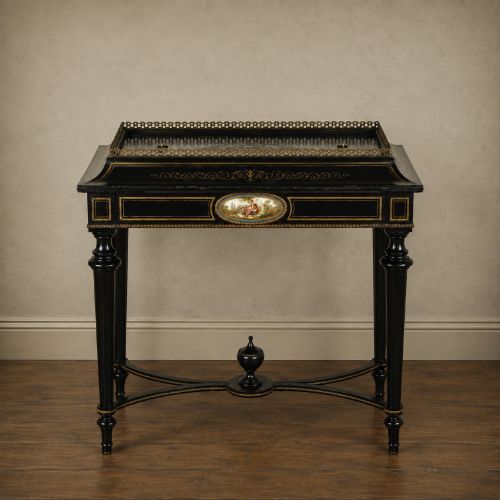
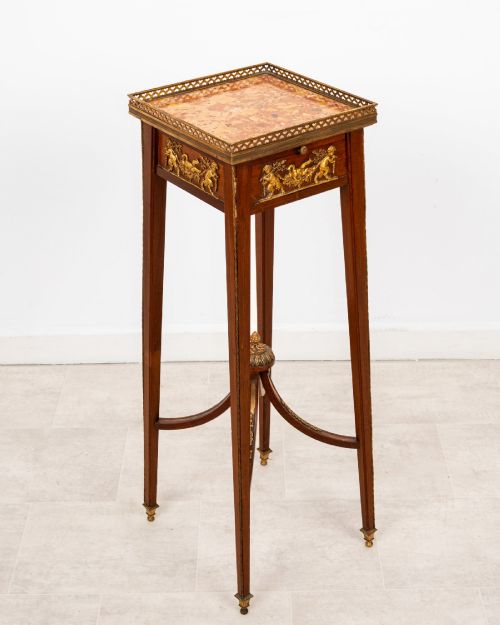
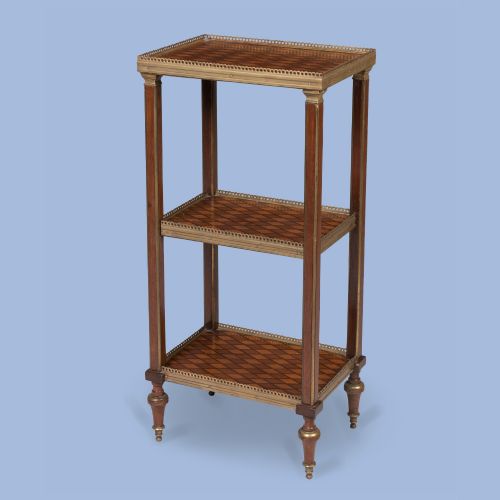
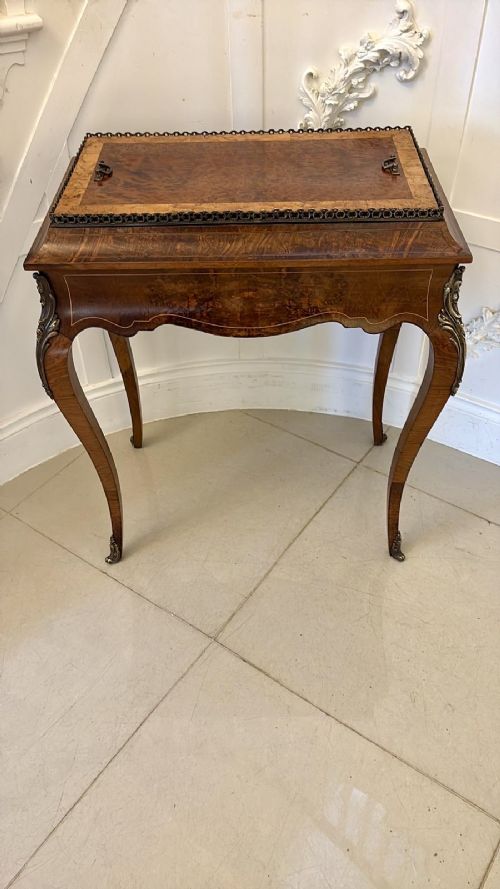
A french brass gallery stand typically takes the form of an occasional table, etagere, or jardiniere table designed for decorative display in reception rooms. These pieces originate predominantly from the nineteenth and early twentieth centuries, spanning periods from Victorian and Edwardian eras up to the nineteen-twenties. You will encounter various compact forms, including multi-tiered etageres and plant stands fitted with raised metal rims.
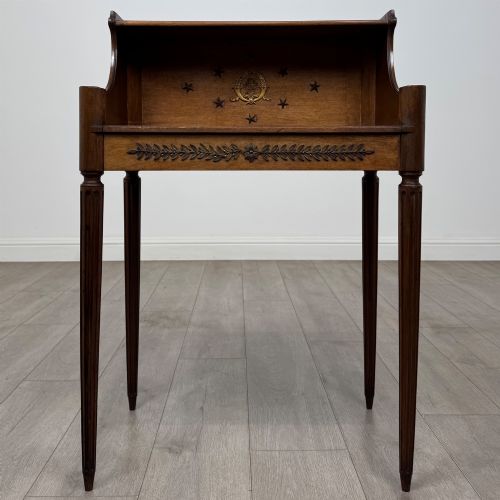
The aesthetic draws heavily on classical French design vocabulary, incorporating styles from Louis XV and Louis XVI revivals to Napoleon III and Empire. Makers utilised rich timbers such as mahogany, walnut, rosewood, and ebonised wood to build these functional surfaces. Many examples integrate inset marble or onyx tops alongside fine marquetry and parquetry patterns.
Construction and Materials
The construction relies on sturdy hardwood carcases of mahogany, walnut, or satinwood, frequently enhanced by decorative veneers like burr walnut, kingwood, and amboyna. Artisans applied intricate marquetry and parquetry inlay to tabletops and tiers, creating geometric or floral motifs. Ebonised wood often provides a dark, contrasting backdrop for gilt metal accents.
Cast brass and ormolu mounts define the structural embellishments, forming the characteristic raised gallery rails that prevent items from sliding off the edge. Gilt metal mounts and Ormolu highlights edge the tabletops, frame porcelain plaques, and cap the legs. Brass fittings also secure multi-tiered etageres and support marble or onyx inserts.
French Brass Gallery Stand Retail Price Guide 2026
Typical asking prices for french brass gallery stand among the pieces listed under this phrase on Sellingantiques today, from the lower quarter to the upper quarter. They describe what is for sale here now, not the wider market.
One clever nineteenth-century design hides a wine cooler function inside a multi-purpose occasional table.
Assessing Quality and Craftsmanship
Quality reveals itself in the crispness of the brass casting and the precision of the gallery rail fitting around the tabletop. Superior pieces feature finely chased ormolu mounts and heavy, solid brass galleries rather than stamped sheet metal. The timber selection also dictates grade, with dense burr veneers and tight marquetry work setting finer examples apart from simpler painted or plain mahogany pieces.
Structural integrity depends on the joinery of multi-tiered etageres and the secure integration of heavy stone inserts like rouge marble or onyx. The subtlety of inlaid parquetry and the integration of hand-painted porcelain plaques indicate workshop standards. Pieces showing refined proportions and balanced brass mounts command greater attention from collectors.
François Linke·Donald Ross
The French Brass Gallery Stand Glossary
- Gallery
- A raised metal or wooden rail fitted around the edge of a shelf or tabletop to secure objects. It is typically pierced or cast in brass on French tables.
- Etagere
- A set of open shelves or tiers used for displaying small ornaments and decorative items. These pieces frequently feature multiple levels supported by brass columns.
- Jardiniere
- A decorative container or stand designed to hold plants or flowers. In French furniture, these often incorporate metal liners and waterproof inserts.
- Ormolu
- Gilt bronze or brass mounts applied to furniture for decorative effect. The technique involves treating metal with a mercury and gold amalgam to achieve a rich, durable lustre.
- Marquetry
- Decorative veneer work arranged in pictorial or geometric patterns using various coloured woods. Craftsmen cut contrasting timbers to fit precisely within a background veneer.
- Parquetry
- A geometric mosaic of wood pieces used for surface decoration on floors and tabletops. It differs from marquetry by strictly employing repeating angular patterns.
French Brass Gallery Stand: Frequently Asked Questions
What is a brass gallery?
A brass gallery is a low decorative railing fixed around the perimeter of a tabletop or shelf. Its primary purpose is to keep small decorative objects from sliding off the edge.
On French tables, these galleries are often pierced or cast with delicate patterns, adding a bright metallic contrast to the dark timber beneath.
How were jardiniere tables used?
Jardiniere tables served as ornamental plant stands inside nineteenth-century drawing rooms and parlours. They allowed homeowners to bring potted plants indoors while protecting surrounding furniture from moisture.
Many examples feature built-in metal liners to catch water drainage, combining practical horticulture with high-status interior decoration.
Where should I place an etagere?
An etagere works best in a drawing room, hallway, or corner where its multi-tiered shelving can be viewed from multiple angles. It provides vertical display space for small ceramics, bronzes, and books without dominating the floor area.
Avoid placing these delicate wood and brass pieces in direct sunlight or near active heat sources to protect the veneers and glue joints.
How do I identify Napoleon III furniture?
Napoleon III furniture dates from the Second French Empire and embraces an eclectic mix of historical revivals. You will frequently spot ebonised finishes, gilt bronze mounts, and colourful marquetry inlay.
These pieces often incorporate luxurious elements like inset porcelain plaques and marble tops, reflecting the opulent tastes of the mid-nineteenth-century French court.