


French Baroque Chairs
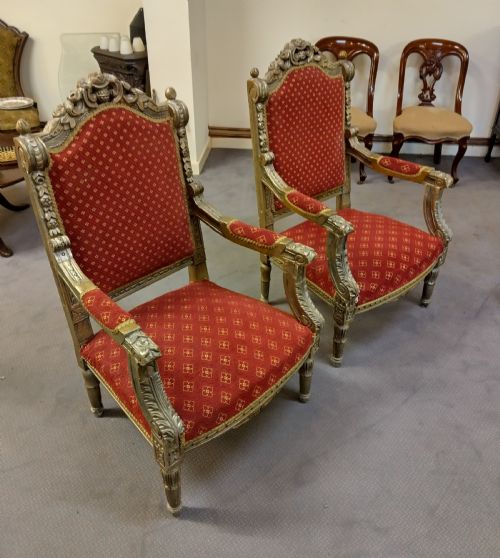
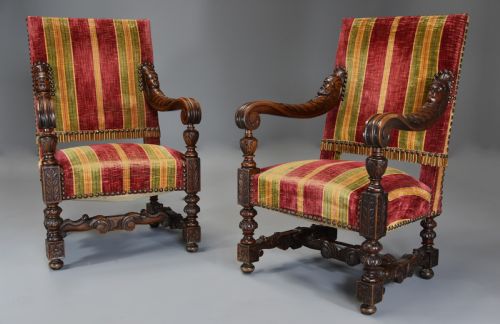
French baroque chairs bring architectural presence and historic theatre into a room, combining dramatic carved frames with rich textiles.
French Baroque Chairs
French baroque chairs combine formal architectural silhouettes with heavy upholstery, offering seating designed for grand interiors. These pieces appear across several eras, ranging from authentic seventeenth and eighteenth-century examples to nineteenth-century revival interpretations.
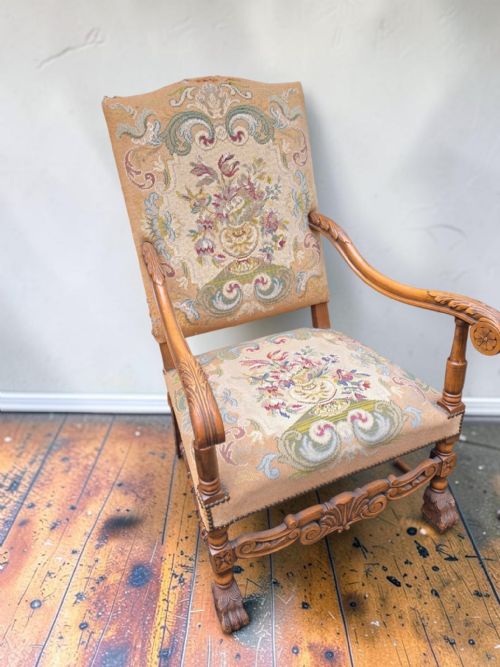
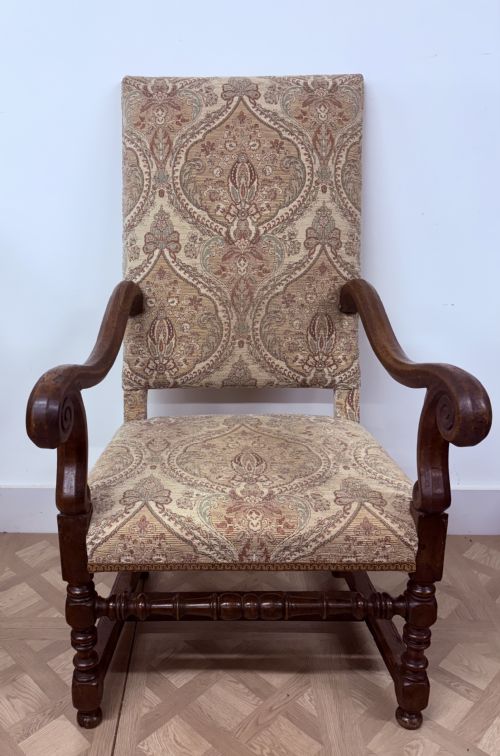
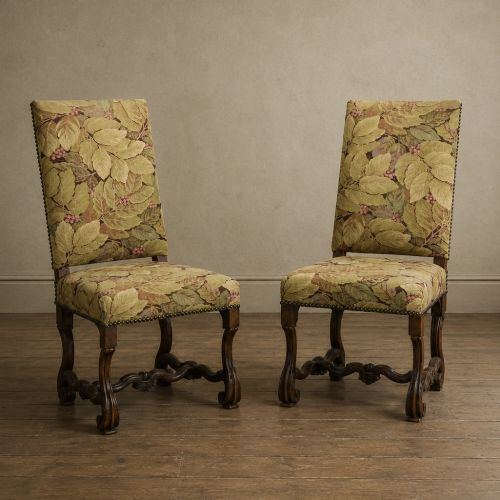
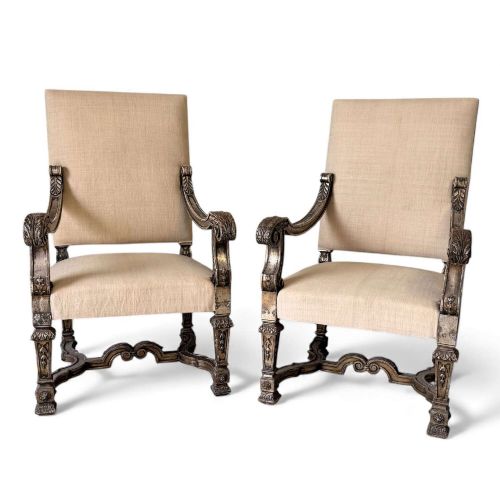
Armchairs and side chairs form the primary selections on this page, often presenting substantial carved wooden frames paired with textiles. Buyers encounter walnut construction alongside gilded finishes, frequently upholstered in period tapestries or needlepoint.
Revival pieces from the nineteenth century capture the substantial scale and intricate ornamentation of earlier reigns, especially the Louis XIV style. Originals from the seventeenth and eighteenth centuries sit alongside these later interpretations, providing options for different interior contexts.
Materials and construction
Makers utilised solid walnut for structural frames, relying on dense timber to support deep hand-carving along the stretchers, legs, and arm supports. Giltwood surfaces appear frequently, created by applying thin metal leaf over prepared wooden bases to achieve a reflective metallic finish.
Upholstery relies on heavy textiles including wool tapestry, needlepoint, velvet, and silk, secured with individual brass tacks driven into the wooden framework. These covers often feature intricate needlework scenes or botanical patterns designed to complement the carved woodwork.
Brass tacks hold centuries of historic textiles in place, each tiny metal stud hammering down another chapter of seating history.
Assessing quality in the collection
Depth and crispness of the hand-carving separate standard production from superior examples, as skilled carvers achieved sharper relief and greater naturalism in foliage and scrollwork. The integration of the frame joints dictates structural stability, particularly where heavy armrests join the upright posts.
The choice of original or period-appropriate textiles elevates a piece, especially when utilising hand-worked needlepoint or dense tapestry rather than plain modern fabrics. Giltwood execution varies from uniform hand-applied leafing that ages gracefully to flat painted finishes lacking dimensional depth.
The French Baroque Chairs Glossary
- Giltwood
- Wood coated with a thin layer of gold leaf. This surface treatment provides a brilliant reflective quality favoured in formal European court furniture.
- Tapestry
- A form of textile art woven on a loom. Historic examples used for chair upholstery depict pictorial scenes or repeating floral motifs.
- Needlepoint
- Embroidery stitched onto a stiff open-weave canvas foundation. Pieces executed in wool yarn frequently cover the seats and backs of formal armchairs.
- Baroque Revival
- A nineteenth-century artistic movement that resurrected seventeenth-century forms. Makers utilised these historicist designs to create grand seating for contemporary country houses.
- Throne Armchair
- A tall, imposing chair with an elevated back and substantial arms. These pieces were historically designed to denote authority and high social status.
French Baroque Chairs: Frequently Asked Questions
How do I clean tapestry upholstery?
Vacuum gently using a low suction setting with a soft brush attachment to remove surface dust without catching loose threads.
Avoid liquid cleaners or scrubbing, as historic fibres require professional textile conservation to prevent permanent damage.
Can I sit in these chairs daily?
Solid walnut and heavy joinery provide robust structural support for regular seating when joints remain tight and stable.
Delicate gilt surfaces and antique textiles require more mindful use to preserve fragile finishes and aged fibres over time.
How do I distinguish 19th-century revival pieces?
Nineteenth-century makers often utilised machine-sawn timber framing and standardised hardware alongside hand-carved decorative elements.
Examination of tool marks and wood oxidation helps separate these later interpretations from authentic seventeenth and eighteenth-century originals.
Where were these chairs used historically?
Grand salons, formal dining spaces, and reception rooms in chateaux and large country houses accommodated these imposing seats.
They stood against walls when not in use, arranged to project authority and aesthetic richness within the interior architecture.