


French Art Deco Dancer
These pieces capture kinetic elegance, offering a slice of 1920s and 1930s movement through bronze, marble, and patinated metal.
French Art Deco Dancer
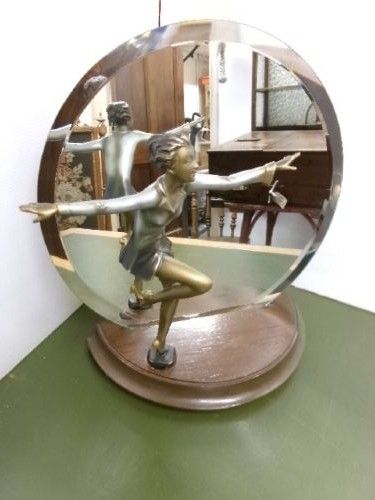
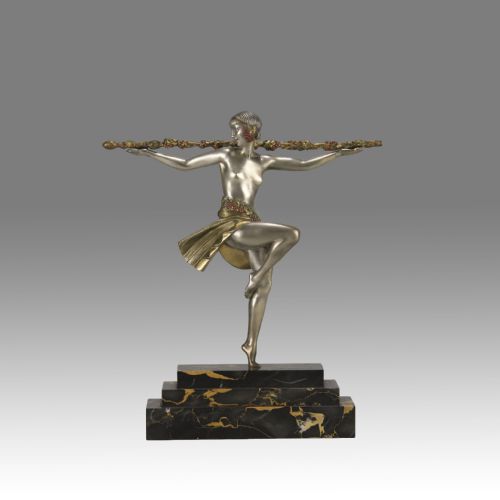
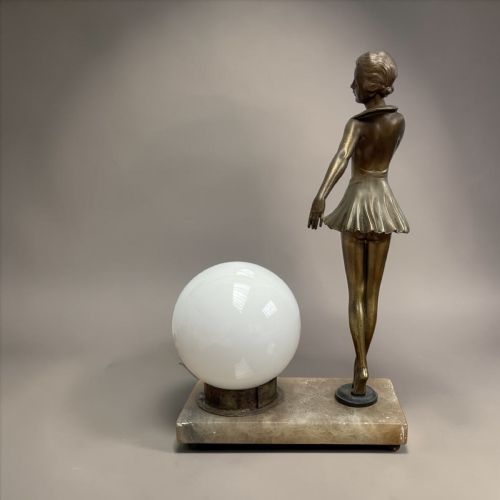
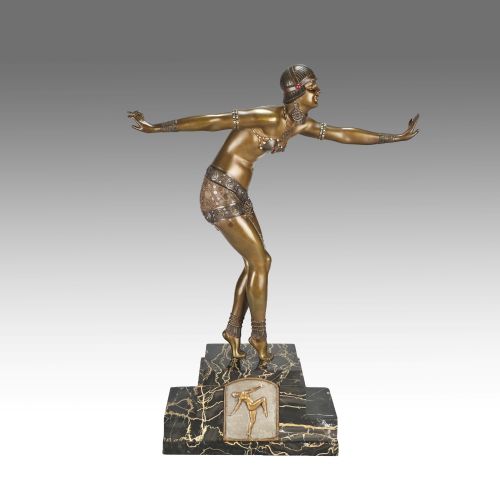
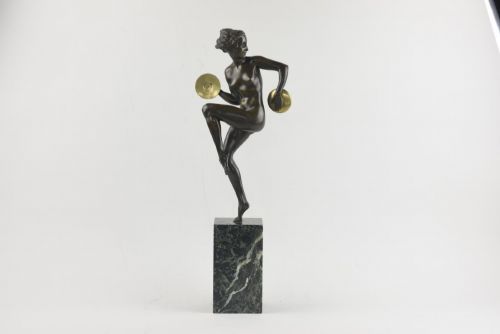
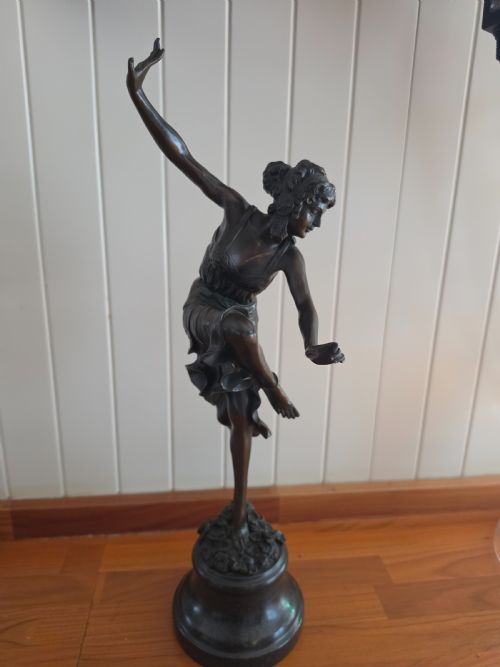
A french art deco dancer typically manifests as a sculptural figure captured mid-movement, reflecting the dynamic energy of early twentieth-century performance. The most frequent iteration on this page is a bronze or spelter statuette mounted upon a marble or onyx base.
The physical forms range from full sculptures and figurines to table lamps and wall plaques, often depicting specific motifs like hoop dancers, Egyptian dancers, or ballet performers. These works draw heavily from the aesthetic currents of the 1920s and 1930s, preserving historical performance styles in solid form.
Materials and construction
Foundry methods of the period relied heavily on casting bronze, silvered bronze, and gilt bronze, alongside more affordable alternatives like spelter. Metals were frequently finished with cold-painting, patination, or silvering to accentuate the details of garments and skin.
Sculptures were commonly anchored to heavy contrasting plinths made of marble or onyx, providing stability to dynamic poses. Some notable examples incorporate chryselephantine techniques, combining metal with carved ivory elements for added texture and contrast.
One dancer balances entirely on the face of a single die.
Distinctions in quality
Signatures from established founders or named sculptors elevate a piece, alongside the complexity of the patina or the preservation of original cold-painted surfaces. Lesser items rely on cheaper base metals like spelter with simpler finishes, lacking the anatomical precision seen in premier foundry output.
Pierre le Faguays·Demetre Chiparus·Claire Jeanne Roberte Colinet·Maurice Guiraud Riviere·Marcel Bouraine
The French Art Deco Dancer Glossary
- Spelter
- A zinc alloy frequently utilised as a cost-effective alternative to bronze during the period. It accepts patination and metallic paint finishes well, though it is softer than bronze.
- Chryselephantine
- A term describing statues made from a combination of bronze and ivory. This technique was favoured for depicting flesh alongside metallic garments.
- Patination
- The chemical or applied surface treatment on metal that creates colour depth and ageing effects. It protects the underlying bronze while defining sculptural contours.
- Cold-painted
- A method where paint is applied to metal sculptures without subsequent high-temperature firing. The technique adds vivid colour to costumes and accessories.
- Onyx
- A banded variety of chalcedony frequently carved into heavy geometric plinths. It provides a dense, polished foundation for upright sculptural figures.
French Art Deco Dancer: Frequently Asked Questions
What materials are common?
Cast bronze and spelter form the primary body of these figures, often enhanced by silvering or cold-painted pigments.
These metals are almost universally paired with heavy stone plinths carved from marble or onyx.
How were they displayed?
These figures were designed to sit prominently on mantelpieces, sideboards, or occasional tables within domestic interiors.
Some variants doubled as functional items, integrating electric lamp fittings into the design.
Are signatures important?
Signatures inscribed into the metal or the base connect the work to specific sculptors and reputable foundries of the era.
Signed pieces carry distinct artistic attribution that distinguishes them from unsigned commercial studio output.
How do I spot spelter?
Spelter is noticeably lighter than bronze and can sometimes show a greyish metal beneath worn areas of surface paint.
It lacks the resonant ring and dense weight associated with cast bronze compositions.