


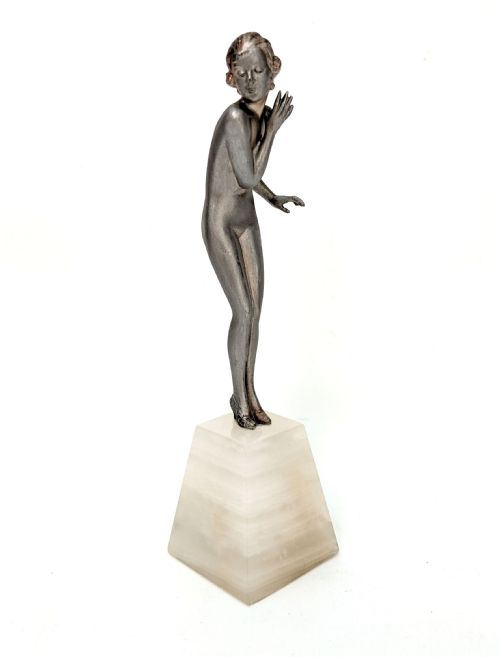

1930s Dancer Statuette
A 1930s dancer statuette captures the kinetic grace of Art Deco through cast metal figures mounted on heavy stone bases.
1930s Dancer Statuette
A 1930s dancer statuette is a figural sculpture depicting a female dancer, most frequently created during the Art Deco period of the early twentieth century. These small sculptures celebrate movement and modern femininity through expressive poses, balancing dynamically on distinct stone bases.
The versions most commonly met on this page are French Art Deco figures cast in spelter or bronze, fixed to bases made from marble, onyx or alabaster. Subjects range from named dancers and specific titled works to anonymous female figures and nudes caught mid-pose.
How they were made
These statuettes rely on metal casting techniques, utilising bronze, gilt bronze, silvered bronze or spelter to form the human figure. Spelter serves as a common, more affordable alternative to bronze, often finished with metallic patinas or paint.
The figures are secured to substantial natural stone plinths, combining materials such as veined marble, banded onyx or translucent alabaster to provide both structural weight and visual contrast.
1930s Dancer Statuette Retail Price Guide 2026
Typical asking prices for 1930s dancer statuette among the pieces listed under this phrase on Sellingantiques today, from the lower quarter to the upper quarter. They describe what is for sale here now, not the wider market.
Some trouser-wearing dancer figures capture a rebellious fashion shift that left traditional long skirts behind for good.
What varies in quality
Quality also resides in the selection and preparation of the mounting base. Dense, evenly polished marble or richly figured onyx enhances the composition, whereas inferior mountings lack the weight and mineral depth found in higher grade examples.
Josef Lorenzl·Rene Andre Varnier·Demetre Chiparus
The 1930s Dancer Statuette Glossary
- Spelter
- A zinc alloy commonly used as a base metal for decorative statuary. It provides a cheaper alternative to bronze and accepts various surface finishes.
- Onyx
- A banded variety of chalcedony quartz used frequently for sculptural bases. Its layered mineral structure creates distinctive natural patterns.
- Alabaster
- A fine-grained, translucent stone utilised for carved or polished mounting bases. It allows light to penetrate slightly beneath the surface.
- Patina
- The surface coloration or sheen developed naturally or applied chemically to bronze and metal sculptures. It defines the visual tone of the metal.
1930s Dancer Statuette: Frequently Asked Questions
Are these figures solid bronze?
Many statuettes are cast in spelter rather than bronze, as the former was widely used for decorative figures during the period. Spelter is a zinc-based metal that was often plated or patinated to resemble bronze.
Heavier examples utilise true bronze, sometimes with gilt or silvered surfaces. Inspecting the underside and the weight helps distinguish the metal type.
How should I clean the stone bases?
Stone bases made of marble, onyx or alabaster require gentle maintenance to preserve their polished surfaces. Use a soft, dry cloth to remove dust without abrasive cleaners.
Alabaster is particularly soft and porous, meaning moisture can damage the finish. Keep these bases away from damp environments and liquids.
What defines the Art Deco style?
Art Deco emerged in the early twentieth century, favouring streamlined forms, geometric precision and dynamic movement. Dancer statuettes embody this through stylised bodily proportions and energetic poses.
The aesthetic combines modern industrial materials with classical figurative subjects, reflecting the optimism of the interwar decades.
How do I display a statuette safely?
These pieces require a stable, level surface away from heavy foot traffic due to their combined metal and stone weight. Placing them on sturdy furniture prevents accidental tipping.
Keep statuettes out of direct sunlight to protect painted patinas and prevent thermal stress on natural stone plinths.