




1930s Onyx Base Figure
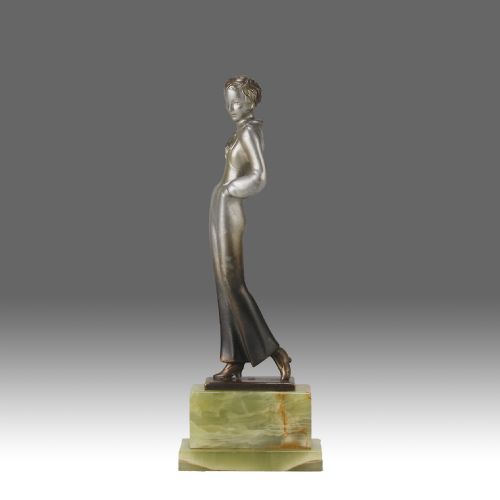
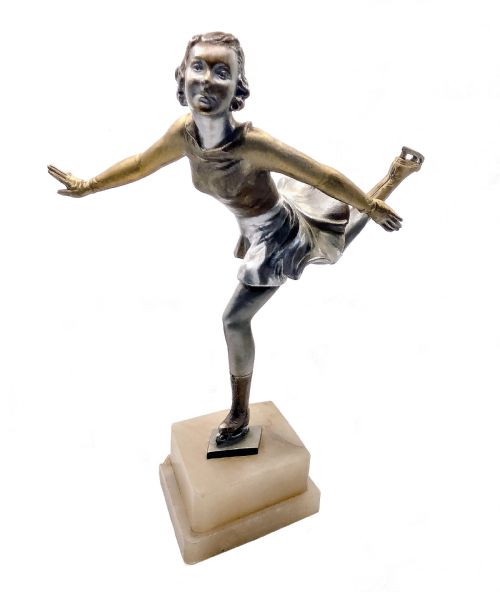
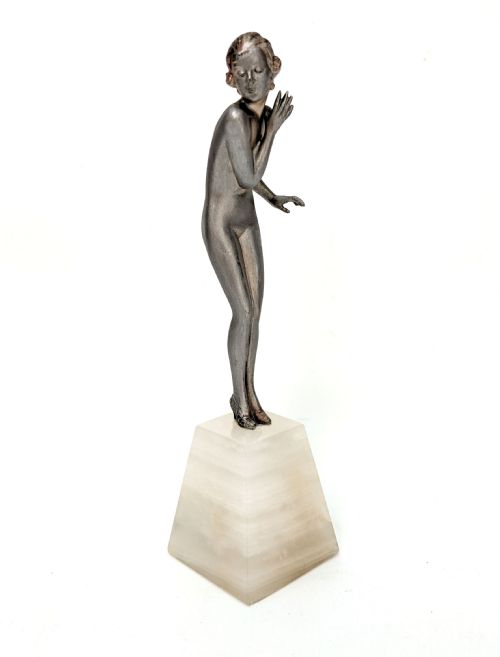
These 1930s onyx base figure works capture the unmistakable geometry and glamour of Art Deco design for the collector.
1930s Onyx Base Figure
A 1930s onyx base figure brings together cast metal sculpture and polished stone plinths in the distinctive Art Deco style. You meet these pieces mostly as female figures, dancers, and animal studies originating from the interwar period.
The objects take the form of table lighters, figurines, and statuettes designed to showcase human movement or wildlife. Each composition rests upon a heavy geometric slab of natural stone to anchor the vertical metal work.
How they were made
The stone bases are shaped into rectangular, stepped, or rounded slabs that complement the streamlined contours of the figures above. Artisans selected varied mineral veining in the stone to contrast with the metallic surfaces of the sculptures.
Listings demonstrate that these figures combine cast spelter or bronze with polished onyx and marble bases.
What varies in quality
The fidelity of the casting dictates the sharpness of detail in fingers, drapery, and facial expressions across different examples. Heavier metal alloys and finer chasing separate workshop productions from standard commercial castings.
The selection and preparation of the stone plinth influence the overall harmony of the piece. Uniform polishing and absence of natural fissures in the mineral base mark the upper tier of manufacture.
Josef Lorenzl·Demetre Chiparus·P. Sega·Geo Maxim
The 1930s Onyx Base Figure Glossary
- Spelter
- A zinc alloy commonly utilised as a less costly alternative to bronze for decorative statuary. It accepts patination and cold painting readily.
- Onyx
- A banded variety of chalcedony or calcite used extensively for decorative sculpture bases during the interwar years. Its translucent layers display natural mineral banding.
- Patination
- The surface coloration applied to metal through chemical means or ageing. It enhances the depth and contrast of sculptural details.
- Cold-painted
- A technique where paint is applied to metal objects without subsequent kiln firing. This finish requires careful preservation to prevent flaking.
1930s Onyx Base Figure: Frequently Asked Questions
How do I clean an onyx base?
Dust the stone regularly with a soft, dry cloth to prevent dirt accumulation in the natural pores. Avoid using water or chemical cleaners that might seep into unsealed edges.
Polish the polished surfaces gently with a dry microfiber cloth to maintain the natural lustre. Keep the stone away from moisture and direct heat sources.
What metals are used in these figures?
Makers utilised bronze, gilt bronze, and spelter for the sculptural elements mounted on the stone plinths. Spelter appears frequently as an economical zinc-based metal alloy.
Surfaces often received patinated finishes, cold paint, or metallic gilding to simulate more costly materials. These finishes highlight the intricate garments and hair styling typical of the period.
Are these figures strictly Art Deco?
The designs belong to the Art Deco movement of the 1920s and 1930s, characterised by stylised geometry and dynamic movement. The postures of dancers and animals reflect the modern aesthetic of the interwar decades.
While sharing a common design vocabulary, individual pieces range from naturalistic animal studies to highly stylised female figures. The combination of metal sculpture and heavy stone bases remains a unifying characteristic.
How is the figure fixed to the base?
Sculptures are typically attached to the stone plinth via a threaded rod or bolt passing through the base from underneath. This secures the heavy metal casting firmly to the stone support.
Checking beneath the base usually reveals the fastening nut holding the two distinct materials together. The weight of the stone provides stability for the upright figure.