



French Wall Pediment
These french antique wall pediment pieces bring architectural presence and classical proportion to a room.
French Wall Pediment
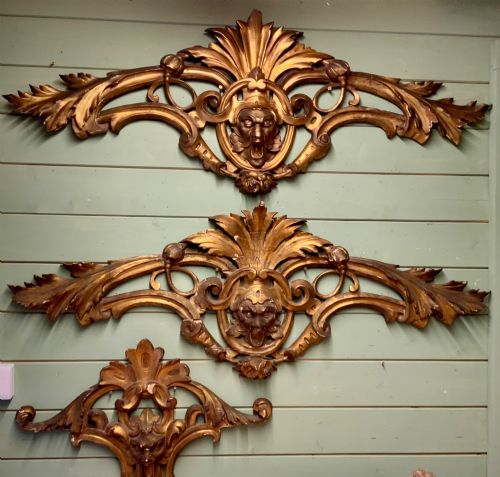
A french antique wall pediment typically manifests as carved architectural fragments, over doors, pelmets, and decorative crests originating from eighteenth and nineteenth century interiors. These elements carry the sculptural weight of French chateau, Empire, Louis XVI, and Rococo design traditions.
The most common forms encountered on this page include carved wooden panels, overmantel mirrors with decorative pediments, and architectural salvage designed to sit above doorways or fireplace mantels. They serve to draw the eye upward and anchor a wall scheme with period authenticity.
How they were made
Makers primarily worked in carved wood, applying gesso and gold leaf to create luminous surface finishes on giltwood and painted frames. Brass mounts and glass plates complete the construction of mirrored variants and architectural elements.
Hand carving remains the defining technique, evident in the detailed relief work of cherubs, foliate scrolls, and classical motifs. Giltwood surfaces often combine burnished and matt gold leaf applications over a prepared gesso ground.
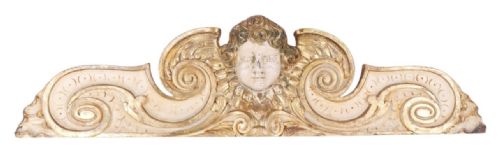
A chubby wooden cherub peers down from an eighteenth century carved over door, keeping watch over modern living rooms.
What varies in quality
The crispness and depth of the hand carving dictate the aesthetic success of each piece, distinguishing spirited artisan work from more mechanical production. High quality examples display undercut relief and naturalistic movement in scrolls and figures.
Surface preservation significantly alters the character of these items, from original patinated paint and intact gold leaf to heavy later interventions. The integrity of the underlying wood and the harmony of the proportion relative to scale separate superior pieces.
The French Wall Pediment Glossary
- Giltwood
- Wood carved and coated with gold leaf or metal leaf over a prepared base. This finish catches light and defines decorative architectural details.
- Pediment
- A triangular or segmental architectural cresting placed above doors, windows, or mirrors. It provides a formal termination to vertical compositions.
- Gesso
- A plaster mixture applied to wood surfaces as a smooth base for gilding or painting. It allows for sharp moulded or incised decorative details.
- Trumeau
- A decorative wall panel or mirror set into wood wall panelling, often featuring a painted or carved scene above the glass. It originates in classical French interior architecture.
- Pelmet
- A framework placed above a window or doorway to conceal curtain fixtures. In French antiques, these are frequently carved timber with gilt or painted finishes.
French Wall Pediment: Frequently Asked Questions
How do I hang a heavy wall pediment?
Heavy carved wooden pediments require secure attachment directly into wall studs or proper masonry fixings using heavy duty brackets.
Weight distribution matters greatly, so ensure the hanging wire or integrated fixing points bear the load evenly across the structure.
Where should I place an architectural pediment?
These pieces work effectively mounted directly above interior doorways, flanking fireplaces, or hung as standalone wall reliefs.
Placing them at a height that mimics their original architectural context helps maintain a natural sense of scale in a room.
How do I distinguish eighteenth and nineteenth century pieces?
Eighteenth century examples typically show deeper, more organic hand carving and earlier joinery methods. Nineteenth century pieces often revive specific historic styles like Louis XVI or Empire with slightly different tool marks.
Examination of the timber backing and the composition of the gesso layer helps clarify the precise period of manufacture.
Should I clean original giltwood finishes?
Dust giltwood surfaces gently with a soft, dry brush to avoid disturbing fragile gold leaf layers. Moisture and modern cleaning chemicals damage historic gesso and gilding.
Professional conservation is recommended if deeper cleaning is required to stabilise flaking material.