


French Academic Figure Study
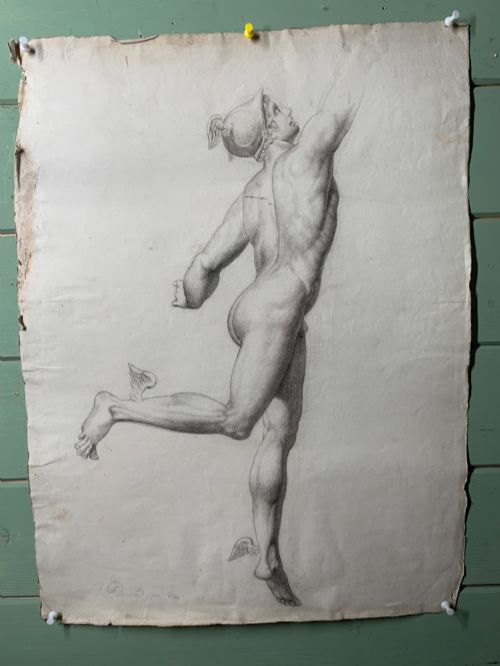
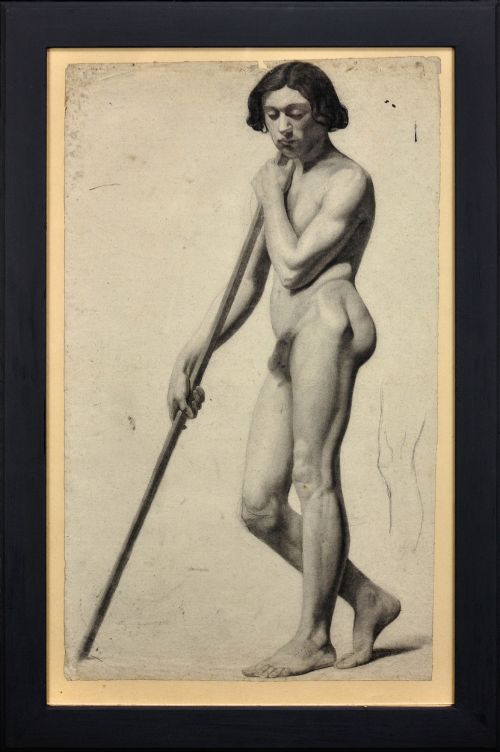
A french academic figure study captures the rigorous draughtsmanship and sculptural anatomy taught in nineteenth-century ateliers.

French Academic Figure Study
A french academic figure study comprises works produced within the traditions of nineteenth-century artistic training, focusing heavily on human anatomy and proportion. Buyers searching this phrase encounter drawings, prints, and sculptures that reflect rigorous academy standards.
The selections available here range from detailed graphite and chalk renderings on toned paper to bronze sculptures of male and female nudes. Pieces span several decades, including works from the Georgian era through to the Edwardian period.
Framed drawings and prints dominate the graphic offerings, often depicting specific academic subjects such as male figures carrying staves or throwing arrows. Alongside these works on paper, patinated bronze figures provide three-dimensional expressions of the same anatomical discipline.
Materials and methods
Artists relied primarily on paper supports, frequently utilising toned paper to enhance highlights rendered in white chalk. Graphite and charcoal provided the foundational lines and tonal gradations necessary for modelling three-dimensional form.
Sculptural works were cast in bronze, often receiving a dark patination to accentuate the musculature and contours of the human figure. These statues and statuettes required traditional lost-wax casting techniques mastered in French foundries.
Some pieces utilise canvas and oil paint, though works on paper predominate the graphic portion of this genre. Framing materials typically include wood to protect delicate charcoal, graphite, and chalk surfaces.
Periods represented in the evidence stretch from the Georgian era through the nineteenth century to the Edwardian period.
Factors of quality
The distinction between ordinary exercises and superior examples lies in the precision of anatomical rendering and the sensitivity of line work. Masterly control of tone and shadow separates accomplished atelier productions from lesser student copies.
In sculptural pieces, the sharpness of the cast and the depth of the patination dictate the visual impact of the work. Finer bronzes retain crisp details in the musculature and facial expressions without losing the fluidity of the original model.
Condition and preservation of the paper support heavily influence the standing of graphic works. Intact framing, minimal foxing, and stable charcoal or chalk layers represent the higher tiers of surviving examples.
Henry Arthur Roberts·Pierre-Paul Prud'hon·Jean Jules Salmson·Marcel Debut·Cecil CP Lawson
The French Academic Figure Study Glossary
- Academic Realism
- A style of painting and sculpture produced under the influence of European academies of art. It combines neoclassical idealism with realistic observation.
- Toned paper
- Paper that has a base colour other than white or off-white, typically grey, tan, or blue. Artists use it to build up highlights and shadows efficiently.
- Patinated bronze
- Bronze that has been chemically treated to alter its surface colour and texture. This finish protects the metal and defines sculptural contours.
- Grand Prix de Rome
- A prestigious French scholarship for art students, providing winners with residency in Rome. Submissions often involved rigorous figure drawings and compositions.
- Graphite
- A crystalline form of carbon used for drawing. It yields crisp grey lines and can be smudged for shading.
French Academic Figure Study: Frequently Asked Questions
What is an academic figure study?
An academic figure study is a drawing, painting, or sculpture created to master the depiction of the human body. These works served as foundational training for artists within official European art institutions.
Subjects usually include nude or draped male and female figures posed to demonstrate anatomical understanding and lighting effects.
How were these drawings produced?
Artists worked with mediums such as graphite, charcoal, and chalk on paper supports. Toned paper was frequently utilised to allow for rapid highlighting alongside deep shading.
Many surviving pieces are framed drawings or period prints documenting submission pieces for academy competitions.
What materials are common in these sculptures?
Sculptural studies in this category are typically cast in bronze. These figures often feature a patinated finish to enhance visual depth.
Foundries used traditional casting methods to capture fine anatomical details in subjects ranging from classical figures to historical portraits.
How do I date an academic study?
Dating relies on stylistic markers, framing, and recorded artist lifespans noted in individual listings. The evidence spans the nineteenth century, including Georgian and Edwardian periods.
Inscribed signatures, dates, or publication details on prints also assist in establishing the approximate decade of creation.