




Freestanding Tilting Mirror
A freestanding tilting mirror stands on its own frame, offering a full-length reflection that pivots to suit any room.
Freestanding Tilting Mirror
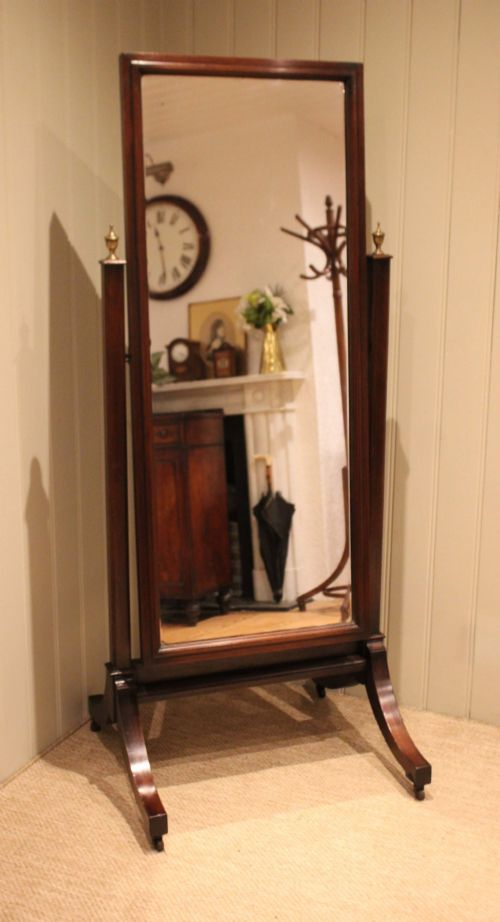
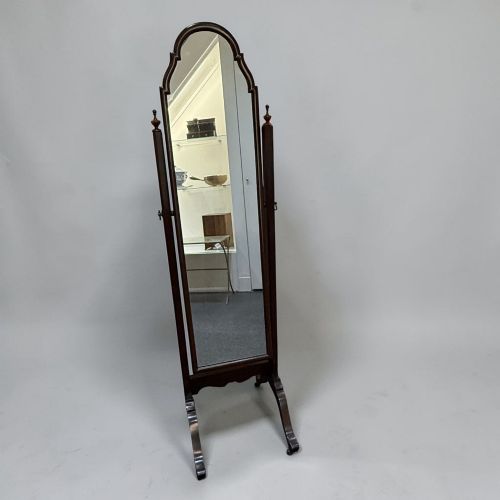
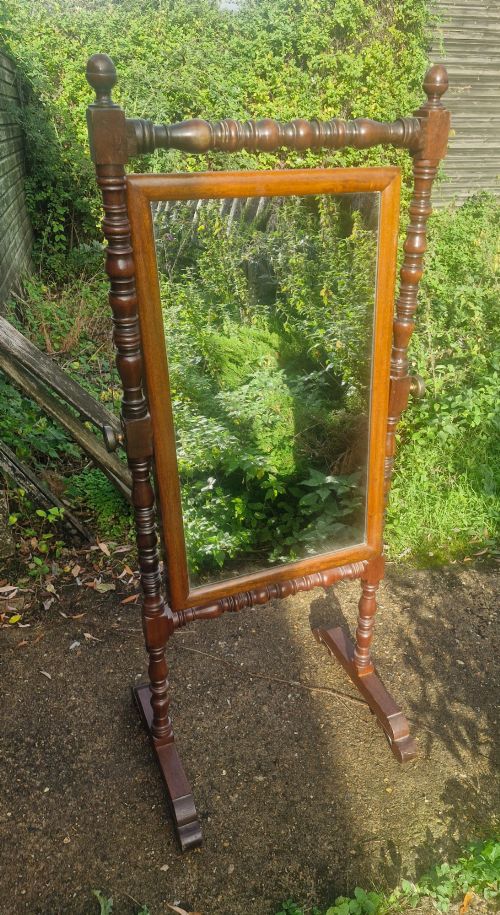
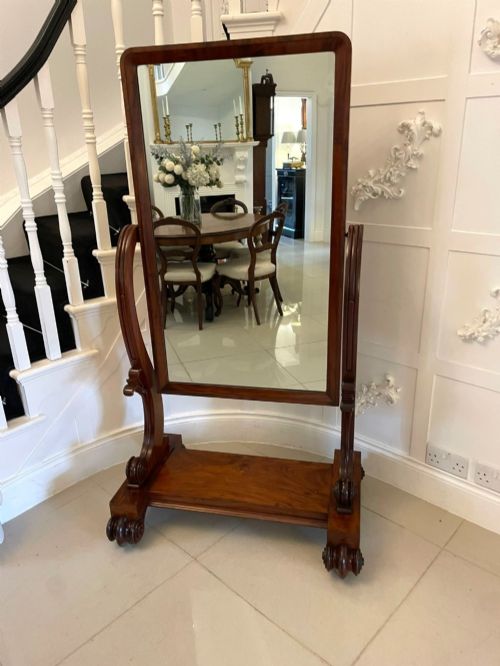
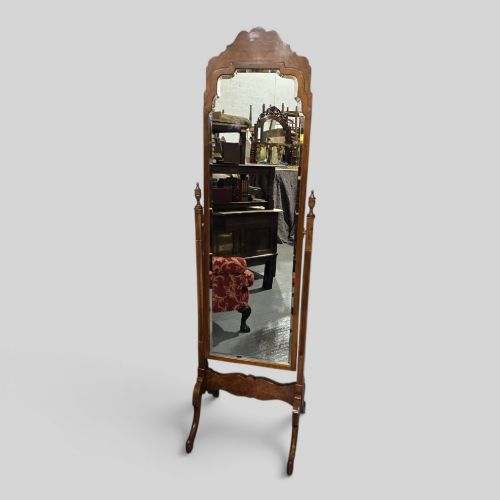
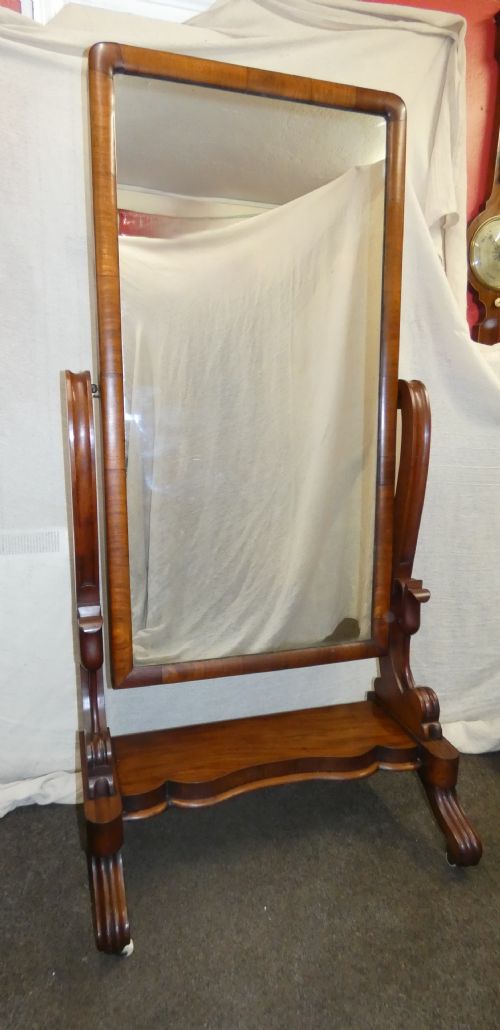
A freestanding tilting mirror offers a practical and adjustable view, designed to stand independently on the floor or a table rather than hanging on a wall. When searching for a freestanding tilting mirror, buyers commonly encounter tall cheval mirrors and smaller dressing table or vanity versions.
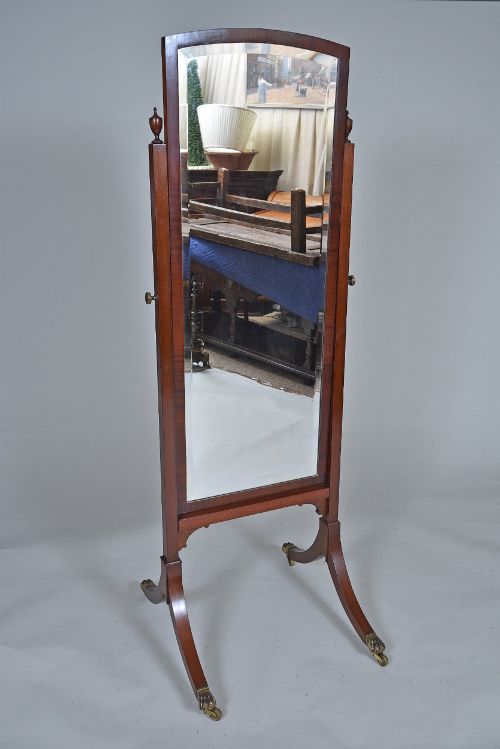
The selection ranges from early nineteenth century Regency examples to Edwardian and Art Deco pieces, with the Victorian era heavily represented. Floor-standing cheval mirrors dominate the selection, usually supported by upright frames and swinging glass panels.
Woods such as mahogany and walnut appear most frequently across these centuries, alongside occasional uses of pitch pine and satinwood. These pieces served traditionally in bedrooms and dressing rooms to check entire outfits from head to toe.
How they were made
Cabinet makers built these frames primarily from solid and veneered timbers, selecting mahogany and walnut for their strength and rich grain patterns. Flame mahogany and burr walnut veneers added decorative movement to the larger upright supports and base pedestals.
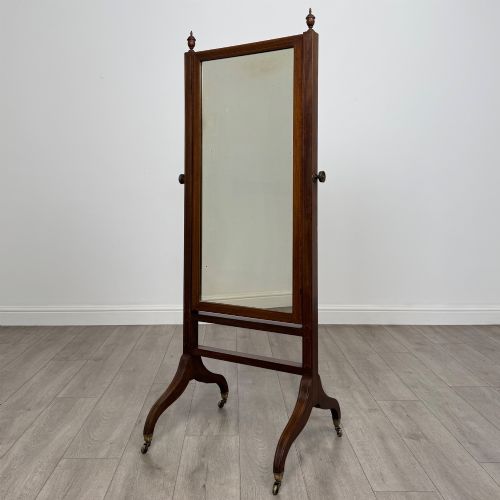
Metal fittings such as brass castors, sabots, and pivoting screw mechanisms allowed the heavy glass frames to tilt smoothly without tipping. Silvered mirror glass was set within wooden rebates and secured safely behind the frame mouldings.
Freestanding Tilting Mirror Retail Price Guide 2026
Typical asking prices for freestanding tilting mirror among the pieces listed under this phrase on Sellingantiques today, from the lower quarter to the upper quarter. They describe what is for sale here now, not the wider market.
Mahogany and walnut remain the predominant timbers used across all listed swinging mirror styles.
What varies in quality
The refinement of the timber and the subtlety of the frame mouldings set superior examples apart from standard production pieces. Finely figured wood veneers and well-proportioned upright supports show the hand of a skilled workshop rather than standard factory output.
The integrity of the pivoting mechanism and the presence of original brass hardware contribute significantly to the character of the piece. Substantial floor-standing frames require robust joinery at the base to maintain stability when the glass is tilted.
Whytock and Reid
The Freestanding Tilting Mirror Glossary
- Cheval mirror
- A large floor-standing swing mirror mounted on a vertical frame with four legs. The word derives from the French for horse, reflecting the four-legged support structure.
- Sabot
- A metal shoe fitted to the foot of a furniture leg for decoration and protection. Brass sabots frequently appear on Regency and William IV mirror stands.
- Flame mahogany
- A distinct wood grain pattern resembling flickering flames, achieved by cutting timber from the fork of the branch. Cabinet makers prized this figure for prominent display surfaces.
- Castor
- A small wheel attached to the base of furniture to allow easy movement. Many floor-standing mirrors incorporate brass castors to let the heavy frame roll smoothly across carpets or wooden floors.
Freestanding Tilting Mirror: Frequently Asked Questions
How do I use a freestanding tilting mirror?
Place the mirror on a level floor or sturdy piece of furniture where the frame has adequate clearance to swing fully. Adjust the side knobs gently to set the glass at the desired angle for your reflection.
Ensure the floor surface is even so the base stays stable when the glass tilts forward or backward.
Where should I place a cheval mirror?
These tall mirrors work best in bedrooms, dressing areas, or spacious hallways where you need a full-length view. Position the piece near a natural light source to brighten the room and maximise the reflection.
Keep the mirror clear of heavy foot traffic to prevent accidental bumps against the pivoting frame.
How do I identify a Regency tilting mirror?
Regency pieces often display classical proportions, sabre legs, and decorative brass mounts such as paw feet or round rosettes. The woodwork typically relies on dark mahogany with clean architectural lines.
Check the construction methods and hardware behind the frame to confirm the period characteristics match the early nineteenth century.
Can I put a dressing table mirror on a desk?
Smaller table-top versions sit comfortably on wide desks, chests of drawers, or vanity units to provide a closer reflection. Measure the surface depth carefully to ensure the feet of the mirror stand fully supported.
Table-top models offer the same tilting action as larger cheval designs but on a scale suited for seated use.