

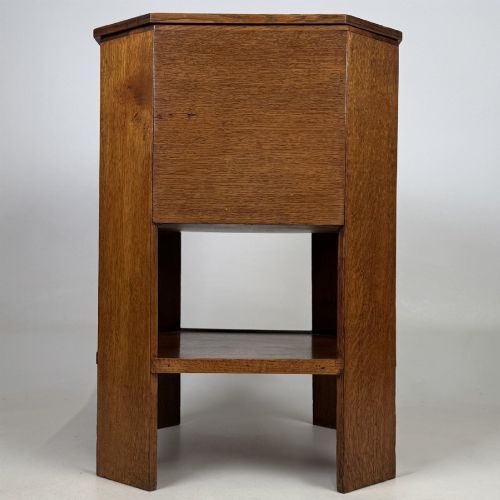
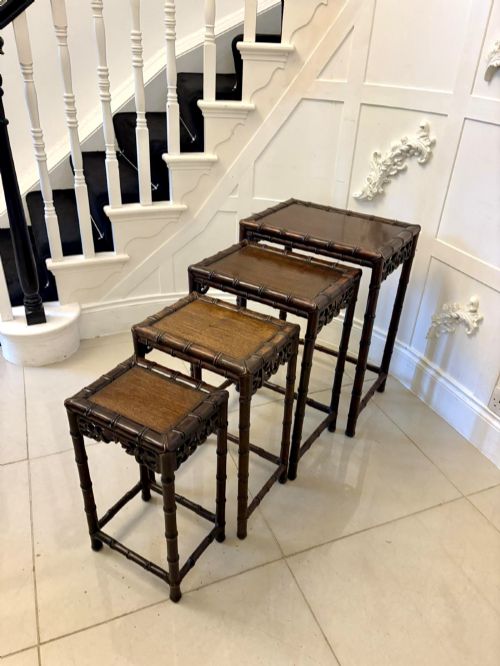
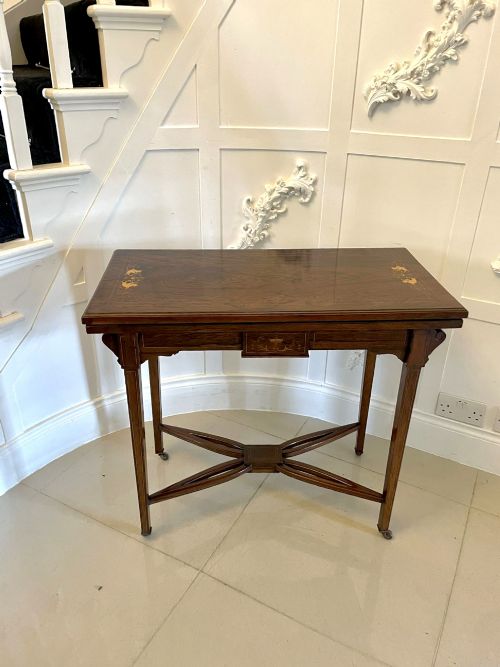
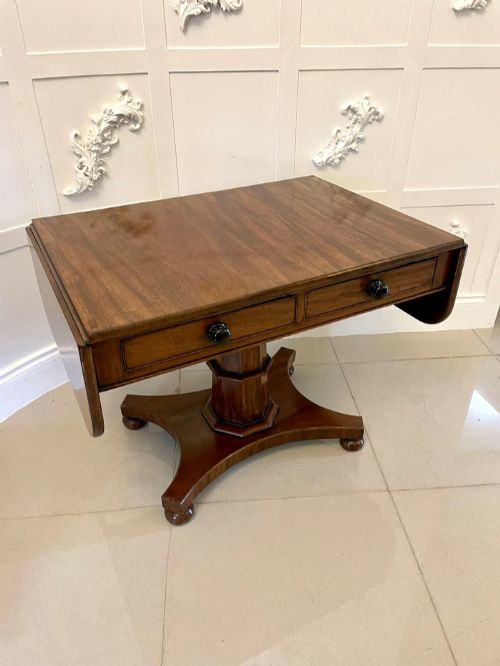
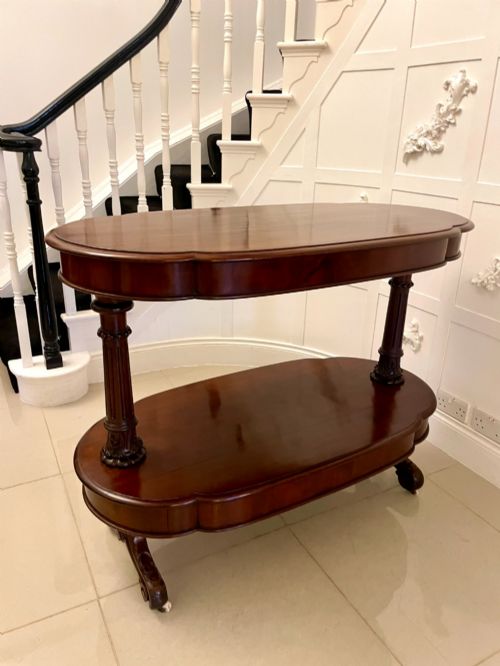
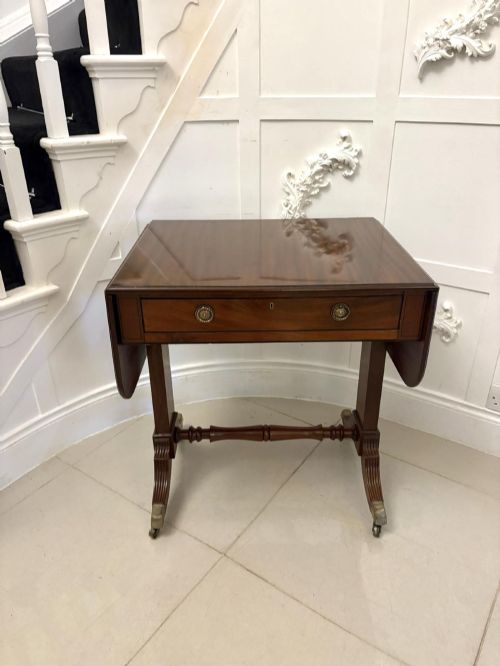
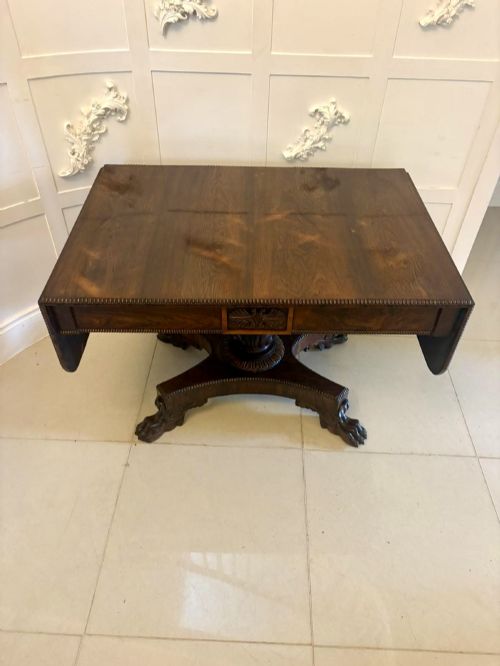
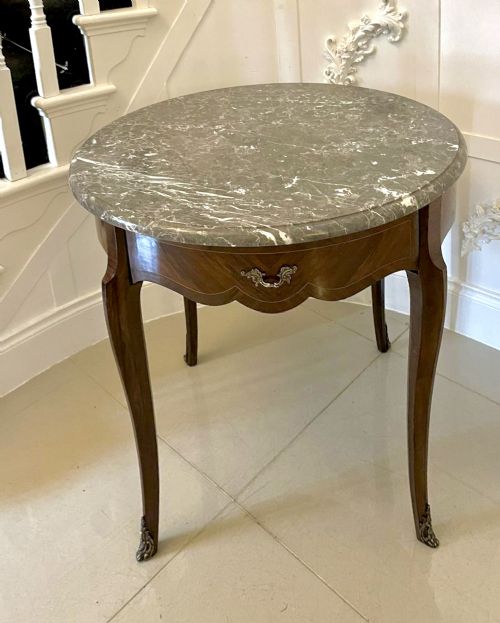
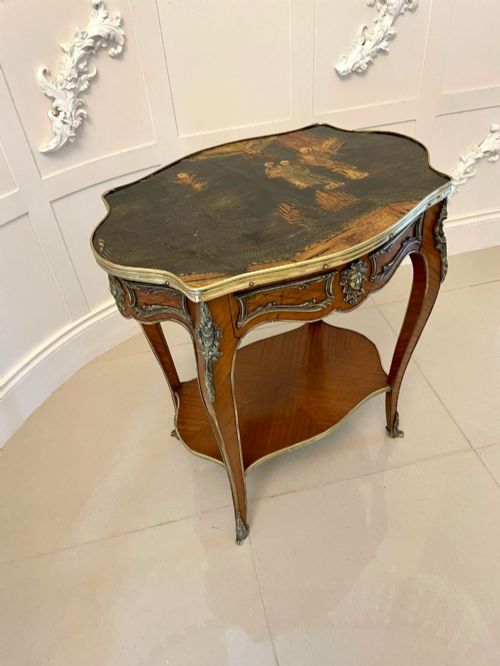
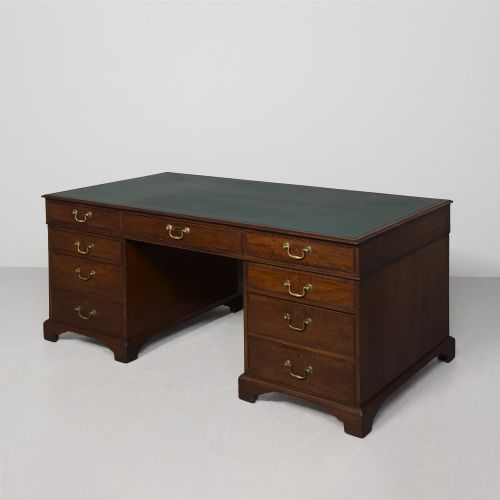
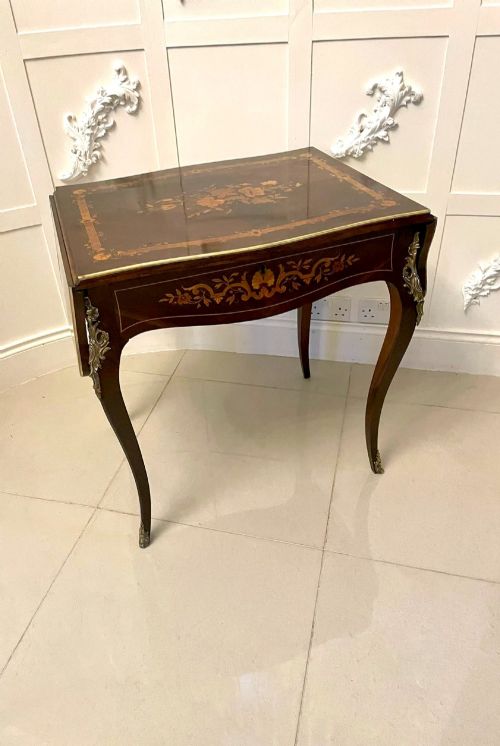
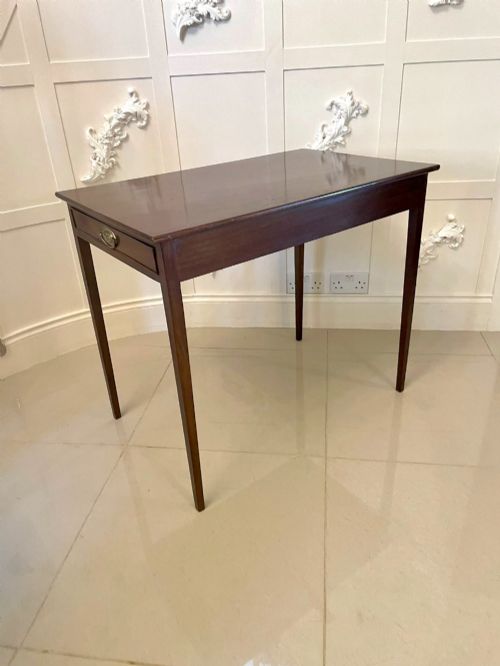
Freestanding Side Table
A freestanding side table offers placement away from the wall, finished on all sides for the middle of a room.
How They Were Made
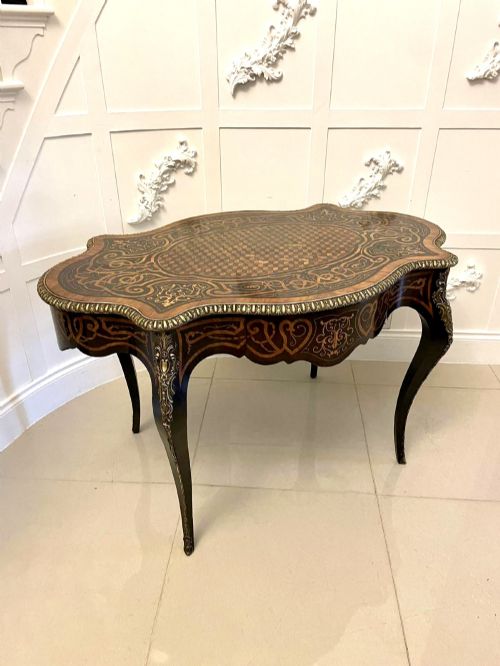
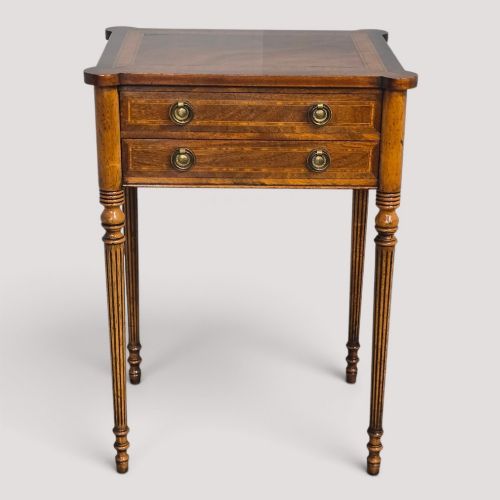
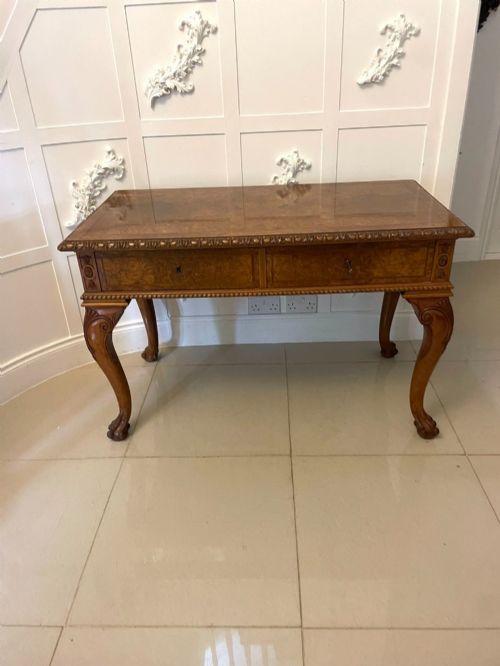
Cabinetmakers utilised dense timbers such as mahogany, rosewood, and walnut, often selecting figured veneers and burrs for visual depth on top surfaces. Marquetry and parquetry patterns add geometric or floral detail to French and English tables alike.
Structural embellishment relied on brass inlays, carved details, and cast ormolu mounts applied to legs and apron rails. Turning and carving shape the uprights and pedestals, supporting marble tops on select continental pieces.
What Varies in Quality
The refinement of the timber selection dictates the character of a piece, from plain straight-grained mahogany to richly figured burr walnut and kingwood veneers. Superior examples display careful matching of grain patterns across the top and sides.
Execution of secondary details, including the crispness of brass inlays, hand-carved foliage, and the weight of ormolu mounts, separates standard production from exceptional craftsmanship. Construction methods such as dovetailed drawers and sophisticated folding mechanisms reveal the maker's intent.
Freestanding Side Table Retail Price Guide 2026
Typical asking prices for freestanding side table among the pieces listed under this phrase on Sellingantiques today, from the lower quarter to the upper quarter. They describe what is for sale here now, not the wider market.
Mahogany, rosewood, burr walnut, and kingwood are the primary timbers recorded across these nineteenth and early twentieth century listings.
The Freestanding Side Table Glossary
- Ormolu
- Gilt bronze mounts applied to furniture, frequently seen on French-influenced Victorian tables. It adds decorative contrast to dark woods like kingwood and rosewood.
- Marquetry
- Inlay work using various woods to create pictorial or floral designs on table tops. It requires precise cutting and fitting of veneer fragments.
- Sofa table
- An oblong occasional table originally designed to stand beside a sofa, typically featuring drop leaves and twin pillar supports. They frequently incorporate drawers.
- Parquetry
- Geometric patterns formed by small pieces of wood veneer fitted together. This technique often decorates the tops of French centre and side tables.
- Freestanding
- Finished on all sides so the piece can be viewed from any angle in open space. This construction requires polish and detail on the back as well as the front.
Freestanding Side Table: Frequently Asked Questions
Where should I place a freestanding side table?
These pieces suit placement in the middle of a room, behind a sofa, or beside a chair where all sides remain visible.
Because the backs are finished to the same standard as the fronts, they do not need to anchor against a wall.
How do I distinguish a centre table from a side table?
Centre tables generally feature a circular, octagonal, or square top designed to be viewed equally from all directions in an open space.
Side tables tend to be rectangular and are traditionally positioned closer to seating areas or walls while remaining fully finished.
What woods are most common in these tables?
Mahogany and rosewood appear frequently in Georgian and Regency examples, offering strong grain and rich natural colouration.
Victorian and Edwardian pieces often utilise burr walnut, kingwood, and exotic hardwoods, sometimes enhanced with marquetry and brass.
Did these tables serve specific functions originally?
Many designs fulfilled specific household roles, such as holding lamps, displaying plants, serving drinks, or providing a surface for sewing and card games.
Sophisticated examples included hinged flaps or mechanisms to adapt their shape and utility.