
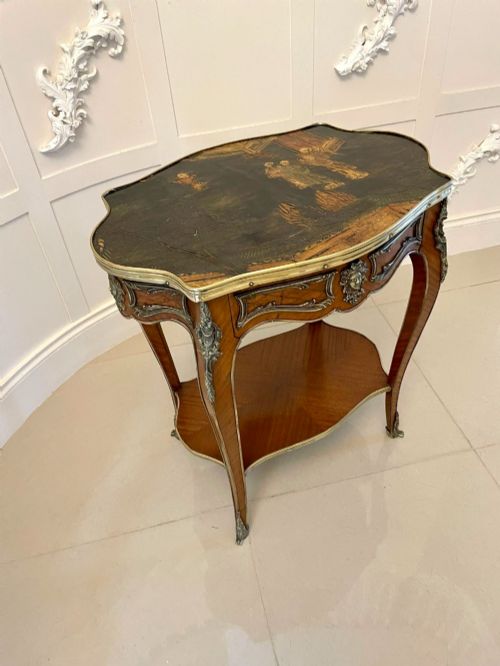
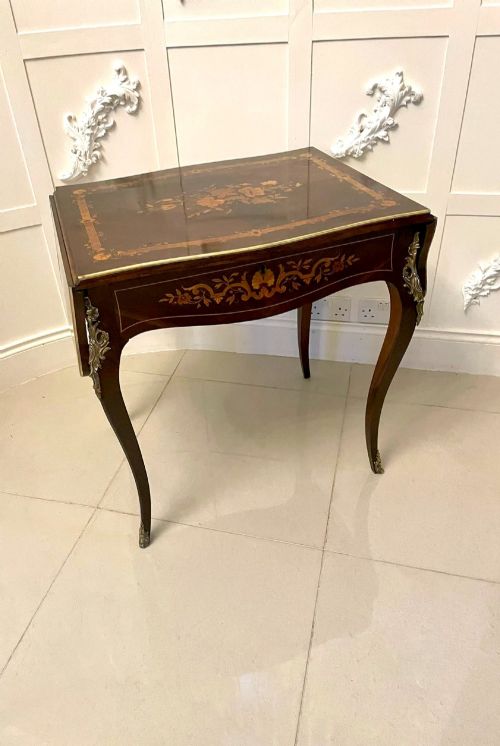
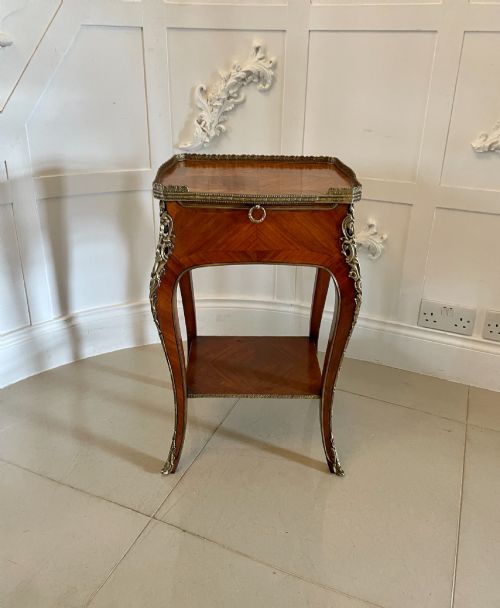
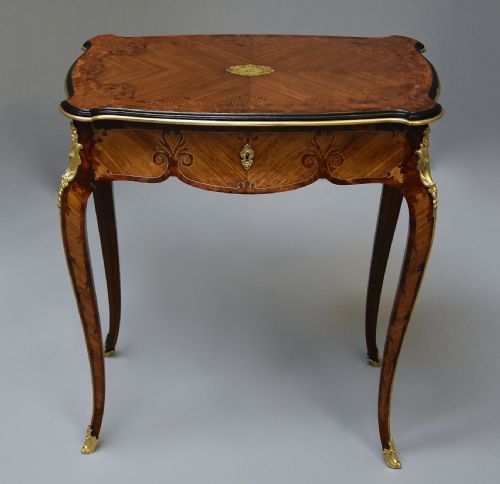
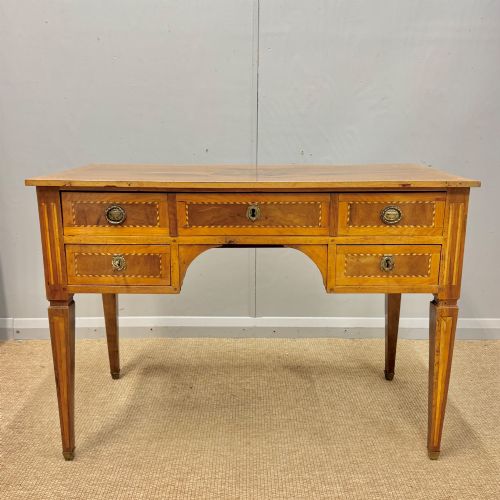
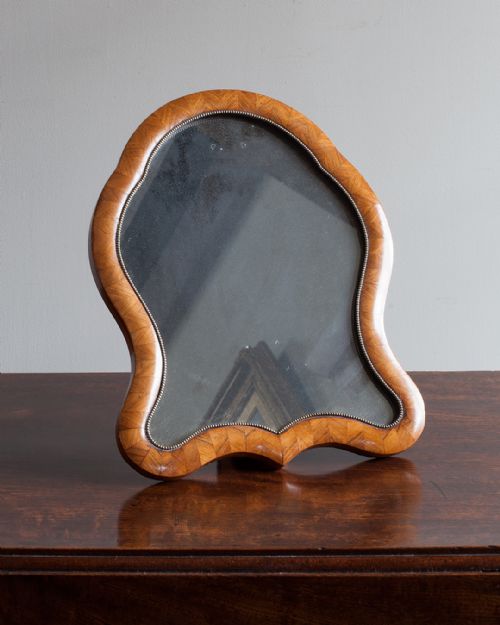
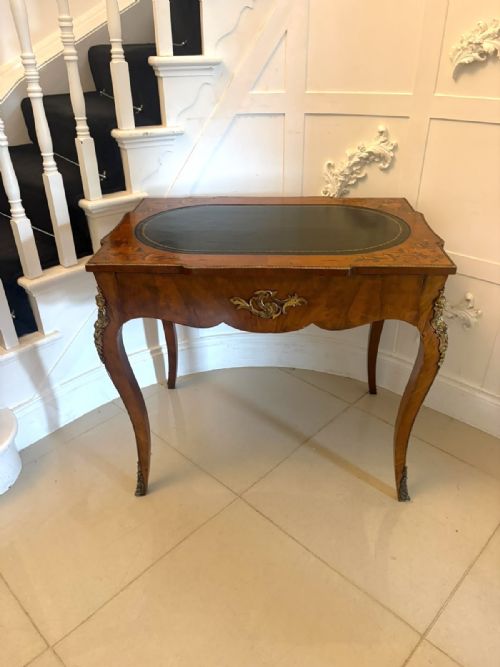


Freestanding Marquetry Table
A freestanding marquetry table is an investment in patterned timber designed to be viewed from every angle in a room.
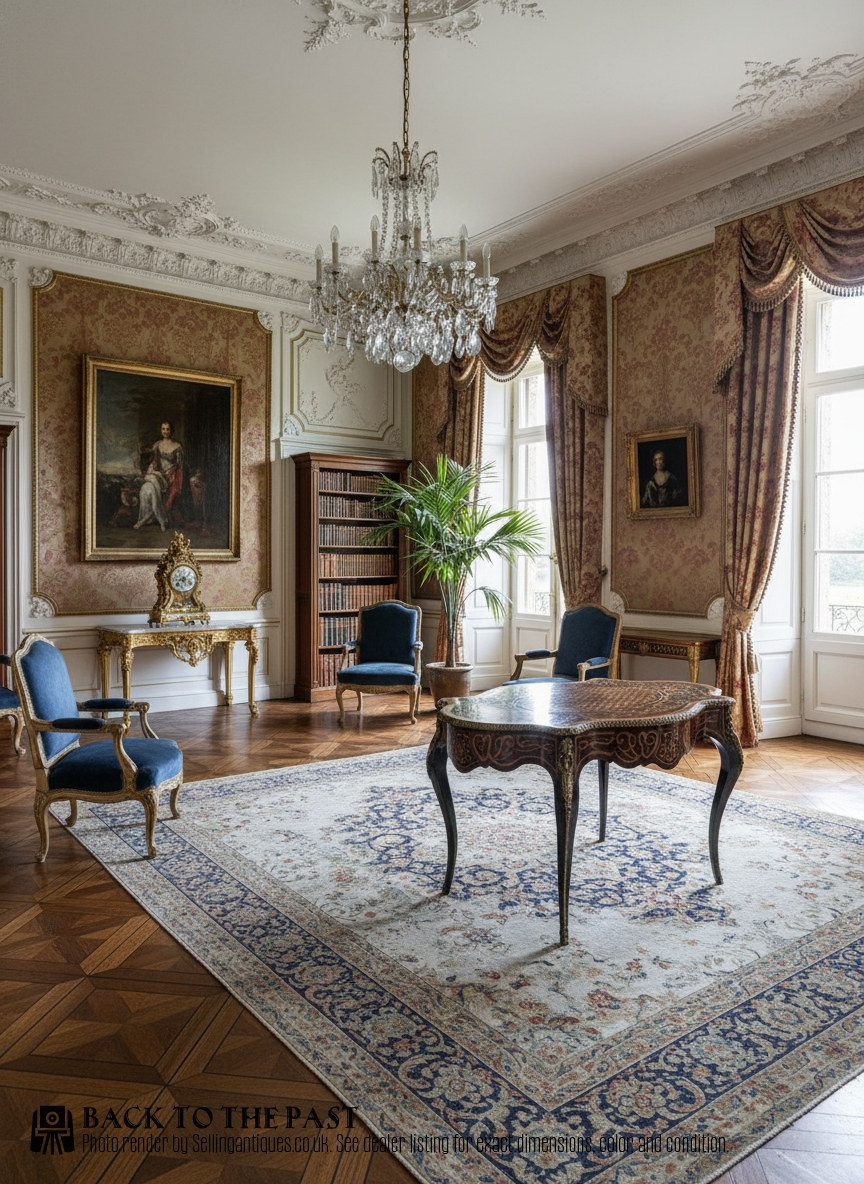
Freestanding Marquetry Table
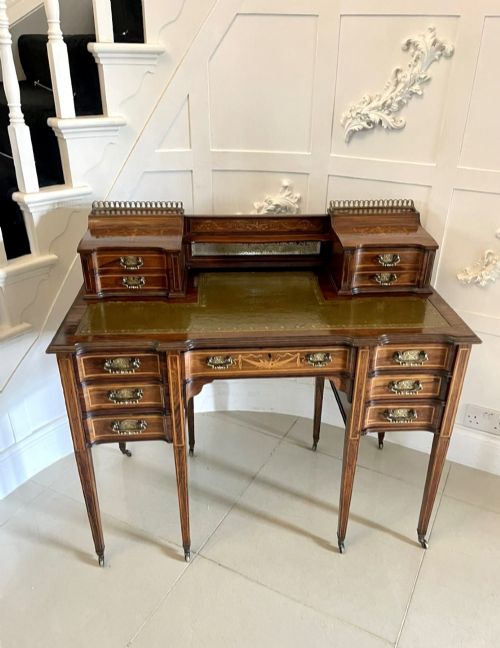
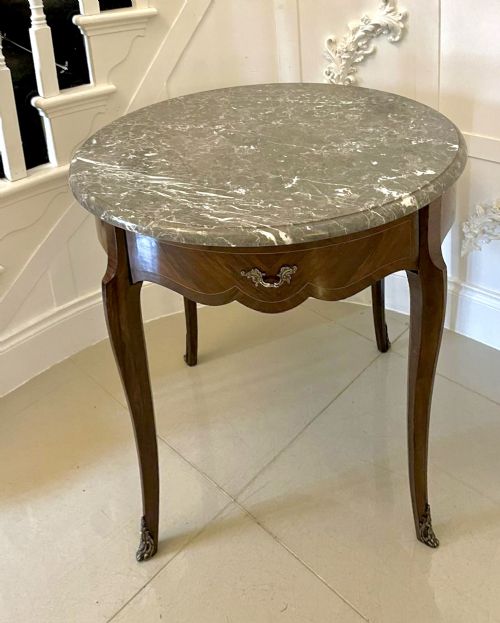
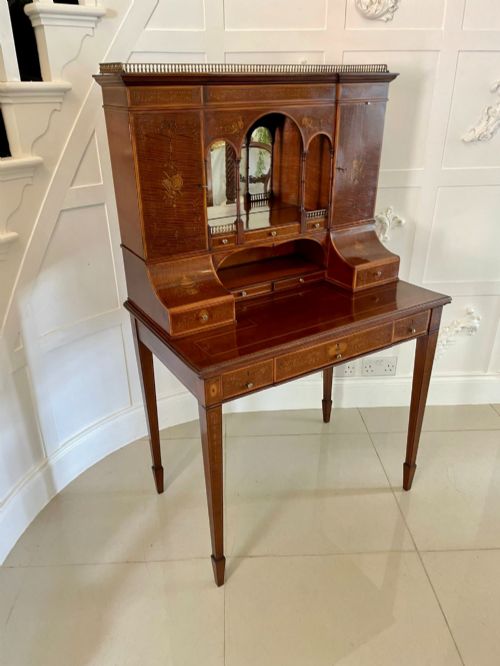
A freestanding marquetry table sits comfortably away from the wall, finished on all sides so that the decorated top and sides remain visible within the room. Buyers seeking a freestanding marquetry table frequently encounter Victorian and nineteenth-century French centre tables, writing desks, and lamp tables.
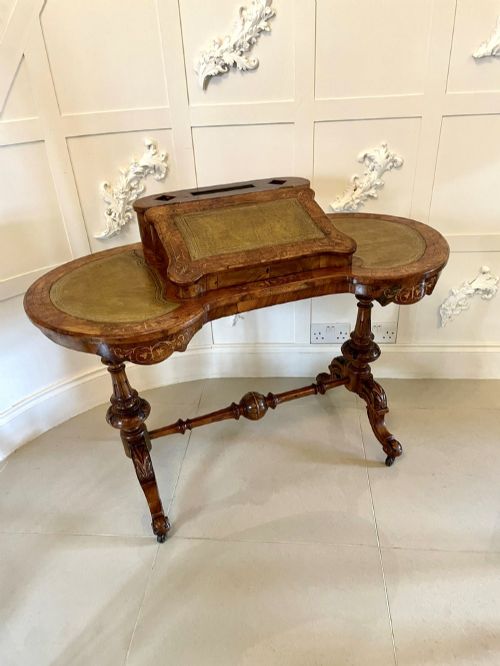
The assortment on this page draws heavily from Victorian revivals of French styles, alongside genuine nineteenth-century French pieces. Forms range from kidney-shaped writing desks and bureau plat designs to occasional and card tables featuring detailed wood patterns.
How they were made
Craftsmen built these tables using a solid carcase of walnut, mahogany, or maple, then applied fine veneers of kingwood, rosewood, burr walnut, and satinwood to the surfaces. Individual pieces of contrasting timber were cut and fitted by hand to form intricate floral or geometric marquetry patterns.
Makers integrated structural bronze and brass mounts, often cast as ormolu, to protect and embellish the edges and legs. Some examples incorporate mechanical elements, such as sophisticated mechanisms for writing surfaces or drawers.
Listings feature items dated from the eighteenth century through to the Edwardian period, constructed in walnut, kingwood, rosewood, and satinwood.
What varies in quality
The distinction between standard and exceptional pieces rests upon the precision of the veneer work and the depth of the timber figuring. Dense burr walnut, figured walnut, and carefully matched parquetry indicate a higher grade of workshop production.
Metalwork provides another measure of standard, where heavy, finely chased ormolu mounts elevate a table above those with simple brass edging. The complexity of the table's function, from kidney-shaped writing surfaces to sophisticated mechanisms, separates basic side tables from masterworks.
Maple and Co
The Freestanding Marquetry Table Glossary
- Marquetry
- Decorative veneer work forming pictures or patterns by assembling tiny pieces of various coloured woods. This technique defines the visual appeal of the top surface.
- Parquetry
- Geometric wood inlay arranged in regular patterns such as cubes or chequers. It often frames the more elaborate floral marquetry scenes.
- Ormolu
- Gilt bronze mounts applied to furniture edges and corners for ornamentation and protection. The quality of the casting dictates its refinement.
- Kingwood
- A dense, heavy Brazilian timber with dark violet-brown streaks favoured by cabinetmakers. It provides strong contrast in period veneered surfaces.
- Boulle
- Marquetry technique incorporating tortoiseshell and brass inlay developed in France. It appears on specific nineteenth-century jardiniere tables.
Freestanding Marquetry Table: Frequently Asked Questions
Where should I place a freestanding marquetry table?
These pieces are finished on all sides, making them ideal for the centre of a room where the patterned top and polished timber can be appreciated from any angle.
Positioning them away from walls also protects the delicate marquetry and ormolu mounts from accidental knocks and direct sunlight.
How do I care for the veneered surfaces?
Keep the timber away from direct heat sources and strong sunlight to prevent the veneers from drying out or lifting over time. Gentle dusting with a dry cloth maintains the polish without harming the delicate inlaid details.
Avoid using modern silicone sprays or harsh chemical polishes on antique French polish or wax finishes.
What is the difference between a centre table and a side table?
A centre table is finished identically on all four sides so it stands independently in open space. Side tables may occasionally feature simpler treatment on the rear edge intended to face a wall.
Many nineteenth-century examples combine the function of a writing desk or lamp table with this finished four-sided presentation.
How do I distinguish between Victorian and French pieces?
Victorian interpretations often utilise burr walnut or mahogany with Sheraton revival motifs, reflecting English cabinetmaking trends of the nineteenth century. French pieces from the same era lean towards Louis XV and Rococo revivals utilising kingwood, rosewood, and elaborate ormolu mounts.
Both traditions rely on meticulous hand-cut veneers, but the timber choices and curve profiles generally point to their origin.