

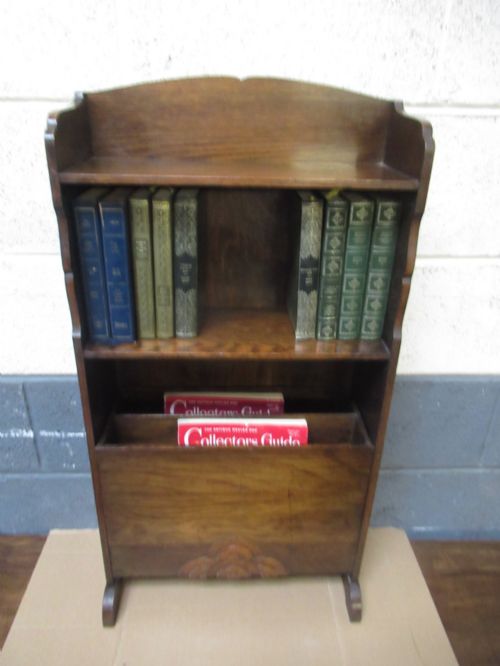
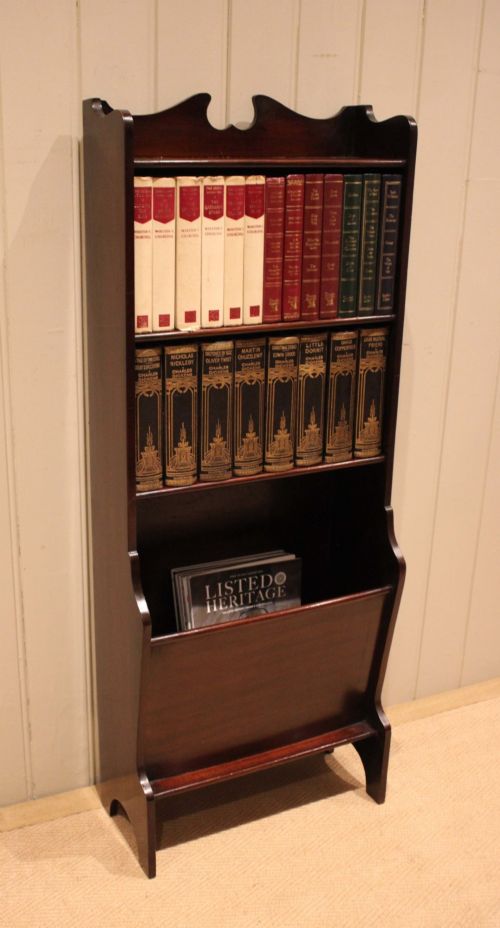
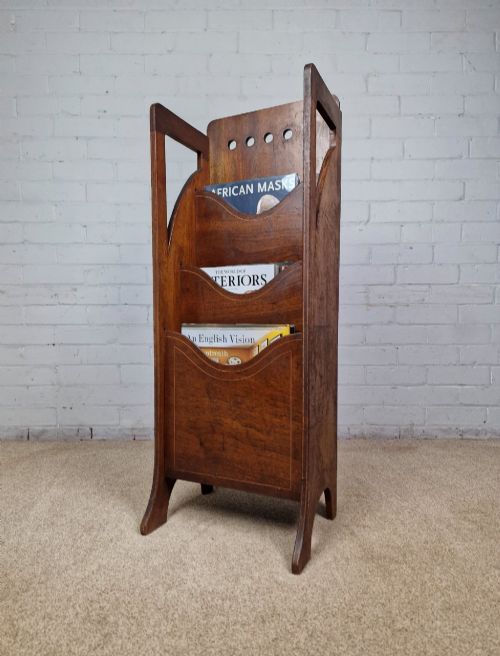
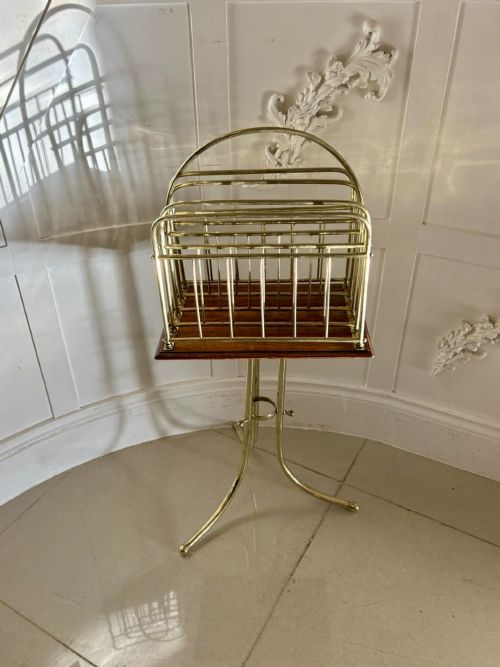
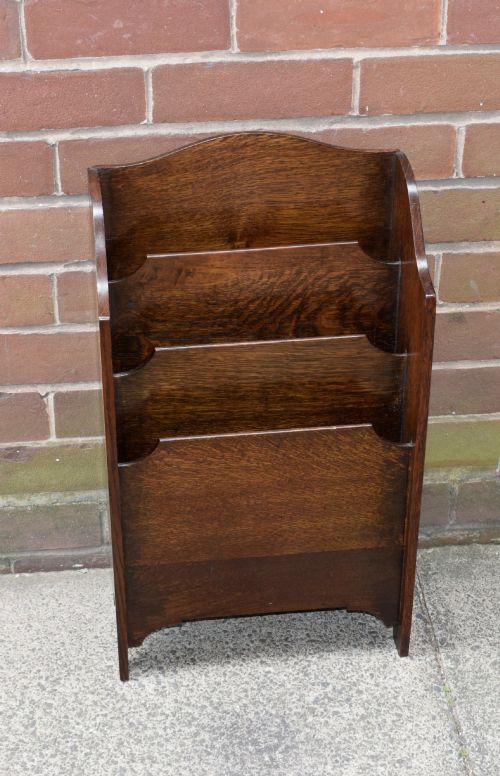
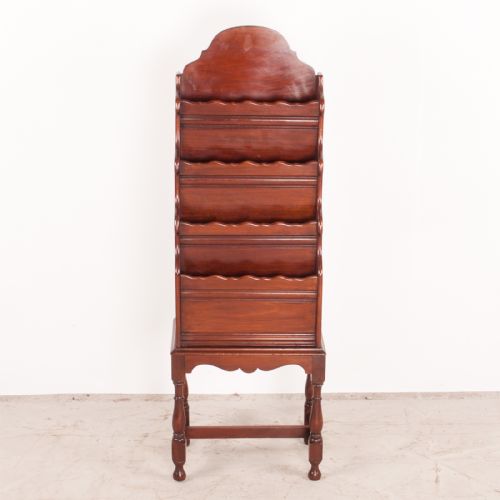


Freestanding Magazine Holder
These freestanding magazine holder pieces bring ordered storage to a room, offering sturdy timber and polished metal in forms that span the Georgian period to the twentieth century.
Freestanding Magazine Holder
A freestanding magazine holder encompasses a range of practical home accessories, including traditional canterburys, revolving stands, bookstands, and dedicated racks designed to keep periodicals tidy. The examples seen here cross several eras, stretching from nineteenth century Victorian pieces back to George III designs and forward into the Edwardian years and the 1920s.
Buyers are most likely to encounter oak, mahogany, and brass constructions on this page, often built as compact floor-standing units. Forms vary from tiered oak bookstands and bamboo canterburys to tubular brass and mahogany music or magazine stands.
How they were made
Construction relies heavily on traditional cabinet timbers like mahogany, oak, rosewood, and walnut, frequently paired with metal components in copper and brass. Makers utilised bamboo and rattan in distinct Victorian designs, introducing lighter organic textures alongside heavy hardwoods.
Joinery methods range from inlaid mahogany bookstands to riveted tubular brass frames, demonstrating both cabinetmaking skill and metalworking techniques. Revolving mechanisms appear on brass and oak stands, adding functional movement to stationary wooden bases.
Freestanding Magazine Holder Retail Price Guide 2026
Typical asking prices for freestanding magazine holder among the pieces listed under this phrase on Sellingantiques today, from the lower quarter to the upper quarter. They describe what is for sale here now, not the wider market.
Early twentieth century readers trusted their periodicals to spinning brass stands that squeaked gently with every rotation.
What varies in quality
Quality rests on the selection of timber and metal, where dense grains in mahogany and rosewood or heavy gauge brass elevate the construction. Finer pieces demonstrate thoughtful details such as inlaid woodwork, drawers incorporated into canterburys, and robust rotating mechanisms.
The distinction between standard utility items and superior examples lies in the integrity of the joints and the finish of the materials. Pieces featuring combined functions, such as bookcases with integrated racks or adjustable stands, show greater ambition in design.
The Freestanding Magazine Holder Glossary
- Canterbury
- A low, freestanding stand with partitioned sections, originally intended for sheet music or books and frequently adapted for periodicals.
- Revolving magazine stand
- A rotating floor-standing unit that allows easy access to multiple sides of stored literature.
- Inlay
- A decorative technique where contrasting strips or pieces of wood are embedded into the primary surface of a furniture piece.
- Tiered rack
- A storage structure built with multiple vertical levels to hold books or magazines in a stepped arrangement.
Freestanding Magazine Holder: Frequently Asked Questions
What is a canterbury?
A canterbury is a partitioned wooden stand designed to hold sheet music, books, or magazines off the floor. These pieces often feature carrying handles and small legs.
Originating in the eighteenth century, the form evolved through the Victorian period into multi-sectioned holders used in sitting rooms.
How do I date a magazine stand?
Dating relies on identifying the prevailing style, timber choices, and construction methods of the period. Victorian pieces frequently utilise bamboo, rattan, or heavy brass, while Edwardian examples often feature inlaid mahogany.
Twentieth century pieces from the 1920s tend toward simpler oak frameworks and neat, tiered profiles without elaborate ornamentation.
Where should I place a revolving stand?
Revolving stands work best beside a reading chair or in the corner of a room where the rotating mechanism can be accessed from all sides. Their compact footprint allows them to sit comfortably without dominating the floor space.
Ensure there is enough clearance around the base for the upper tier to turn freely.
Are brass and mahogany stands sturdy?
Tubular brass and solid mahogany frames provide robust support for heavy books and periodicals. The weight of the metal combined with dense hardwoods ensures the stands remain stable during daily use.
Revolving models are balanced to prevent tipping when loaded unevenly on one side.