
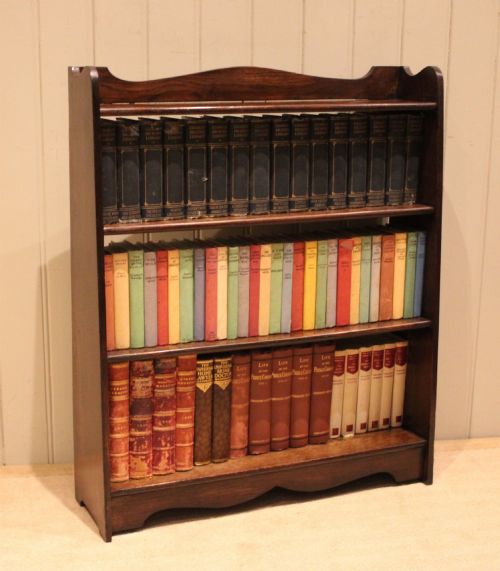
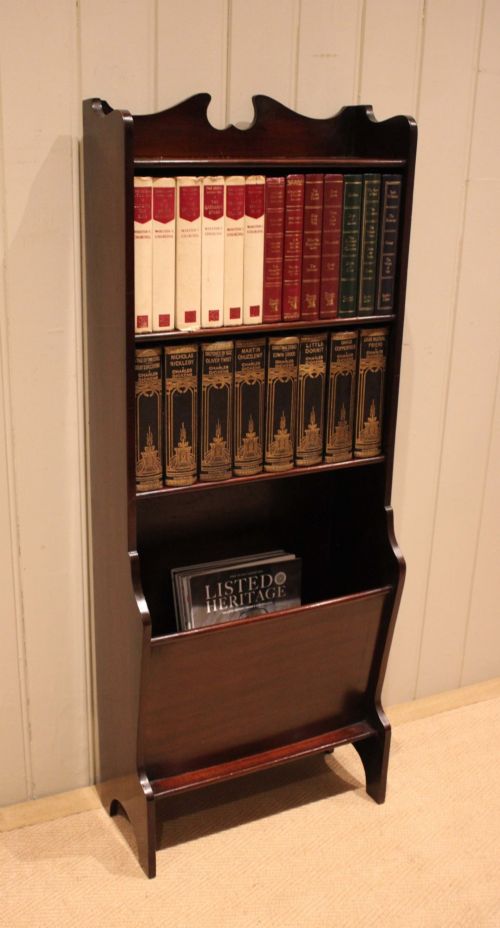
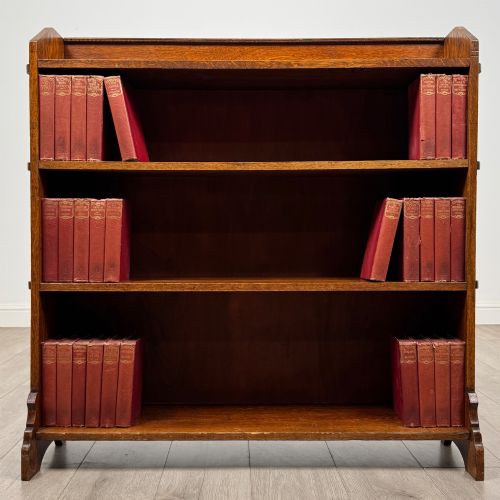
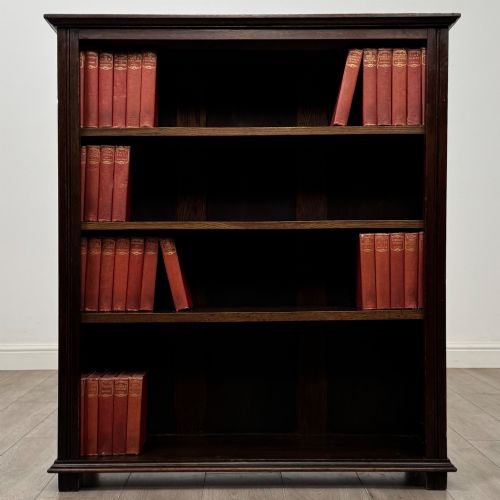
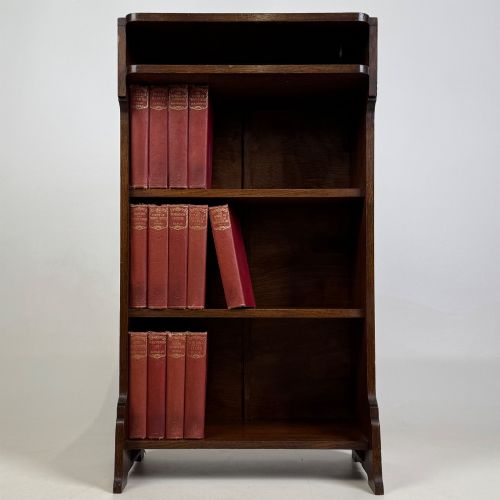
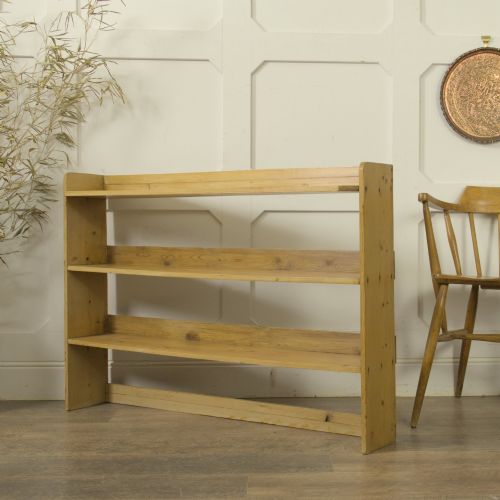
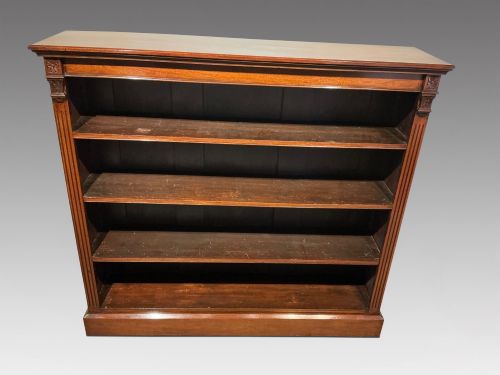
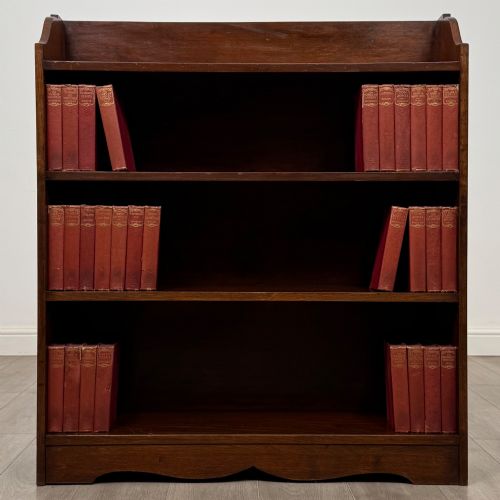


Freestanding Low Bookcase
A freestanding low bookcase gives you accessible shelving that sits below eye level, keeping rooms feeling open while keeping volumes within reach.
Freestanding Low Bookcase
A freestanding low bookcase offers accessible shelving that sits below eye level, keeping rooms feeling open while keeping volumes within reach. When you search for a freestanding low bookcase, you are looking at items designed to stand away from the wall or in open room layouts without dominating the vertical space.
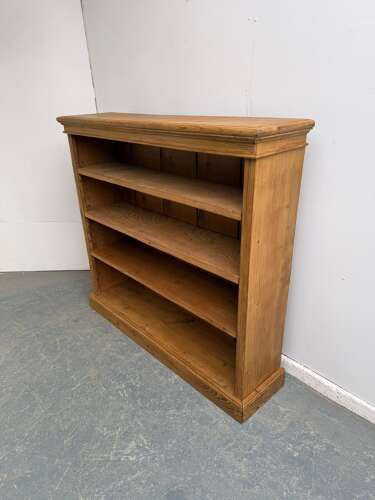
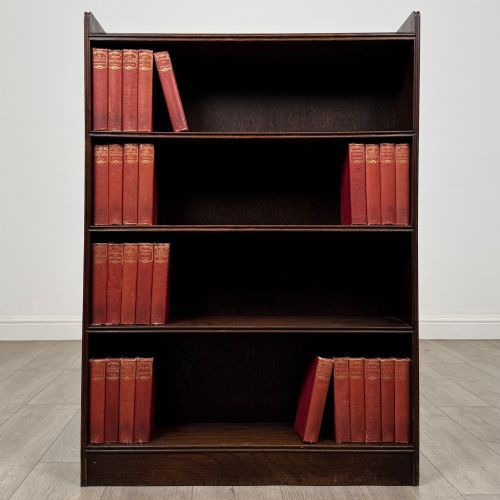
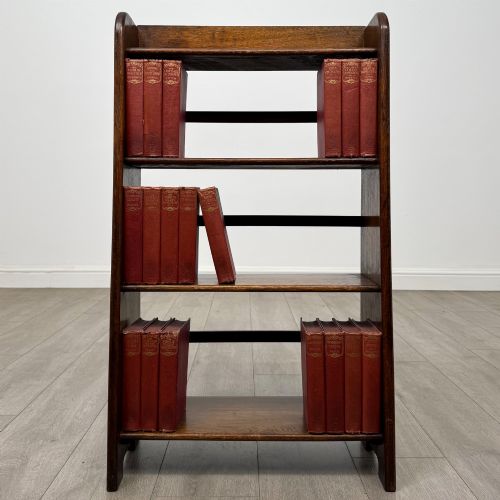
The pieces on this page span the 19th Century, Victorian, Edwardian, and 1920 periods. You will most frequently meet Edwardian and 19th Century examples constructed from oak and mahogany, often featuring open shelves or adjustable configurations.
How they were made
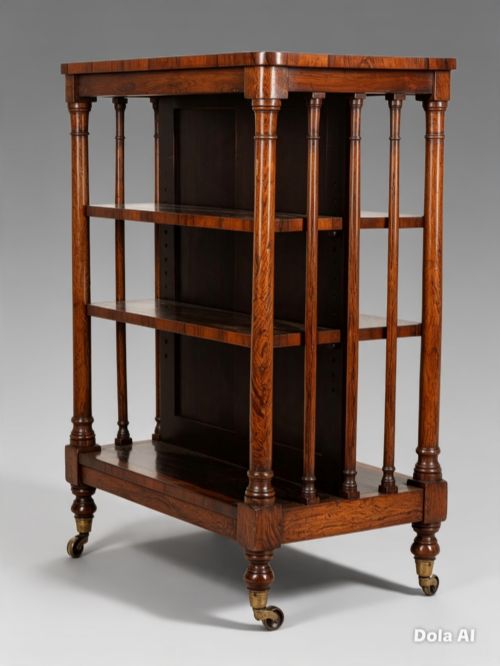
Cabinet makers utilised solid timbers alongside veneers, building carcasses in oak, mahogany, walnut, rosewood, and pine. Surfaces received waxed, polished, or beaded finishes, sometimes accented with brass fittings and glass elements.
Construction techniques included adjustable shelf mechanisms and open-backed designs, alongside waterfall tiers and double-sided configurations intended to be viewed from multiple angles in a room.
Some small mahogany variants include built-in magazine racks, proving that Victorian readers also liked to keep their periodicals close to hand.
What varies in quality
Quality separates through the selection of timber figures, such as flame mahogany or burr walnut, against plain utility woods. Finer pieces display crisp edge moulding, such as beaded detailing, and robust adjustable shelf mechanisms that operate smoothly.
The integration of design styles, from simple rustic country forms to architectural references like Gothic or Regency proportions, marks the distinction between standard workshop production and superior cabinet making.
The Freestanding Low Bookcase Glossary
- Waterfall
- A stepped shelving design where each lower tier extends further forward than the one above it.
- Open bookcase
- A piece of furniture designed for book storage with open shelves and no doors enclosing the front.
- Double sided
- Finished on both the front and the back so the piece can stand in the middle of a room.
- Flame mahogany
- A wood veneer cut from the fork of the mahogany tree to create a distinctive flickering flame pattern.
- Beaded edge
- A narrow rounded moulding carved along the border of a shelf or frame.
Freestanding Low Bookcase: Frequently Asked Questions
Where should I place a low bookcase?
These pieces sit comfortably beneath windows or along partition walls where taller furniture would block light or views. Their low profile helps maintain an open sense of space in sitting rooms and studies.
Because many examples are finished on all sides or feature open shelving, they work well positioned away from walls to divide larger rooms or house bedside reading.
How do I adjust the shelves?
Many period examples use traditional timber peg supports or slotted uprights inside the interior walls. You simply lift the shelf slightly to clear the supports and reposition the pegs into alternative slots.
Care should be taken with older wood to align the shelf evenly so the weight rests securely on all four supports without twisting the frame.
Are these bookcases sturdy enough for heavy books?
Solid hardwood carcasses in oak and mahogany provide robust support for dense volumes and reference books. Thicker timber shelves resist bowing over time under heavy loads.
Pine and lighter veneer shelves suit lighter paperbacks and decorative displays better, though solid construction ensures everyday durability across the eras represented.
How do I distinguish Edwardian from Victorian pieces?
Victorian pieces often display heavier proportions, darker finishes, and ornamental details like Gothic tracery or rich rosewood and walnut timbers. They lean towards formal architectural statements.
Edwardian examples tend to feature lighter golden oak, simpler rectilinear lines, and practical adjustments geared towards domestic comfort and brighter room aesthetics.