

Freestanding Leather Desk
A freestanding leather desk gives a room presence, finished on every side so it sits proudly in the middle of the floor.
Freestanding Leather Desk
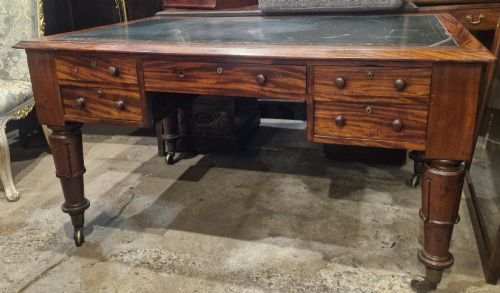
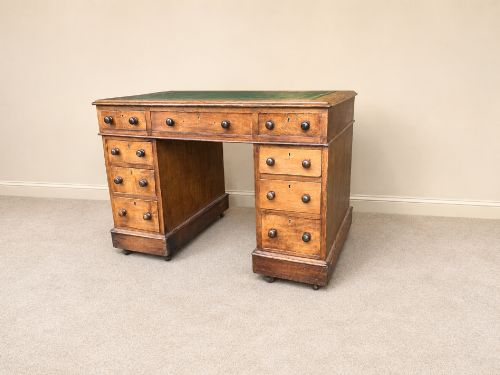
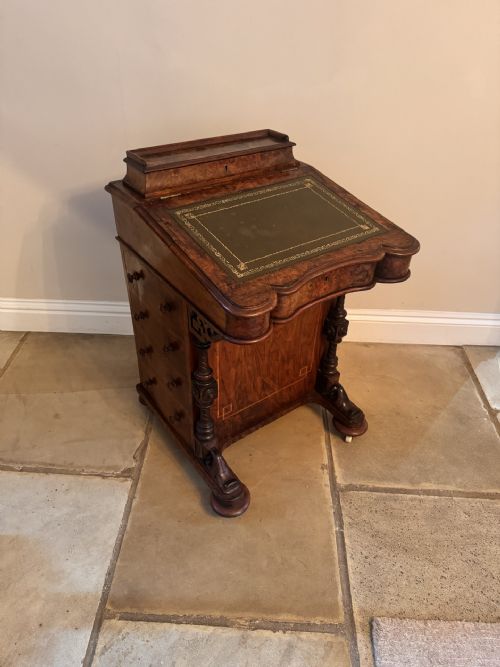
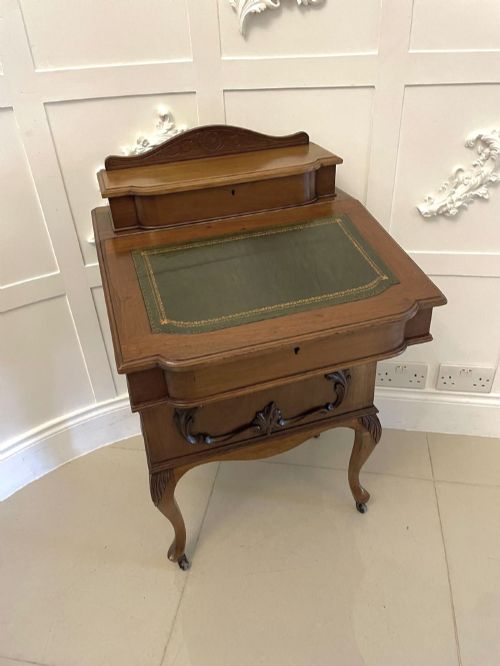
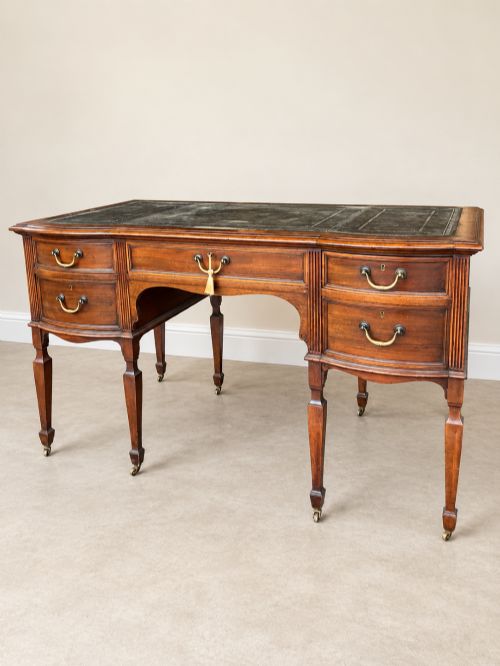
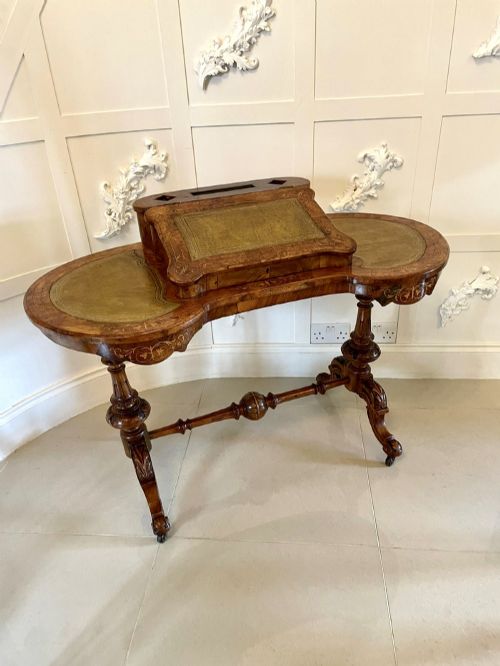
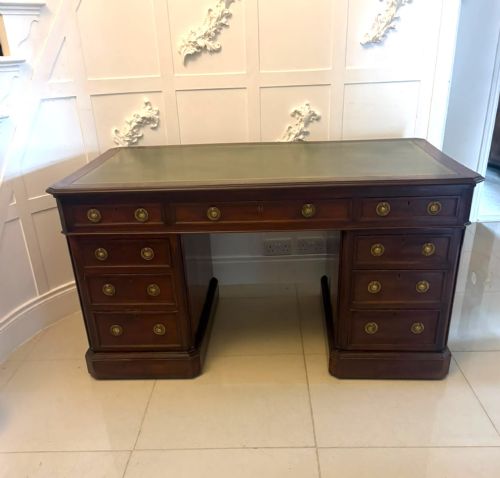
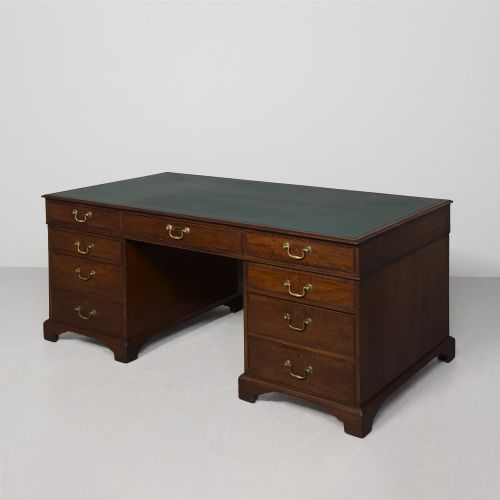
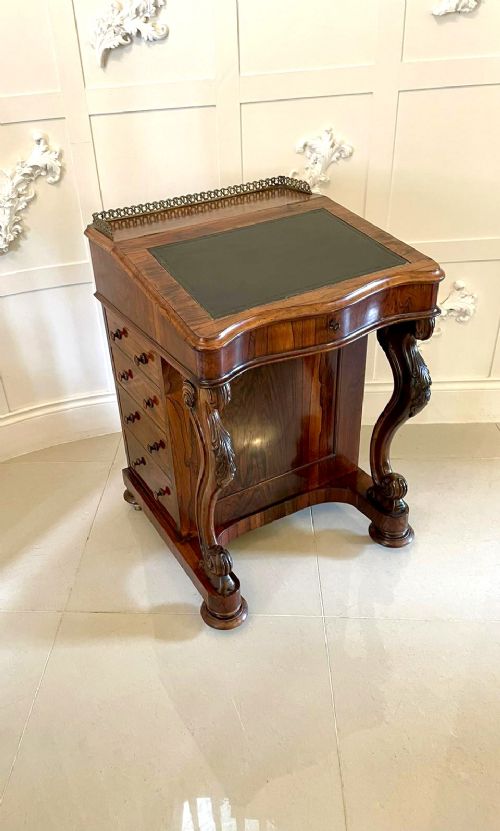
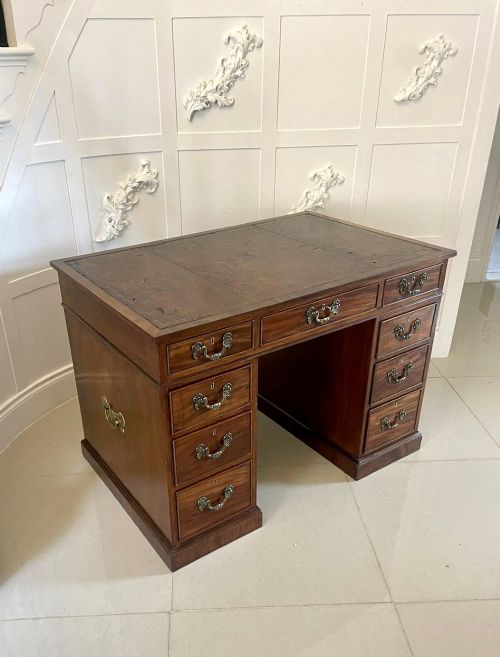
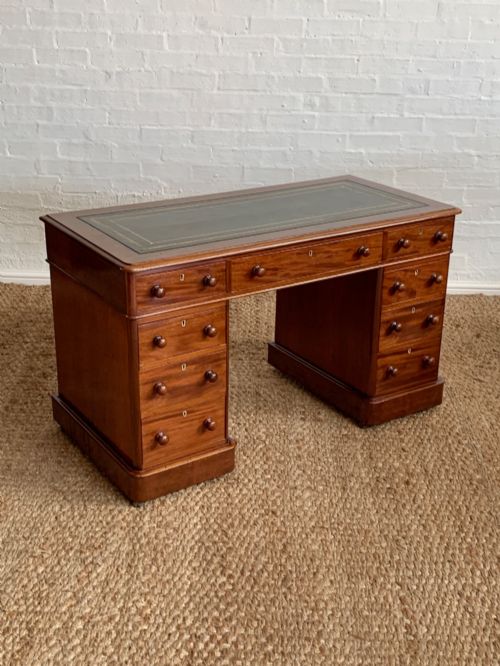
A freestanding leather desk is designed to be viewed from all angles, unlike standard writing tables that push against a wall. The pieces matching this phrase appear across Victorian, Edwardian, and Regency periods, taking forms such as pedestal kneehole desks, davenports, and partners desks.
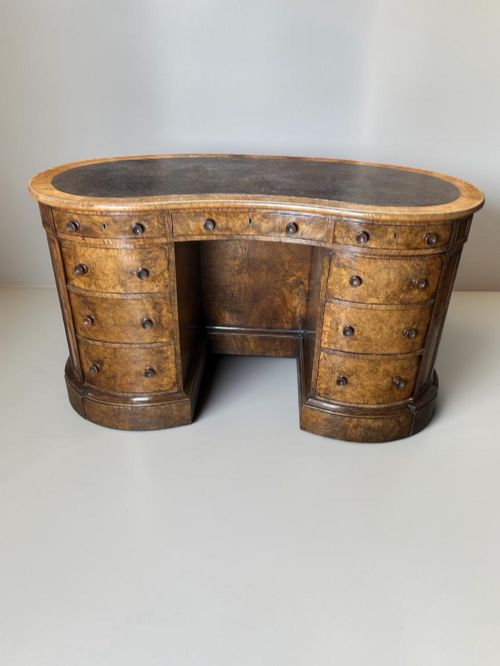
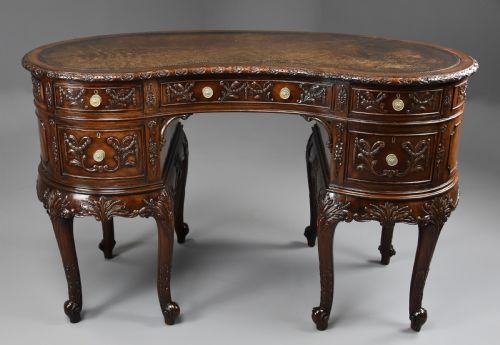
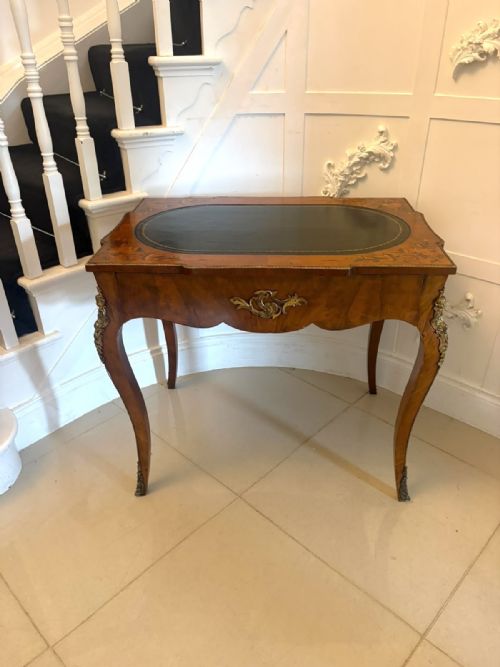
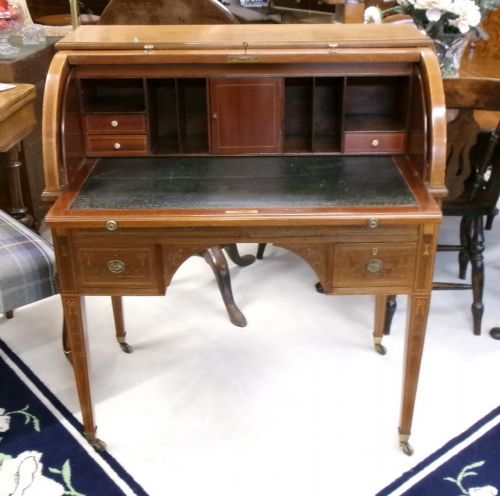
You will most frequently meet Victorian walnut and mahogany examples here, often featuring fitted stationery drawers, writing slides, and shaped tops like the kidney or oval form. These variations reflect the diverse domestic and library requirements of the nineteenth and early twentieth centuries.
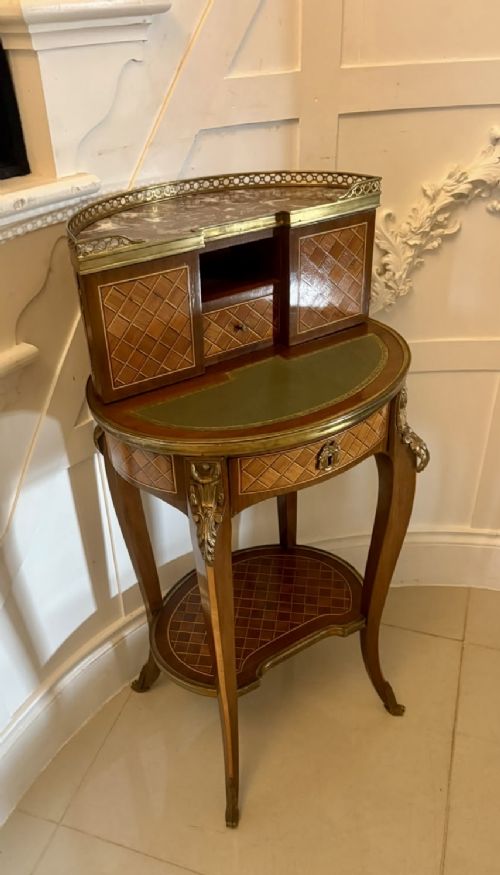
French influences also emerge through kingwood parquetry and bureau plat designs with ormolu mounts. Each iteration maintains the essential finished back required for central room placement.
How they were made
Cabinet makers built these desks using dense timbers such as mahogany, walnut, burr walnut, and rosewood, sometimes accented with satinwood, kingwood, or maple veneers. The writing surfaces incorporate tooled leather inserts framed by timber surrounds.
Decorative detailing relies on fine marquetry, parquetry, brass handles, and ormolu mounts, particularly on French pieces. Structural integrity depended on solid secondary timbers for drawer linings and internal framing.
Freestanding Leather Desk Retail Price Guide 2026
Typical asking prices for freestanding leather desk among the pieces listed under this phrase on Sellingantiques today, from the lower quarter to the upper quarter. They describe what is for sale here now, not the wider market.
Listings span the eighteenth to the early twentieth century, including Georgian, Regency, Victorian, and Edwardian periods.
What varies in quality
Quality rests in the depth of timber figure, the crispness of marquetry or inlay, and the retention of original brass hardware and fitted interior components. Desks finished with carefully matched burr walnut veneers or fine carved mahogany demonstrate superior workshop execution.
The integration of the finished back is crucial; superior pieces maintain the same decorative treatment on the reverse as the front, ensuring a seamless appearance when viewed from any angle in a room.
Maple and Co.
The Freestanding Leather Desk Glossary
- Partners desk
- A large pedestal desk designed with drawers and cupboards on both sides so two people can work facing each other.
- Davenport
- A compact desk featuring a sloping, leather-lined writing lid that lifts to reveal storage, typically with drawers opening to the side.
- Bureau plat
- A formal French writing table with a leather inset top and multiple frieze drawers, finished on all sides.
- Ormolu
- Gilt-bronze mounts applied as decorative ornaments to French and English writing furniture.
- Parquetry
- Geometric wood inlay patterns arranged to create decorative surfaces on desk tops and drawer fronts.
Freestanding Leather Desk: Frequently Asked Questions
Can a freestanding leather desk float in the middle of a room?
Yes, these desks are specifically finished on the reverse side so they do not need to be placed against a wall.
This makes them ideal for positioning in the centre of a study or library.
What is the difference between a partners desk and a pedestal desk?
A pedestal desk has a finished front and a plain or panelled back intended to face a wall.
A partners desk provides usable drawers and kneeholes on both sides for two users.
How do I care for the leather top?
The leather inset benefits from occasional application of neutral wax or leather balm to keep the surface supple.
Avoid placing direct heat sources or unprotected liquid containers on the writing surface.
How do I identify a Victorian davenport?
A Victorian davenport is a small, boxy desk with a sloping writing lid and a set of side drawers enclosed by a panel.
They frequently incorporate stationery compartments accessed beneath the top lid.