

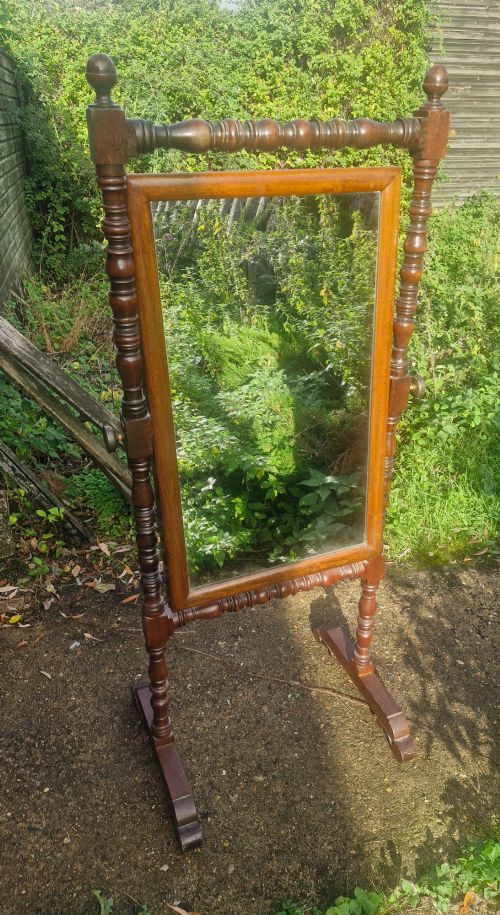
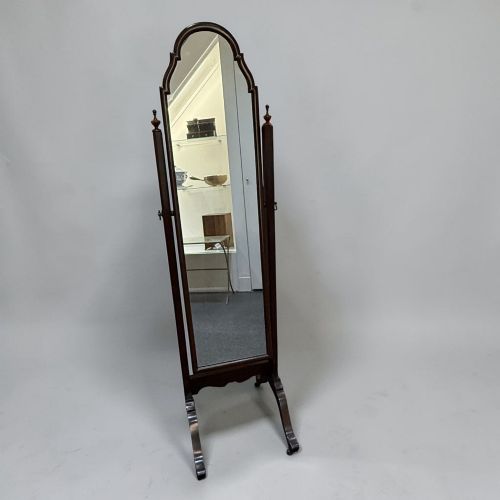
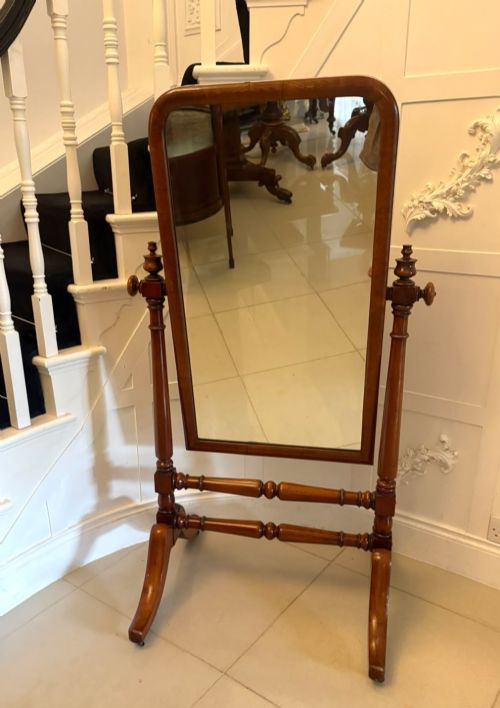
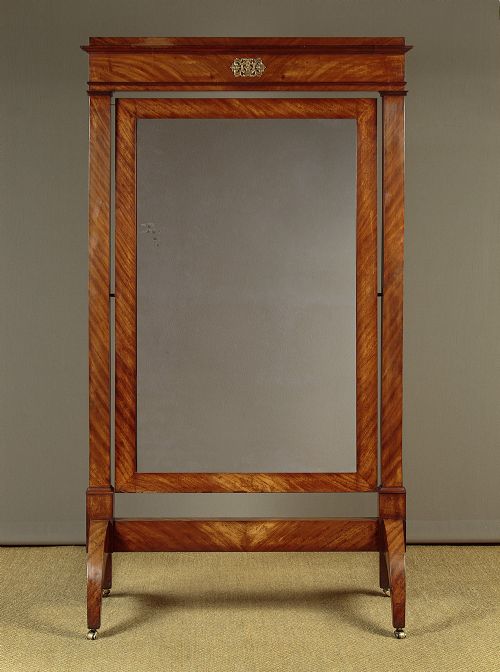
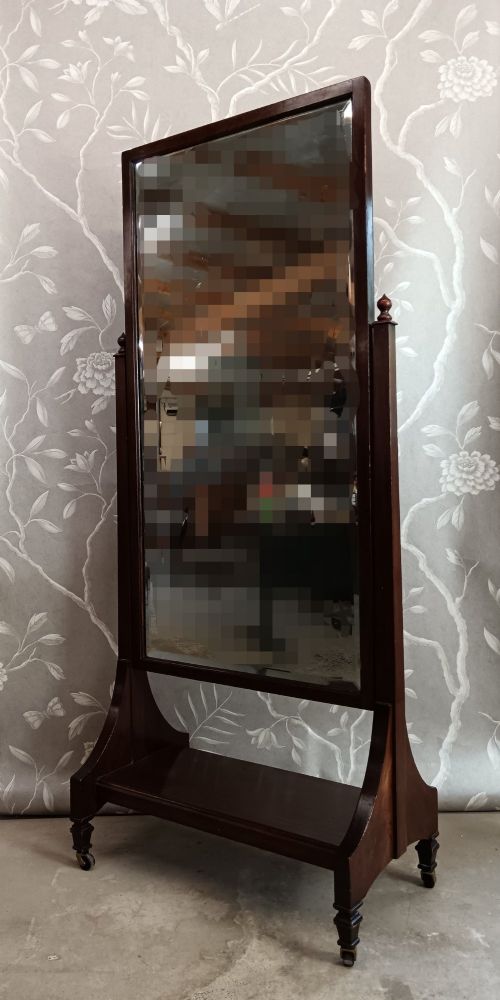


Freestanding Cheval Glass
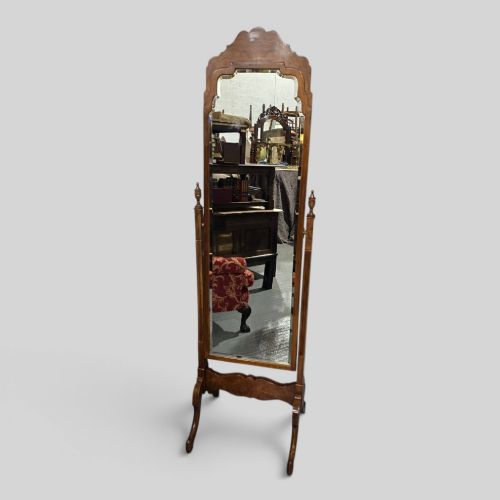
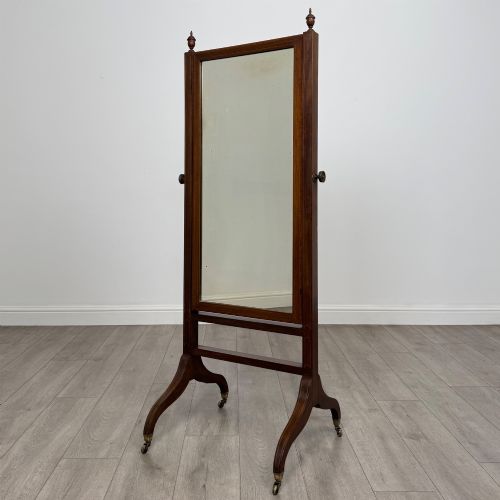
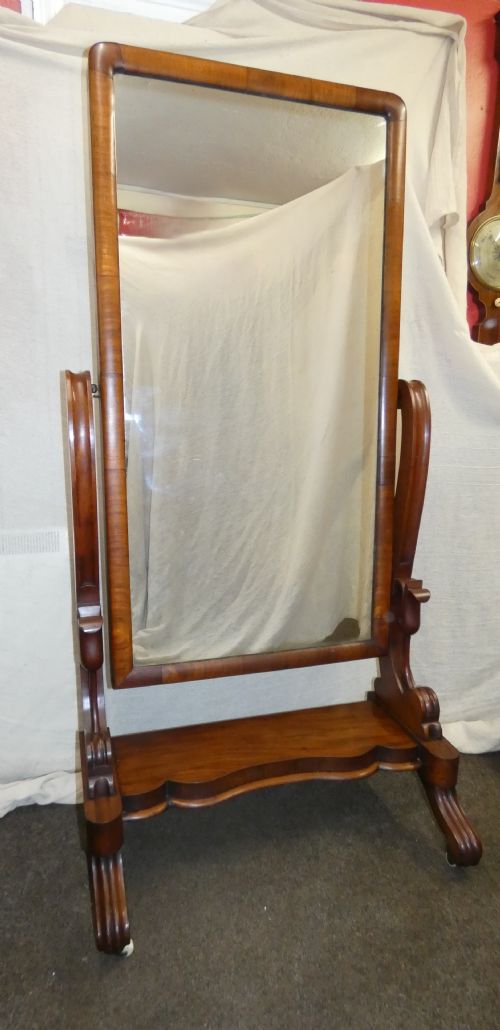
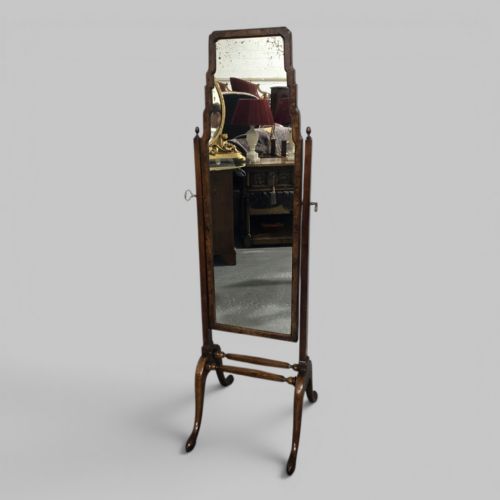
A freestanding cheval glass is a floor-length swing mirror designed to stand independently, offering a full reflection for dressing.
Freestanding Cheval Glass
A freestanding cheval glass serves as a tall, adjustable mirror mounted on a sturdy frame with vertical side supports, allowing the glass to tilt. When searching for a freestanding cheval glass, buyers encounter diverse forms ranging from large floor-standing models to dressing mirrors.
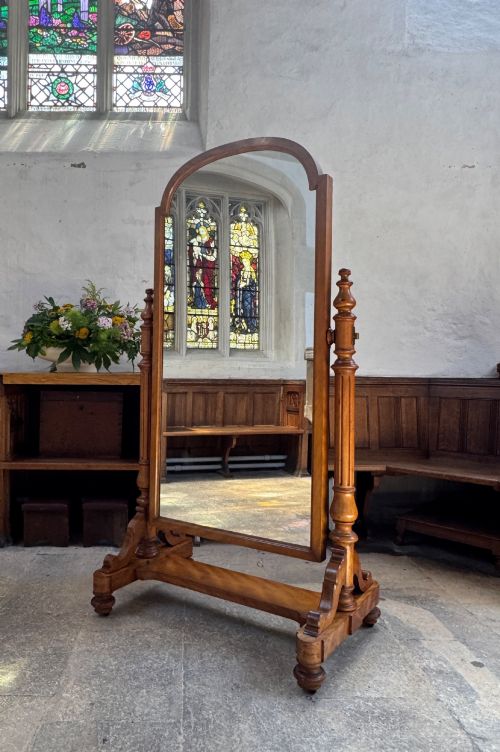
The pieces on this page span the 19th century, Regency, Victorian, and Edwardian periods, demonstrating the enduring popularity of this tall mirror format in domestic interiors. Mahogany forms the predominant wood across the selection, complemented by walnut, satinwood, satin birch, and pitch pine.
Materials and construction
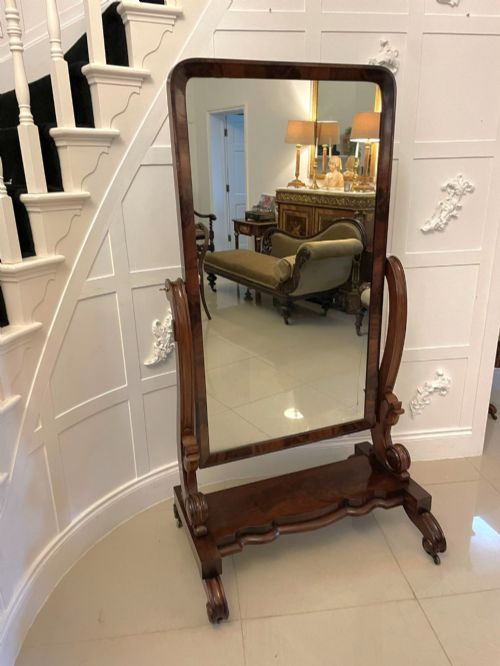
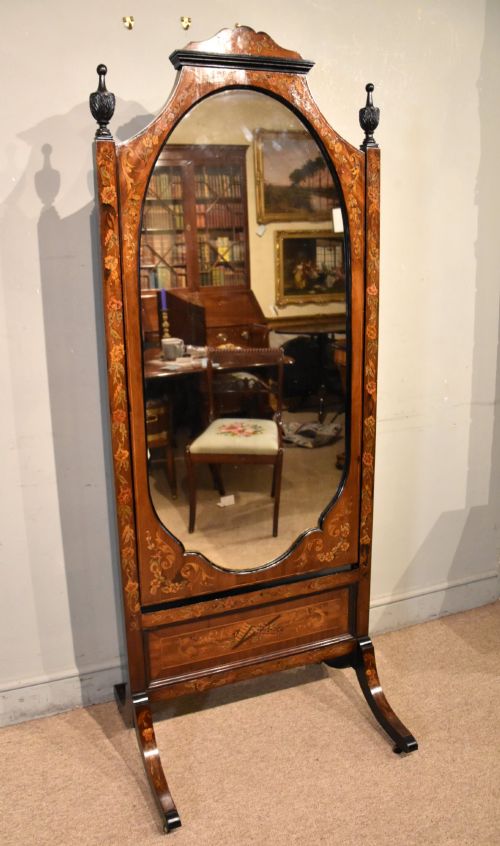
Craftsmen built the main upright frames and floor stands using dense hardwoods like mahogany and walnut, ensuring sufficient weight to counterbalance the heavy swing mirror. Selected pieces feature decorative inlays or flame mahogany veneers to enhance the visual grain of the timber.
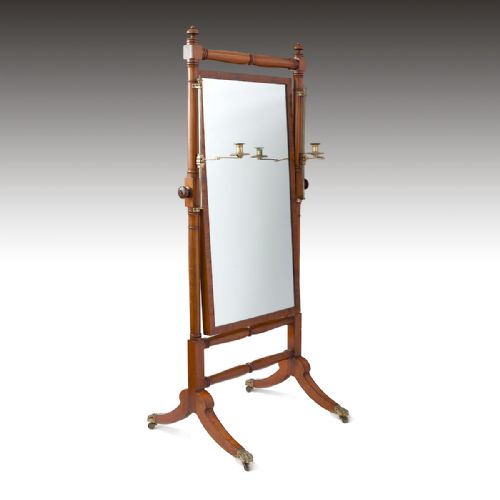
The mirror glass is held within a pivoted frame attached to two upright posts via metal trunnions or screw pins, allowing the user to adjust the angle of reflection. Brass hardware, including castors, candle arms, and pivoting brackets, provides both structural support and functional movement.
Several mirrors include articulated brass candle holders, designed to illuminate your reflection before electricity reached the dressing room.
Markers of quality
The refinement of the timber frame and the stability of the upright supports distinguish finer examples from standard production. Superior pieces display thoughtful proportions, robust joints that prevent wobble during tilting, and carefully selected wood veneers.
Attention to detail in the metalwork, such as well-cast brass mountings, original castors, and finely turned supporting pillars, indicates higher manufacturing standards. The clarity of the mirror glass and the integration of functional elements like articulated candle holders also separate exceptional pieces.
Gillow
The Freestanding Cheval Glass Glossary
- Cheval glass
- A tall, full-length mirror mounted on a freestanding frame with vertical pivots. The name derives from the French word for horse, referencing the four-legged frame design.
- Swing mirror
- A mirror plate suspended on horizontal pivots within a secondary frame. This mechanism allows the user to tilt the glass forward or backward.
- Trunnion
- A cylindrical projecting pivot that supports the rotating mirror frame. It fits into the upright posts to facilitate smooth tilting.
- Flame mahogany
- A decorative wood veneer showing a distinct, fiery flame-like grain pattern. Cabinetmakers reserved this timber for the most prominent surfaces of the mirror frame.
Freestanding Cheval Glass: Frequently Asked Questions
Where should I place a freestanding cheval glass?
Position the mirror in a bedroom or dressing room where you need a full-length reflection for dressing. Ensure there is adequate clearance on all sides for the swing mechanism to tilt freely.
Keep the piece away from direct, harsh sunlight to protect the wooden frame and original mirror silvering over time. Placing it near a natural light source helps maximise the reflection in the room.
How do I adjust the mirror angle?
Most frames utilise side screws or metal trunnions that tighten to hold the mirror at your preferred viewing angle. Gently tilt the glass while supporting the weight to find the right position.
Avoid over-tightening the pivot screws, as excessive pressure can damage the wooden frame or the metal hardware. Periodic checks ensure the fixings remain secure during daily use.
How do I care for the mahogany frame?
Dust the wood regularly with a soft, dry cloth to prevent dirt accumulation on the carved details and turned posts. Apply a quality wax polish occasionally to nourish the timber and maintain its natural sheen.
Avoid using harsh chemical sprays or abrasive cleaners that can strip the historic finish. Clean the mirror glass carefully with a mild glass cleaner applied to a cloth rather than sprayed directly onto the surface.
How can I tell the period of the mirror?
Examine the timber selection, construction methods, and hardware style to identify the era of manufacture. Regency and Victorian examples often feature heavy mahogany frames, turned uprights, and sturdy brass castors.
Look for signs of age in the mirror glass, such as minor foxing or bevelling techniques, alongside construction details like hand-cut screws or dovetail joints on the base.