




Framed Wool Needlework
Framed wool needlework brings centuries of tactile human story to a wall, offering rich colour and texture stitched into canvas, linen or silk.
Framed Wool Needlework
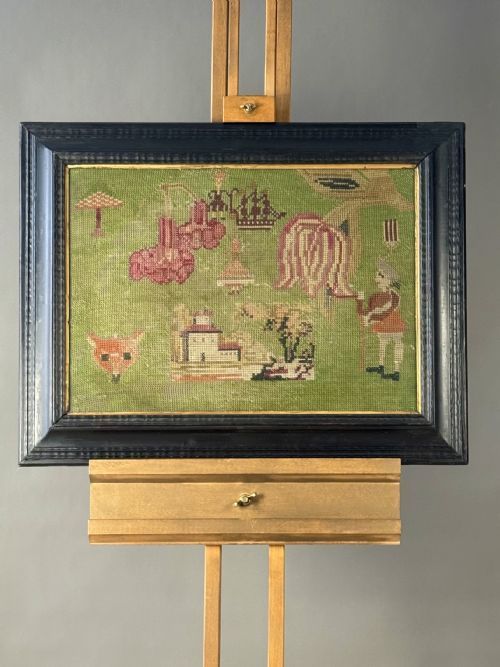
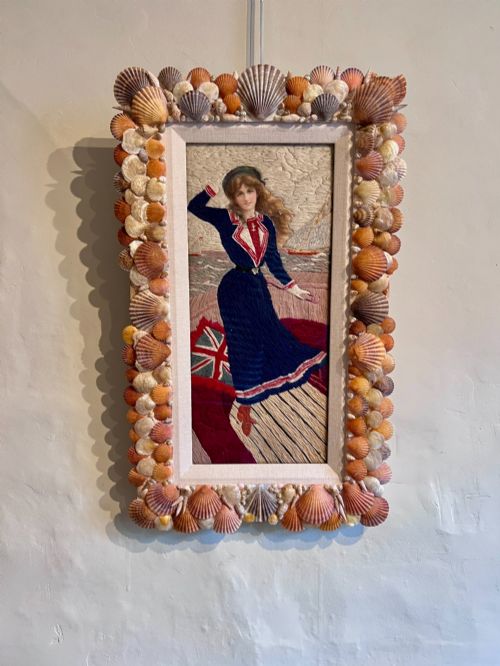
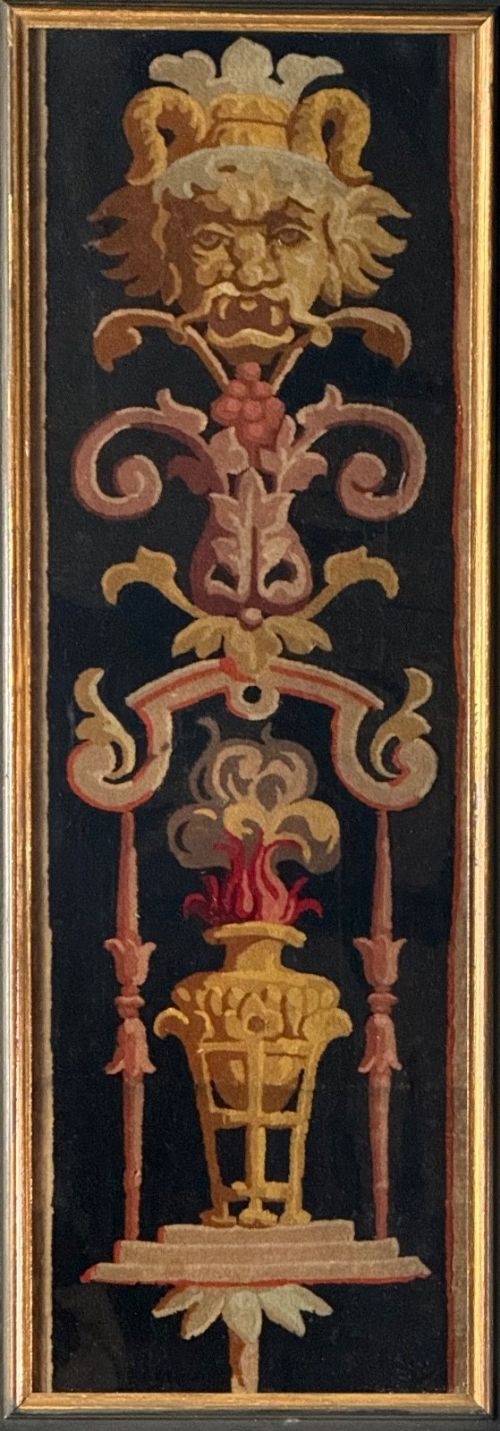
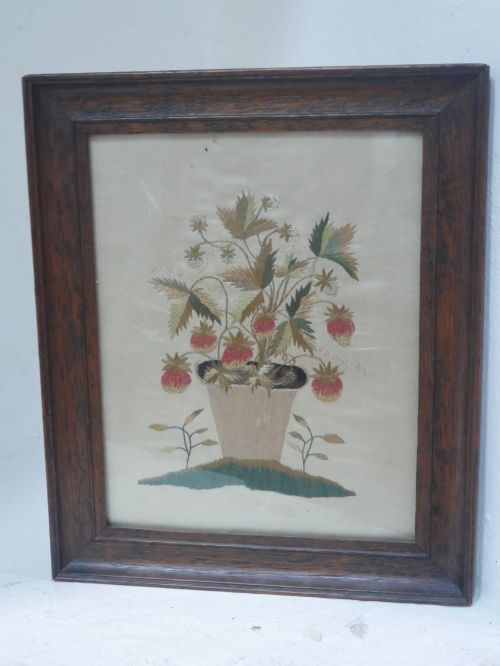
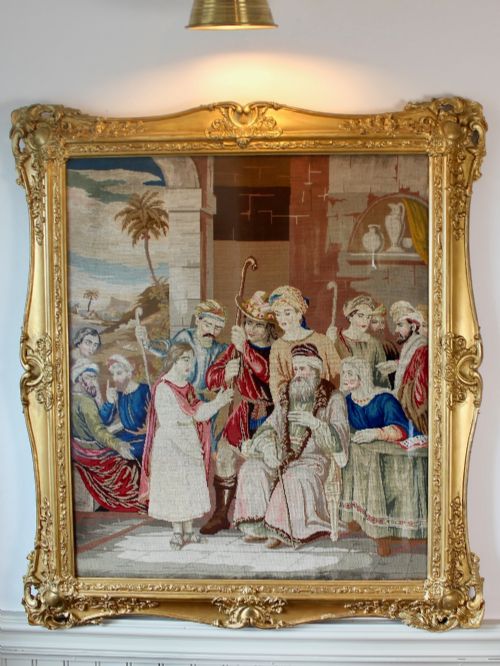
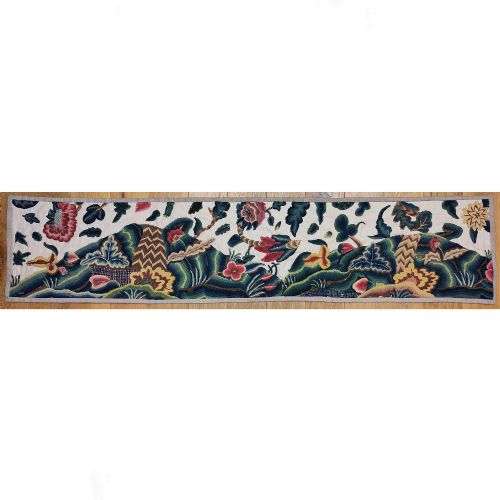
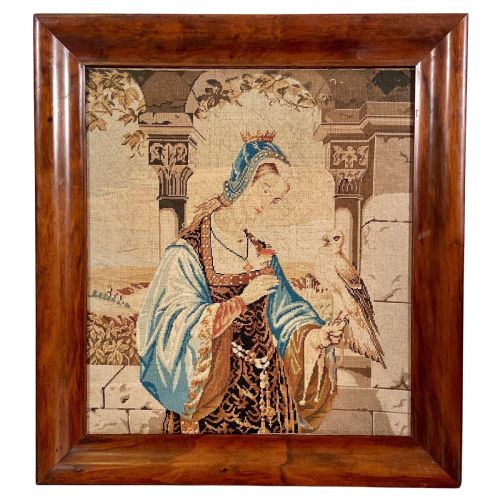
When you search for framed wool needlework, you encounter pieces spanning from the seventeenth century through to the twentieth century, encompassing samplers, woolies, plushwork, and pictorial scenes. The Victorian era contributes heavily to what appears here, alongside eighteenth-century panels and seventeenth-century textile works.
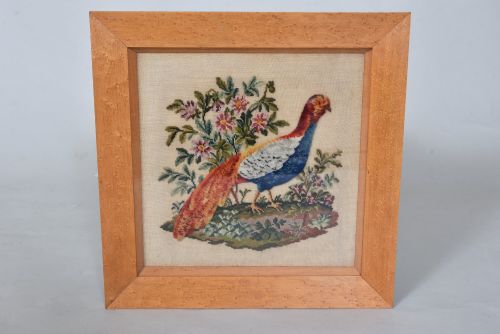
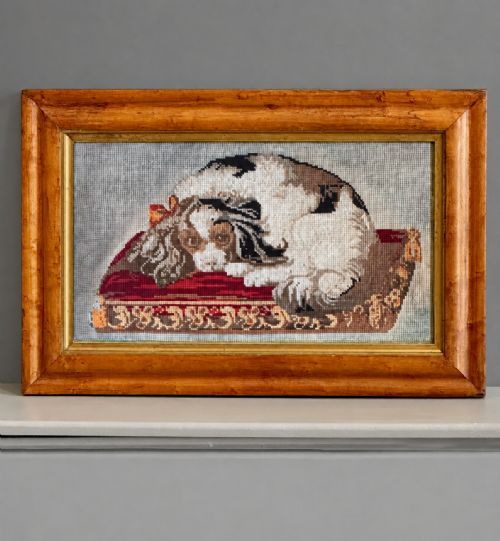
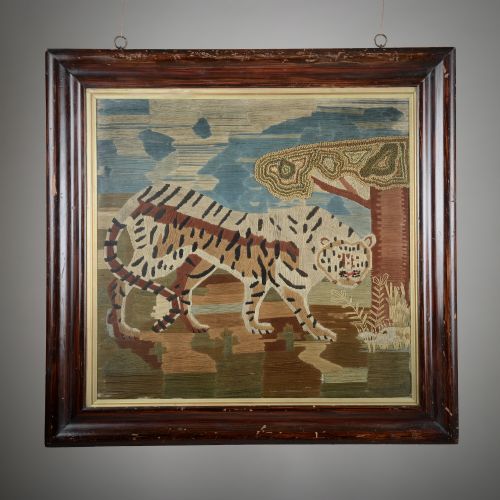
Subjects range widely from domestic animals, birds, and botanical studies to sailor-made woolies, classical figures, literary scenes, and religious depictions. Most items present as wall art, preserved behind glass within wooden, giltwood, or burr maple frames.
The materials record traditional textile craft, with wool dominating alongside silk, cotton, and metallic threads worked upon canvas, linen, and mesh grounds.
Materials and construction
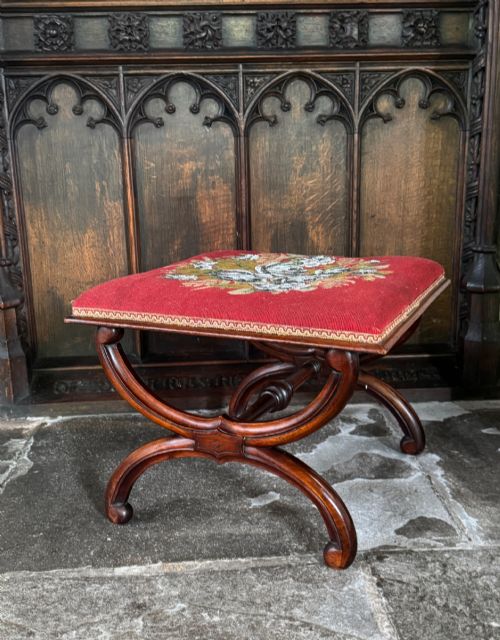
Makers stitched dyed wool and silk yarns onto open-weave canvas or tightly woven linen grounds using techniques such as Berlin work, gros-point, crewelwork, and plushwork. The tension of the stitches determines the longevity and flatness of the textile panel.
Frames play a crucial structural role in protecting these textiles, utilising woods like walnut, burr maple, and gilded mouldings, often backed with protective glass to shield the fibres from dust and atmospheric moisture.
Listings feature wool, silk, canvas, linen, and giltwood across Victorian, Georgian, and seventeenth-century periods.
Factors of quality
Quality rests upon the fineness of the stitch execution, the complexity of the colour shading, and the original integrity of the textile fibres. Pieces with high stitch density and careful tonal gradation command greater visual depth than looser, simpler works.
The preservation of the original framing, particularly period burr maple or giltwood surrounds with intact glass, elevates the historical completeness of the piece.
The Framed Wool Needlework Glossary
- Berlin work
- A type of nineteenth-century counted-thread embroidery worked in wool on canvas using patterned grid charts. This technique produced vivid pictorial images with rich colour shading.
- Woolie
- A form of sailor embroidery executed in wool yarn, typically depicting naval ships or maritime scenes. These sentimental works were often made by nineteenth-century sailors during long sea voyages.
- Gros-point
- A counted-thread embroidery stitch worked on canvas, coarser than petit-point, creating durable and textured pictorial surfaces. It provides a robust ground for heavy wool threads.
- Sampler
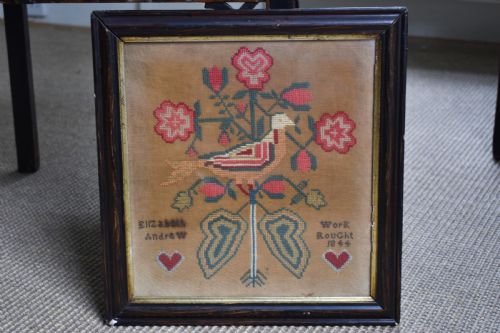
- A piece of cloth sewn to demonstrate or test needlework skills, featuring various stitches, alphabets, and motifs. Earlier examples often include maker names, ages, and dates.
- Plushwork
- An embroidered technique utilising looped stitches that are subsequently cut to create a velvet-like, raised pile effect. It adds tactile three-dimensional texture to animal and botanical depictions.
Framed Wool Needlework: Frequently Asked Questions
How do I clean framed wool needlework?
Surface dust should be gently removed with a soft brush, ensuring no pressure is applied directly to the fragile textile.
Water and liquid cleaners must be avoided entirely, as moisture damages old wool fibres and wooden frames.
Where should I hang needlework pictures?
These pieces require placement away from direct sunlight and damp environments to prevent fading of the dyed wool and deterioration of the backing materials.
Stable indoor temperatures help preserve both the textile and the original wooden frame.
What is the difference between a sampler and a woolie?
A sampler focuses on alphabets, numbers, and stitch demonstrations, often created by young makers as proof of proficiency.
A woolie represents a maritime picture stitched by sailors using available yarns to record ships or nautical subjects.
How can I tell the age of the piece?
Age is indicated by the type of wool, the weave of the canvas or linen ground, and the framing style typical of specific periods.
17th-century and 18th-century works show different thread twists and subject matters compared to Victorian Berlin work or 20th-century folk pieces.