




Framed Wool Needlepoint
Framed wool needlepoint brings textile art onto the wall through historical pictures stitched in wool, canvas, and silk.
Framed Wool Needlepoint
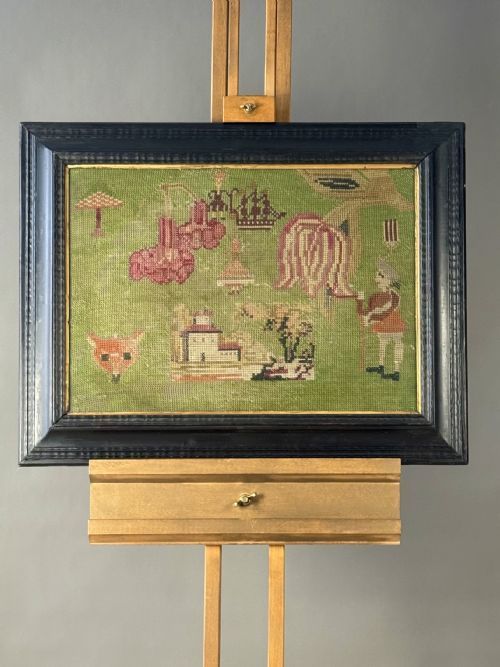
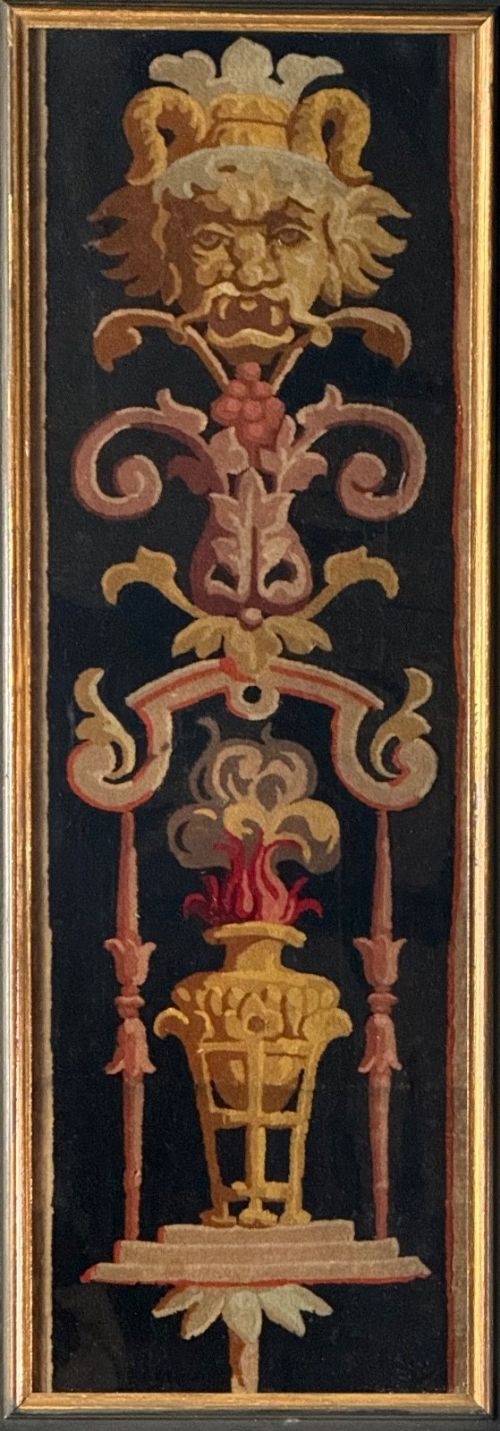
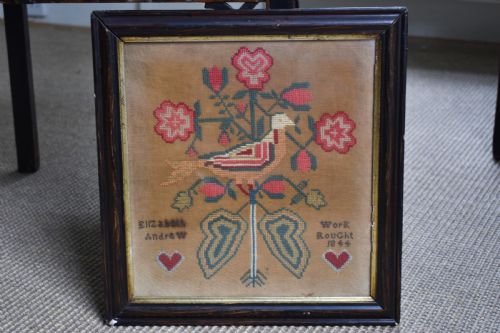
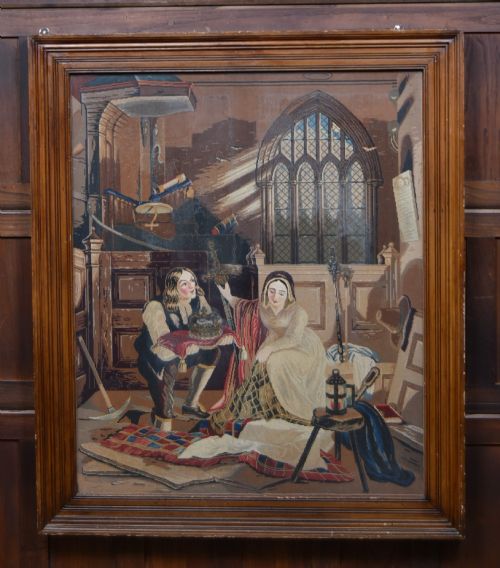
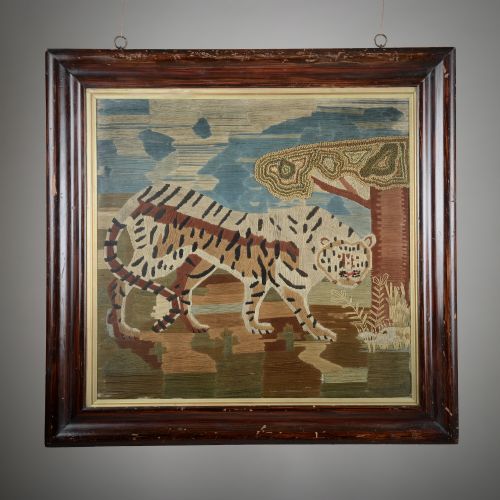
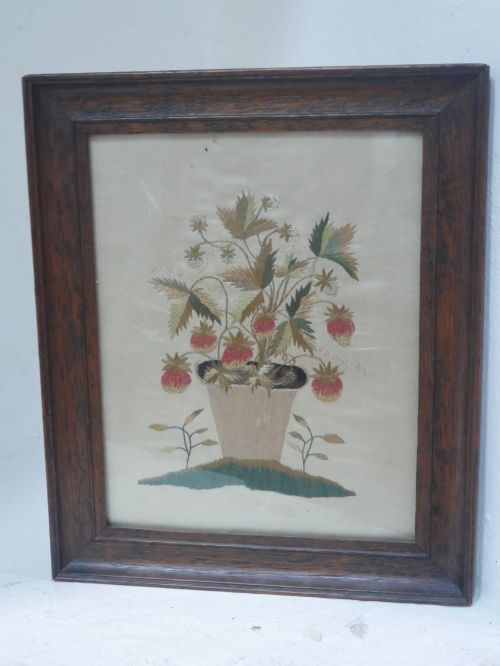
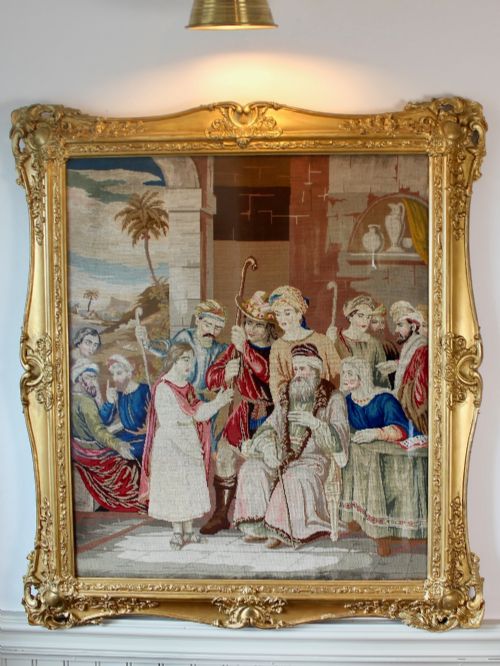
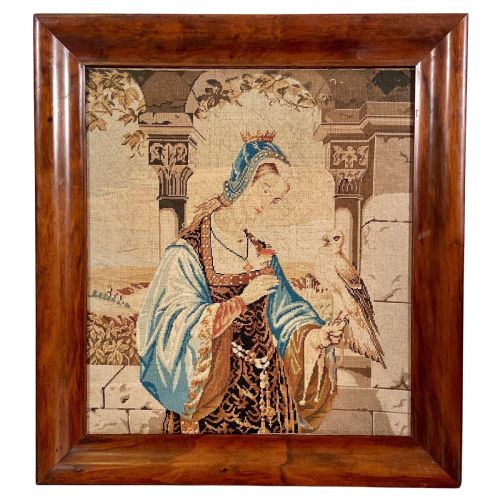
A framed wool needlepoint piece on this page typically spans from the seventeenth century through to the early twentieth century, taking the form of wall art, samplers, and textile panels. Buyers encounter Victorian woolwork pictures depicting animals, portraits, and landscapes alongside earlier eighteenth-century pastoral scenes and classical panels.
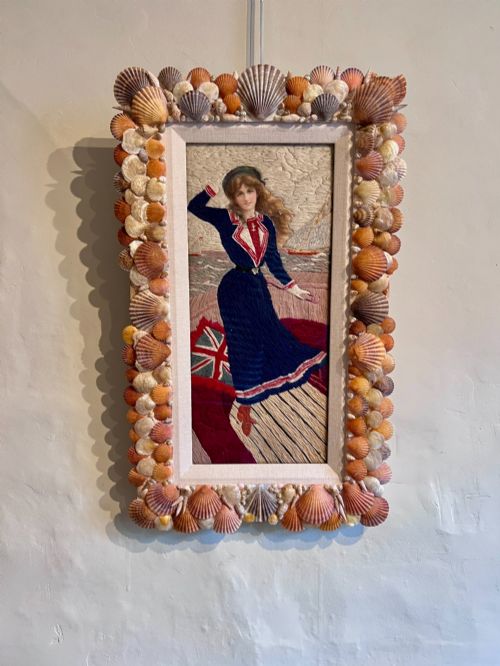
The selection ranges from folky stitched samplers and sailor woolies to elaborate Berlin work and French needlework pictures. Pieces frequently arrive in period frames including burr maple, giltwood, and verre églomisé, preserving the textile work behind glass.
Materials and construction
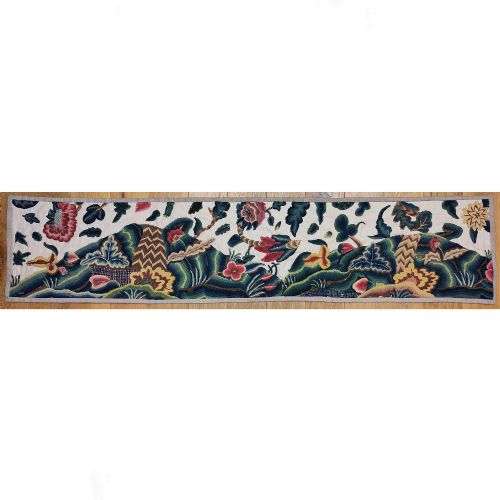
These works rely on wool, silk, and linen threads stitched onto canvas or fabric grounds, often utilising specialised techniques such as gros-point, plushwork, and crewelwork. Artisans combined wool with gold leaf details or mounted the completed embroideries within wooden frames protected by glass.
Makers constructed needlework pictures using counted thread techniques or free embroidery, working wool yarns into dense patterns that created textured surfaces like the raised pile of plushwork.
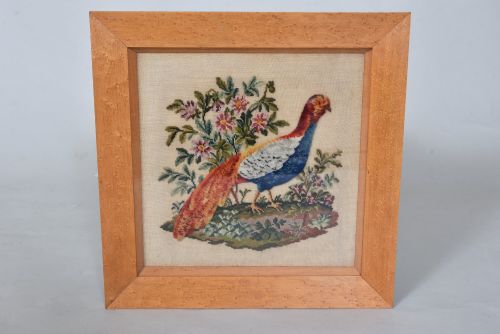
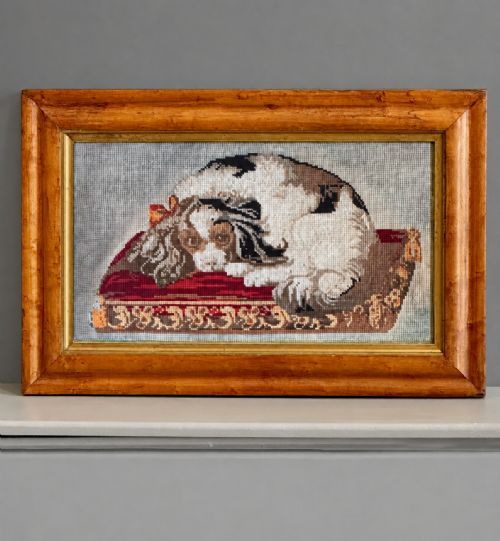
King Charles Spaniels and plushwork pheasants peer out from centuries past, proving that historical stitchers loved their pets as much as we do.
Judging execution and preservation
Quality rests in the intricacy of the stitching, the fidelity of the pictorial composition, and the survival of the original wool colours and frame. Elaborate nineteenth-century Berlin work or finely rendered eighteenth-century pastoral pictures demonstrate superior draughtsmanship in thread.
The survival of original mounting materials, such as burr maple or gilt frames and glass protection, maintains the integrity of the textile art and elevates the piece.
The Framed Wool Needlepoint Glossary
- Berlin work
- A style of nineteenth-century needlepoint worked in wool from printed and hand-coloured grid patterns. It allowed stitchers to create elaborate, shaded pictorial scenes.
- Woolie
- A form of embroidered textile art created by nineteenth-century sailors, typically depicting naval ships or figures using wool yarns. These wool works offer a distinct folk art perspective.
- Plushwork
- A specialised embroidery technique utilising looped stitches that are cut to create a raised, velvety pile. This method gives texture to animal coats and natural elements.
- Gros-point
- A coarse needlepoint stitch executed on canvas, producing a durable and firm background. It frequently forms the heavy pictorial field in historical tapestries and panels.
- Verre églomisé
- A process of applying design and gilding to the reverse side of glass. Frames utilising this technique provide a decorative border around historical pictures.
Framed Wool Needlepoint: Frequently Asked Questions
What is Berlin work?
Berlin work is a nineteenth-century needlepoint style stitched in wool using charted pattern papers. It gained popularity for its shaded pictorial designs.
These pieces often depict animals, figures, or biblical scenes rendered in vibrant wool colours on canvas grounds.
How do I date a needlework picture?
Datation relies on the style of the figures, the framing materials, and the canvas structure. Eighteenth-century pieces tend toward pastoral scenes, while Victorian examples include woolies and plushwork.
Secondary clues include original giltwood or burr maple frames and accompanying paper labels on the reverse.
What is a sailor woolie?
A sailor woolie is a nineteenth-century embroidered picture created by British sailors at sea. They utilise wool yarns to depict naval vessels and coastal scenes.
These works represent a specific branch of folk art valued for their maritime subject matter.
How should I display wool needlepoint?
Wool needlepoint requires protection from direct sunlight to prevent the wool yarns from fading. Framing behind glass shields the delicate fibres from dust and atmospheric moisture.
Positioning pieces away from damp walls and heat sources ensures the long-term preservation of the canvas and frame.