
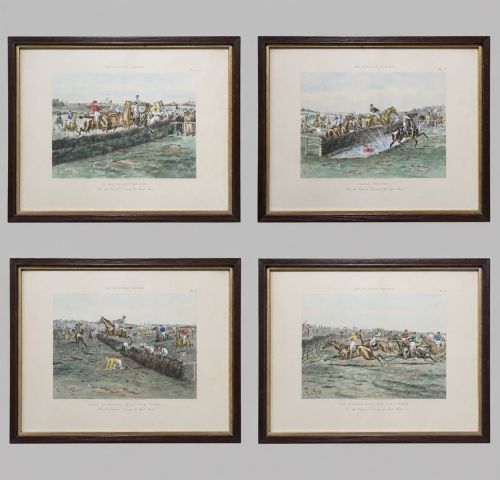
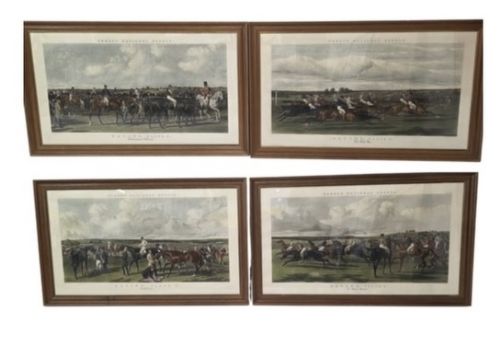


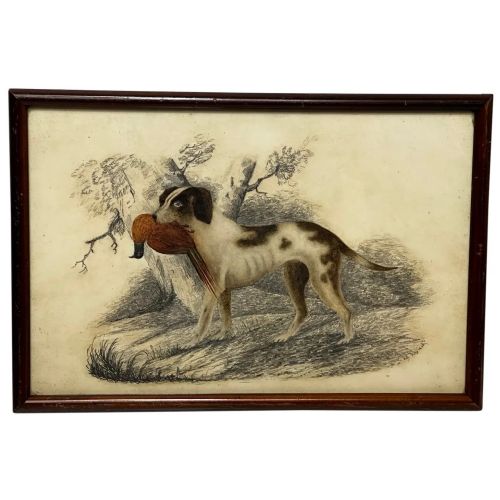


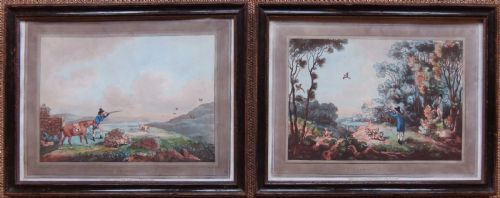


Framed Wood Sporting Print
These framed wood sporting print examples capture centuries of field sports and racing through period engravings, watercolours, and photographs.
Framed Wood Sporting Print
A framed wood sporting print brings traditional equestrian and field sports into an interior through historical paper works housed in timber frames. When searching for a framed wood sporting print, buyers encounter works ranging from Georgian engravings to early twentieth-century watercolours.
The selections span Victorian horse racing scenes, shooting sets, and hunting subjects produced across various decades. Most examples on this page comprise nineteenth-century British works alongside early twentieth-century prints and watercolours.
Subjects cover horse racing, shooting, hunting, and game dogs depicted through aquatints, stipple engravings, and original watercolours. These pieces reflect the rich heritage of British sporting art preserved within wooden frames.
How they were made
Makers utilised paper, ink, and watercolour applied through engraving, aquatint, and hand-colouring techniques. Many works incorporate glass protection alongside gilt and gold leaf accents.
The supporting frames are constructed from wood, housing paper prints, photographs, or watercolour paintings. Certain pieces feature eglomise glass panels or embossed surface details.
Subject matter centres on British sporting culture, recording horse racing, shooting scenes, hunting dogs, and coaching events.
What varies in quality
The distinction between tiers rests upon the medium and execution, separating original watercolours and hand-coloured stipple engravings from later reproductions. Finer pieces display crisp ink work and skilled hand-colouring upon the paper.
Frame construction and material preservation also dictate overall merit, with period wooden frames holding greater significance than modern replacements. The clarity of the print and the distinction of the artist's hand elevate particular examples.
George Finch Mason·Abraham Cooper·William Bunbury·H Alken·Sam Howitt
The Framed Wood Sporting Print Glossary
- Aquatint
- An intaglio printmaking technique that produces tonal effects resembling watercolour washes. It was widely employed for reproducing sporting art and racing scenes.
- Stipple engraving
- A method of printing using dots to create subtle gradations of light and shade. This technique often appeared in eighteenth-century and Regency plates.
- Eglomise
- A process of applying cold gilding and painting to the rear face of glass. It creates a reflective, decorative border around the central image.
- Hand coloured
- A print finished with watercolour or ink by hand after the initial impression. This adds individual character and colour variation to each plate.
Framed Wood Sporting Print: Frequently Asked Questions
What periods do these pieces date from?
The selection spans from the eighteenth century through the Georgian and Regency eras into the Victorian period. Early twentieth-century pieces also feature prominently across the collection.
Dates range from eighteen hundred up to nineteen thirty, encompassing both antique engravings and early twentieth-century watercolours.
How were these sporting prints originally displayed?
Historically, sporting prints hung in country houses, libraries, and smoking rooms to celebrate equestrian pursuits and field sports. Sets often decorated walls in matching arrangements.
They served as both decorative art and a testament to the owner's sporting interests and pedigree in breeding or shooting.
Are these works original or reproductions?
The inventory contains a mixture of period original prints, watercolours, and photographs alongside occasional later reproductions. Each listing specifies the medium employed.
Original works include hand-coloured stipple engravings and signed watercolours by listed artists from the nineteenth and twentieth centuries.
How do I care for framed paper art?
Keep framed pieces away from direct sunlight to prevent the fading of inks, watercolours, and paper supports. Stable room temperatures protect the wood frames and glass seals.
Dust the wooden mouldings gently and avoid hanging prints in damp environments to preserve the paper integrity over time.