


British Hunting Artwork
British hunting artwork captures the energy of hounds, horses, and open country across oil paintings, watercolours, and prints.
British Hunting Artwork
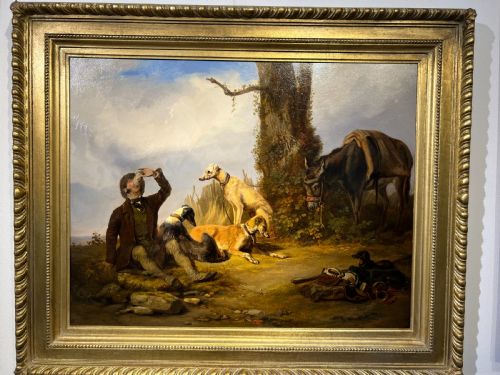
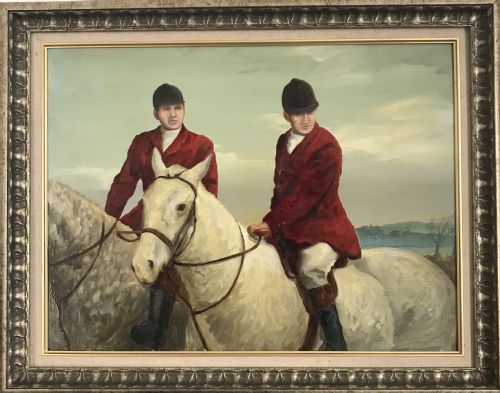
British hunting artwork encompasses framed oil paintings, watercolours, and original prints depicting equestrian scenes, hounds, and field sports. The selection spans the nineteenth century through the mid-twentieth century, capturing traditional rural pursuits in oil on canvas, paper, and lithograph.
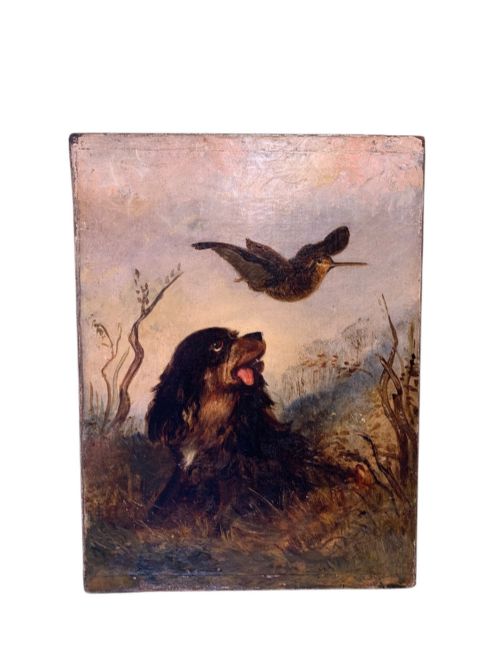
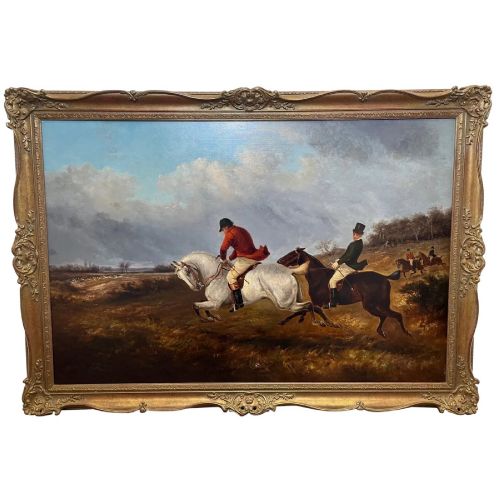
Buyers commonly encounter Victorian and Edwardian portrayals of full cries, hunting studs, and mounted riders navigating country landscapes. These works frequently document specific packs, such as the Berkeley Hunt, alongside portraits of hunters, spaniels, and working dogs.
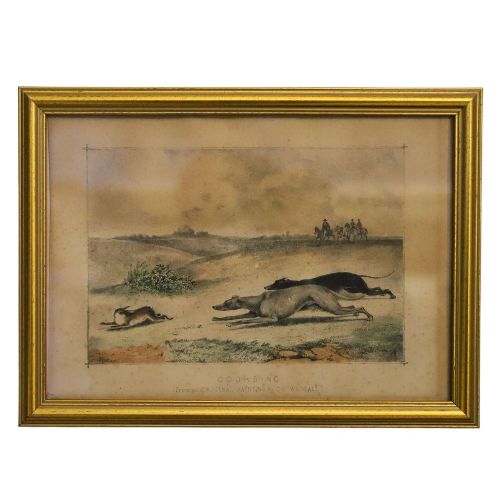
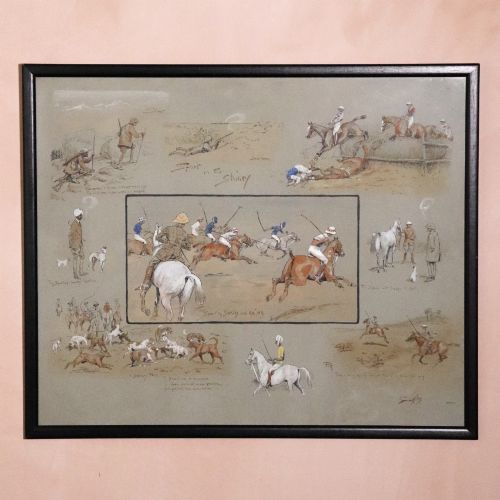
The visual records range from finished gallery watercolours to chromolithographs and engraved sequences designed for framing. Early twentieth-century pieces often reflect the distinctive hand of military and sporting illustrators working in watercolour or print formats.
Materials and methods
Artists painted these subjects using oil on canvas or applied watercolour to paper, frequently enclosing them behind glass within gilt wood frames. Printmakers utilised lithography, chromolithography, and engraving to reproduce popular sporting scenes for domestic interiors.
Canvases received layered applications of oil paint to render the sheen of horse coats and the texture of hounds, while watercolour works relied on fluid washes to build atmospheric landscapes. Frames were constructed from carved wood finished with gilt layers to complement the domestic display of country house art.
Listings feature works created across the nineteenth and twentieth centuries, using oil paint, watercolour, paper, and gilt wood.
Factors of quality
Quality rests upon the artist's command of equine and canine anatomy during moments of rapid motion, such as a gallop or a full cry. Superior examples demonstrate acute observation in the rendering of horse muscle, hound expression, and rider posture within the landscape.
The depth of the composition and the handling of atmospheric light distinguish accomplished works from routine production pieces. Original watercolours and primary oil paintings hold greater artistic weight than mass-produced prints, though signed and hand-finished prints retain distinct merit.
Thomas Smythe·Edgar Hunt·Sir Edwin Henry Landseer·John Sherrin·John Arthur Lomax·Arthur Wardle·Philip Henry Rideout·George Armfield·John Sanderson Wells·Herbert Dicksee·Charles Johnson Payne Snaffles·George Goodwin Kilburne·Geoffrey Mortimer·Frank Algernon Stewart·Godfrey Douglas Giles·Frank Dadd
The British Hunting Artwork Glossary
- Chromolithography
- A planographic printing process used to produce multi-coloured images by combining separate lithographic stones for each ink colour. This technique allowed affordable reproductions of sporting paintings to enter homes.
- Lithography
- A printing method based on the chemical repulsion of oil and water on a flat limestone or metal plate. Artists drew directly onto the surface to create original prints.
- Equestrian
- Pertaining to horses, horse riding, and the depiction of mounted figures in art. This category forms the core of many sporting collections.
- Watercolour
- A painting method where pigment is suspended in a water-based solution and applied to paper. It yields translucent washes well suited to atmospheric country scenes.
- Gilt Wood
- Wood carved and coated with a thin layer of gold leaf or metallic gilt paint. These frames were standard for framing oil paintings and watercolours of the period.
British Hunting Artwork: Frequently Asked Questions
What subjects appear in these works?
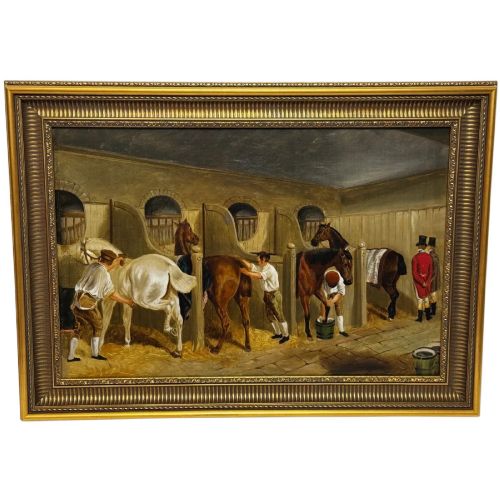
The compositions record mounted hunts, hound packs in full cry, stable scenes, and portraiture of working dogs such as spaniels and setters. Landscape views of the countryside frequently frame the action.
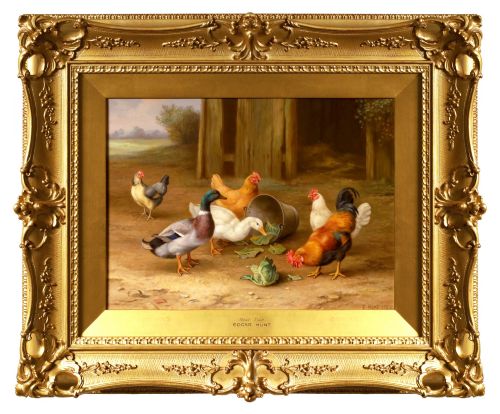
Artists also documented hare coursing, wild boar, and rural still life elements alongside the primary equestrian focus.
How do I date a piece?
Dating relies on the recorded active periods of the artists, clothing styles of the riders, and framing materials. Victorian and Edwardian pieces exhibit distinct costume details and signature formats.
Inscribed mounts and original publication dates on prints provide further chronological markers for tracking the era of production.
Are these works original or prints?
The category includes both unique hand-painted works, such as oil on canvas and watercolours, and published print editions. Lithographs and engravings were produced in multiple impressions for collectors.
Signatures, brush textures, and examination under magnification help distinguish an original painting from a printed reproduction.
How should I display them?
Traditional sporting art suits spaces with neutral or rich interior tones, often hung in groupings or balanced pairs. Most pieces arrive within period gilt wood frames ready for wall mounting.
Placement should avoid direct sunlight to protect watercolours on paper and oil pigments from fading over time.