
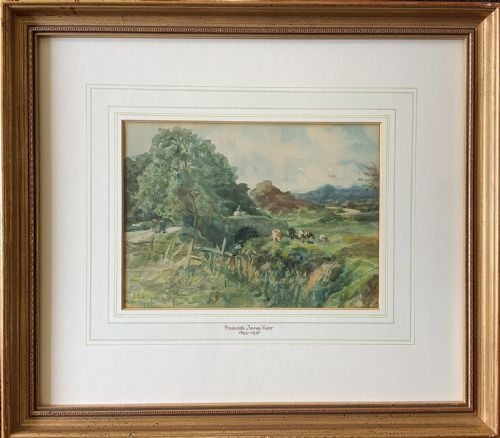
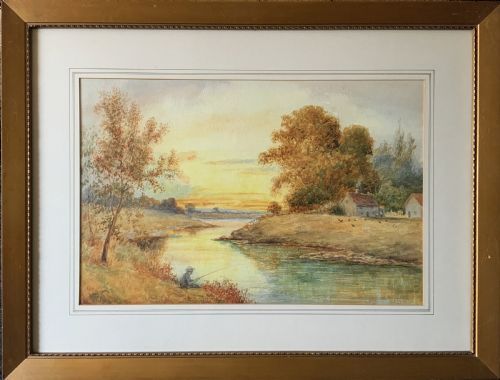
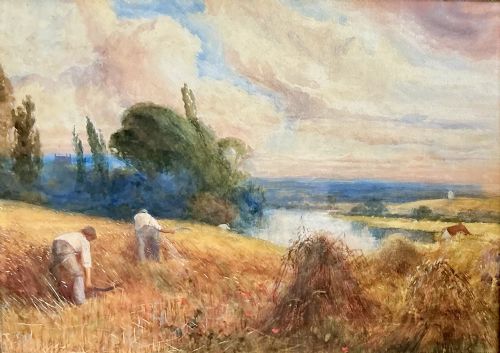


Framed Watercolour Pastoral Scene
A framed watercolour pastoral scene captures the quiet rhythm of traditional country life through delicate pigments and paper.
Framed Watercolour Pastoral Scene
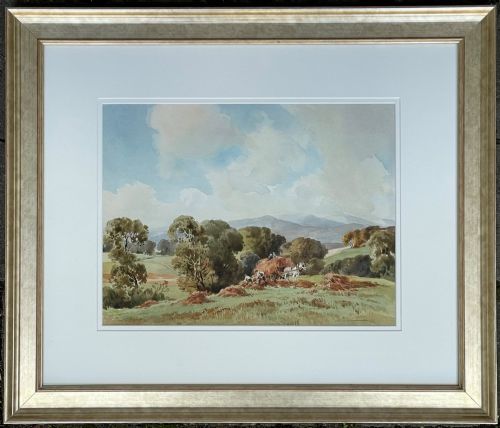
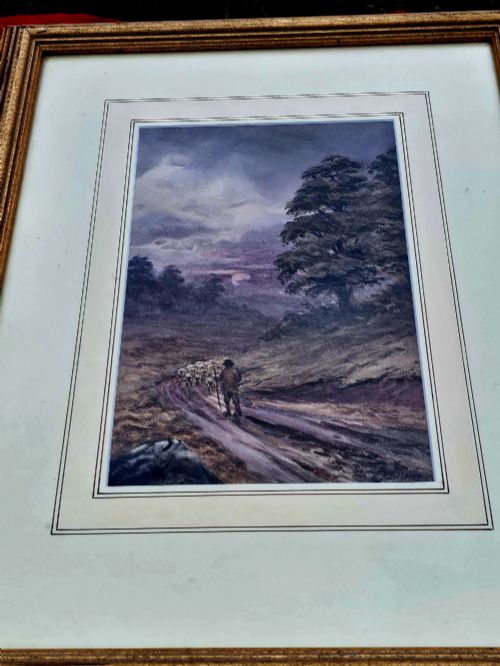
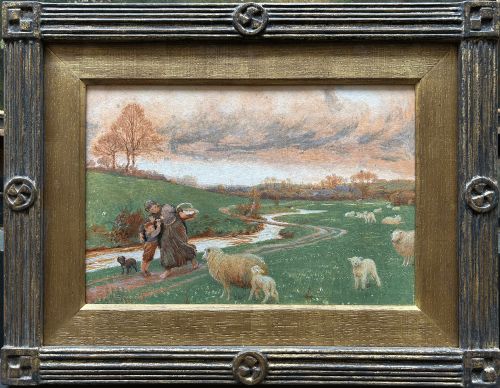
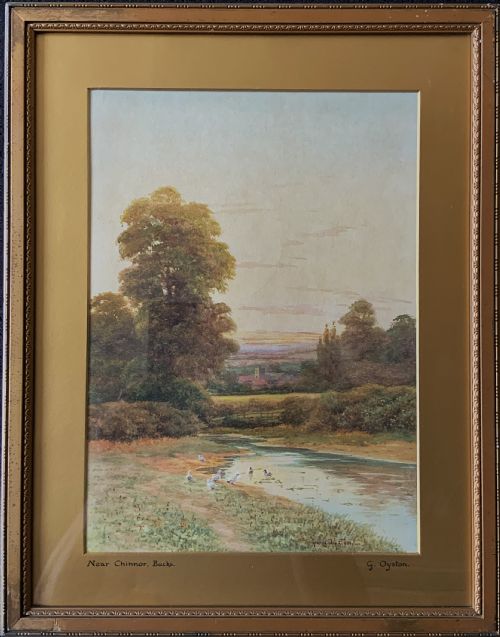
A framed watercolour pastoral scene depicts rural landscapes, farming activities, and countryside dwellings originating predominantly from the nineteenth and early twentieth centuries. These artworks frequently portray agricultural labourers, shepherds with flocks, and river settings framed by traditional British aesthetic traditions.
Buyers will encounter various stylistic approaches on this page, ranging from detailed Victorian fine art to later British Impressionism. The typical composition centres on open fields, livestock, and rustic cottages rendered in subtle washes of pigment.
Materials and Construction
The foundation of these works consists of watercolour pigment applied to paper, mounted beneath protective glass to prevent environmental damage. Traditional framing often incorporates wood and gold leaf or gilt mouldings to complement the delicate nature of the paintings.
Artists utilised water-soluble pigments layered upon paper sheets, capturing light and atmosphere through varying opacities. Original frames frequently utilise period wood joinery, preserving the historic integrity of the artwork.
Several sheep appear to have deliberately loitered near fences just so Victorian artists could immortalise their wool.
Distinctions in Quality
The calibre of a framed watercolour pastoral scene rests upon the artist's command of light, composition, and brushwork technique. Skilled painters achieved depth and movement within rural landscapes through confident pigment application rather than heavy detailing.
Material preservation also influences the standing of a piece, particularly the stability of the paper support and the clarity of the pigment. Works retaining their original period frames without excessive discolouration in the paper generally represent the upper tier of the selection.
Percy Lancaster·George Oyston·Frederick Hines·Henry John Kinnaird·James William Booth·Ernest Pile Bucknall·Robert Thorne Waite·Augustus Jules Bouvier·Henry Charles Fox·John R K Duff
The Framed Watercolour Pastoral Scene Glossary
- Watercolour
- A painting method where the paints are made of pigments suspended in a water-based solution. This medium allows for transparent washes that create luminous atmospheric effects in landscape art.
- Pastoral
- A genre of art depicting the rural countryside, agricultural labour, and shepherds with flocks. These scenes romanticise traditional farming life and quiet village environments.
- Gilt
- A thin layer of gold applied to wood framing or decorative objects. This technique enhances the visual weight and elegance of the display setting.
- Impressionism
- An art style focusing on accurate depiction of light in its changing qualities. In British works, this translates to looser brushstrokes and emphasis on atmospheric conditions.
Framed Watercolour Pastoral Scene: Frequently Asked Questions
How should I hang a watercolour painting?
Watercolours are sensitive to bright sunlight, which can fade the pigments over time. Position the framed piece on a wall away from direct, harsh light sources.
Ensure the room maintains stable humidity levels to protect both the historic paper and the wooden frame from warping or moisture damage.
How do I identify a Victorian pastoral watercolour?
Victorian examples frequently feature narrative elements such as farm workers, livestock, or thatched cottages rendered with careful attention to natural detail. The colour palette often relies on earthy tones and gentle atmospheric washes.
Checking the framing style and any artist signatures against historical records can also help confirm the Victorian or Edwardian period of execution.
What is the difference between a study and a finished watercolour?
A study is typically a preparatory sketch created to capture light or composition quickly before producing a larger work. These pieces often display looser brushwork and immediate compositional notes.
Finished watercolours show a higher degree of tonal completion and refined pigment layering designed for formal exhibition and framing.
Are these watercolours always signed by the artist?
Many works bear the artist signature or monogram directly on the front surface of the paper, often integrated into the lower corner. Some historical paintings remain initialled rather than fully signed.
Unsigned works can sometimes be attributed through stylistic similarities, exhibition records, or archival framing labels from the period.