

Framed Victorian Watercolour Art
Framed victorian watercolour art brings nineteenth-century colour and detail to walls through original landscapes, botanical studies and portraits.
Framed Victorian Watercolour Art
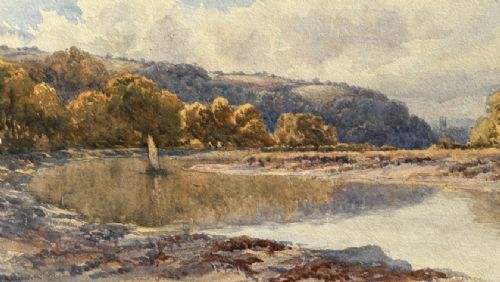
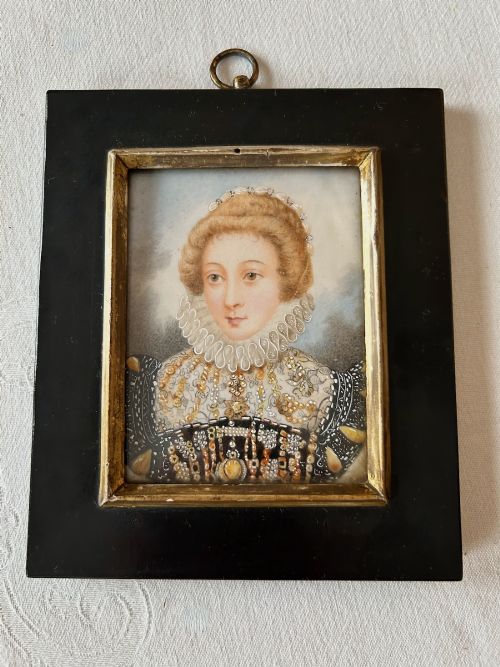
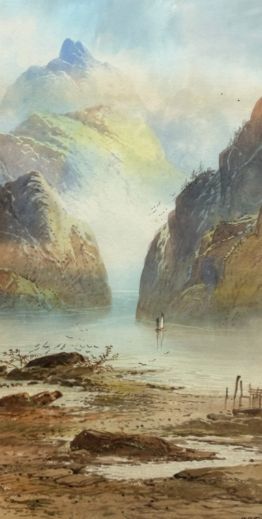
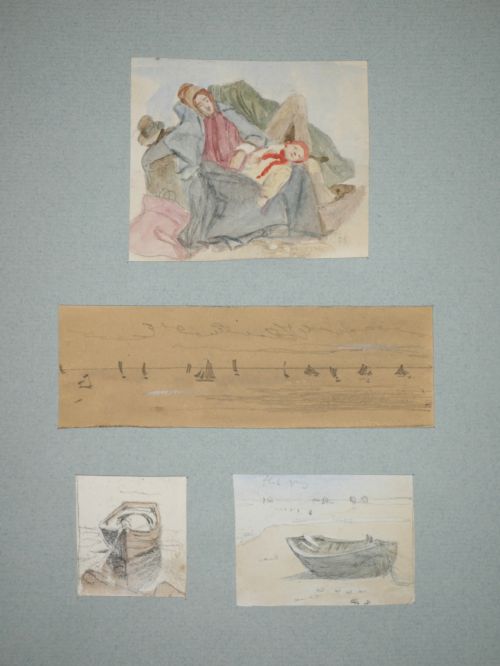
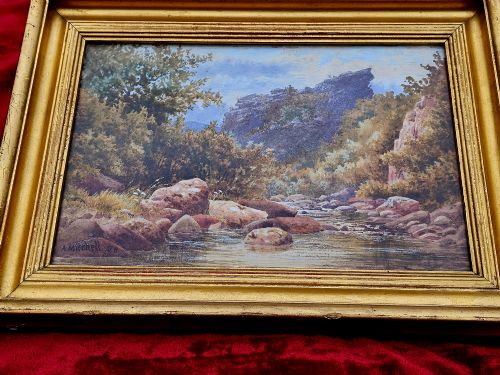
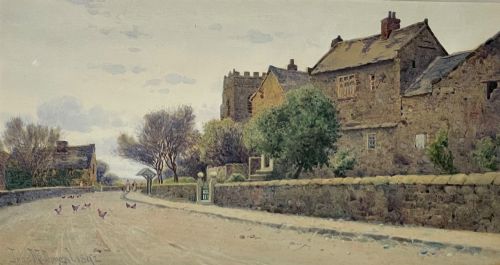
Framed victorian watercolour art spans paintings on paper and works on paper housed behind glass in wood or gilt frames. Buyers searching this phrase encounter nineteenth-century scenes ranging from Scottish landscapes and marine views to botanical studies and portrait miniatures.
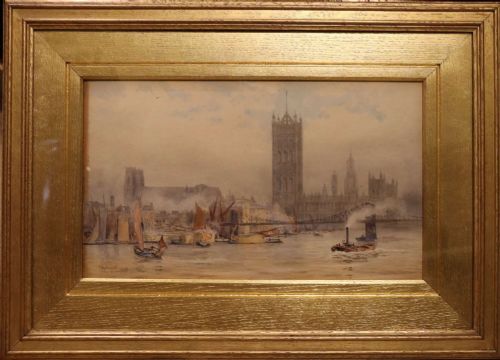
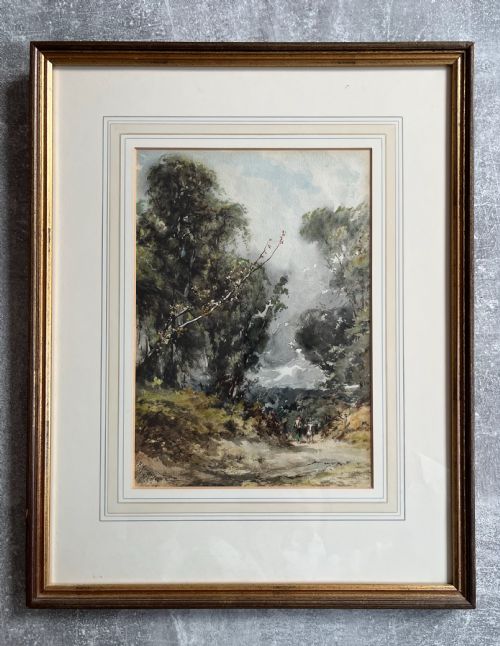
The selections on this page draw from periods including the Regency era, the Victorian decades, and the early twentieth century around nineteen hundred. Landscapes by artists such as Thomas Miles Richardson Jnr and maritime paintings by figures like TB Hardy form a significant portion of the available works.
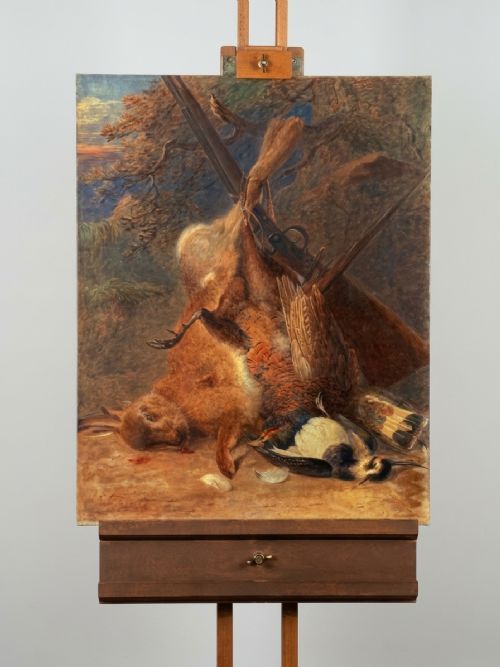
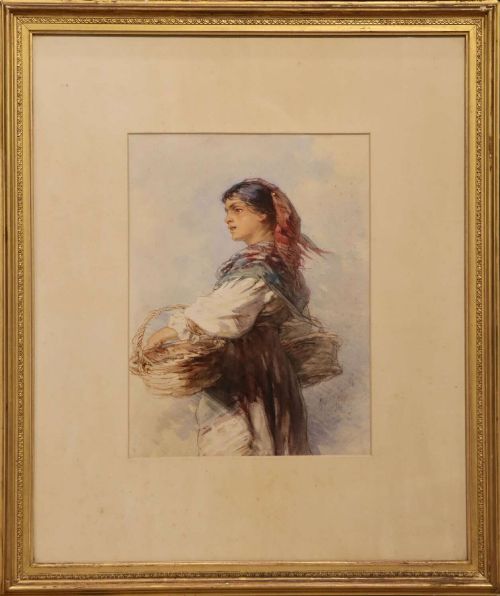
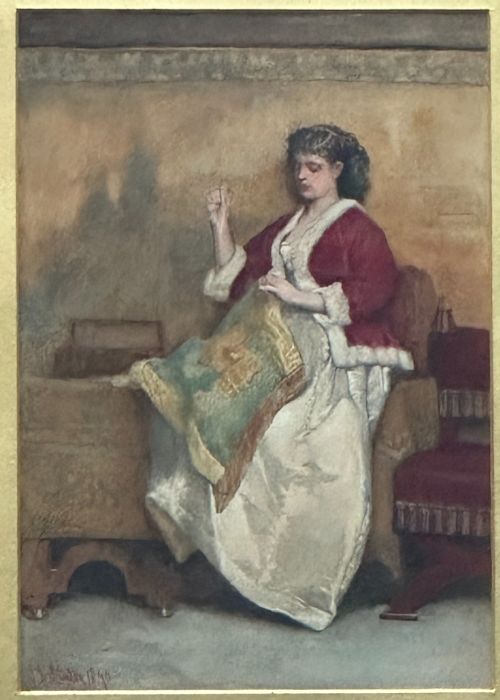
Subjects stretch from pastoral farming scenes and Italianate views to floral still lifes and character portraits. These pieces reflect the varied interests of nineteenth-century painters, from Royal Academy exhibitors to regional artists working in watercolour pigment.
Materials and technique
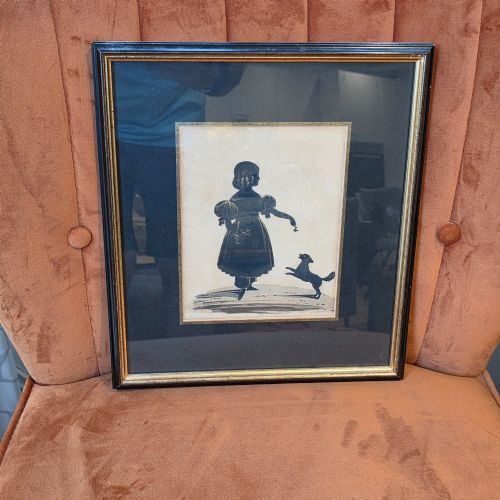
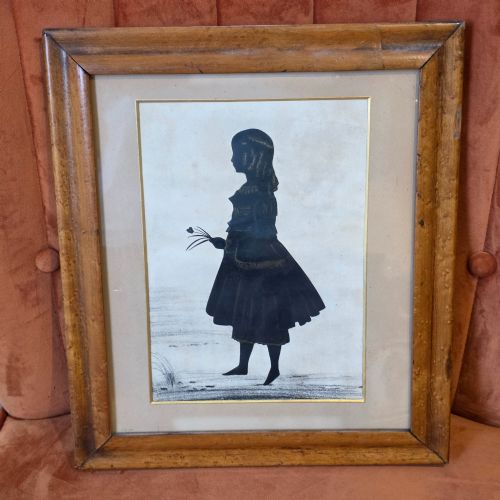
These works rely on watercolour pigment applied to paper, occasionally supplemented by cut-paper silhouettes or worked on glass for miniature portraits. Artists used fluid washes of colour to build transparency and light in landscapes, seascapes, and botanical studies.
The paintings are housed within period surrounds constructed from wood, rosewood, and gold leaf or gilt wood. Glass protects the delicate pigment and paper surfaces from moisture and environmental damage over time.
Many examples bear signatures, monograms, or dates inscribed by the hand of the artist, while others remain attributed to followers or schools of nineteenth-century practitioners.
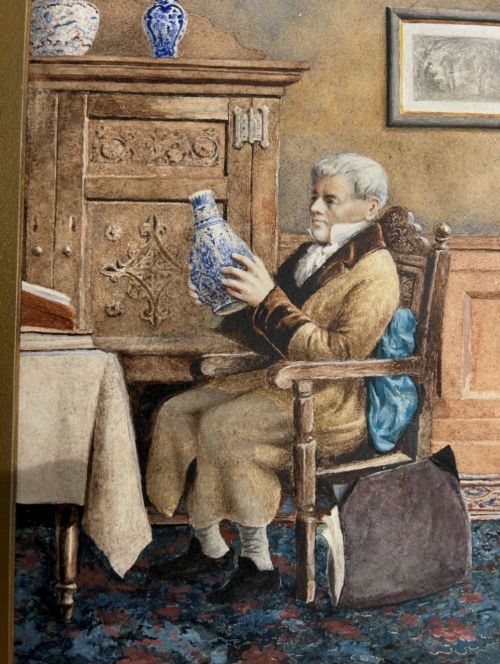
Several artists captured the quiet drama of everyday Victorian life, from sheep being herded to market to gentlemen examining blue vases.
Aspects of quality
Quality in these watercolours rests upon the skill of the brushwork and the precision with which light and atmosphere are captured. Master painters achieved depth and clarity in complex scenes such as coastal harbours and woodland paths, whereas lesser works display rigid lines and flat washes.
The preservation of the pigment against fading plays a vital role in the appeal of a piece. Strong colour retention and minimal paper discoloration distinguish superior works from those affected by prolonged exposure to light.
The harmony between the painting and its original housing matters greatly. Examples retaining period rosewood or gilt wood frames complement the visual weight of the art far better than mismatched modern replacements.
William James Hubard·George Fotherly Hargitt·Thomas Miles Richardson Jnr·James Orrock·William Henry Earp·Sir James Dromgole Linton·Henry Stacy Marks·James Smetham·John McDougal·William Banks Fortescue·Robert A Nottingham·Vincent Clare·Robert Thorne Waite·Joseph H Barnes·Ernest Arthur Rowe·Frederick Walker·TB Hardy·Frederick James Kerr·Carlo Ferranti·Frederick Tatham·Bonomi Edward Warren
The Framed Victorian Watercolour Art Glossary
- Watercolour pigment
- A colourant ground with a water-soluble binder, used on paper to create translucent washes and fine details. Artists applied these pigments to depict landscapes, portraits, and botanical subjects.
- Gilt wood
- Wood carved and coated with a thin layer of gold leaf or metallic gilt. This material was widely utilised for decorative nineteenth-century picture frames.
- Portrait miniature
- A small-scale painting capturing a likeness, often executed on paper or glass during the nineteenth century. These intimate works frequently sat inside protective hinged cases or small frames.
- Regency
- An architectural and artistic period spanning the early nineteenth century preceding the Victorian era. Pieces from this time often exhibit neoclassical influences.
- Monogram
- A motif made by overlapping or combining letters to form a single symbol used by an artist to sign a work. These marks help identify the creator of a painting.
Framed Victorian Watercolour Art: Frequently Asked Questions
How do I care for antique watercolours?
Keep watercolour paintings out of direct sunlight to prevent the pigments from fading over time. Maintaining stable indoor humidity levels protects both the delicate paper support and the wooden frame.
Ensure the protective glass remains sealed against dust and moisture. Professional framing using acid-free materials safeguards the longevity of nineteenth-century works on paper.
Are these watercolours original paintings?
The listings on this page consist of original hand-painted works rather than modern reproductions or prints. Each piece represents a unique application of watercolour pigment by an artist.
Signatures, dates, monograms, and brushwork visible under close inspection confirm the hand-painted nature of these nineteenth-century creations.
What subjects are most common?
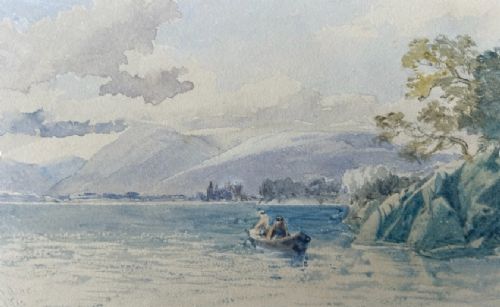
Landscapes and seascapes form a large part of the selection, capturing rural scenes, coastal fishing boats, and Scottish views. Botanical studies featuring roses, fuchsias, and plums also appear frequently.
Portraiture represents another key category, ranging from full-length silhouette portraits to detailed family groups and character studies.
How can I tell the period of a painting?
Stylistic clues such as costume details in portraits, landscape compositions, and framing materials often point toward a specific decade. Signatures linked to recorded artists with documented working dates help narrow down the timeline.
Technical aspects like the type of paper stock and framing construction provide further evidence regarding whether a piece originates from the Regency, Victorian, or Edwardian era.