


Framed Victorian Caricatures
Framed Victorian caricatures bring sharp satirical wit to your walls through period printmaking and original watercolour art.
Framed Victorian Caricatures
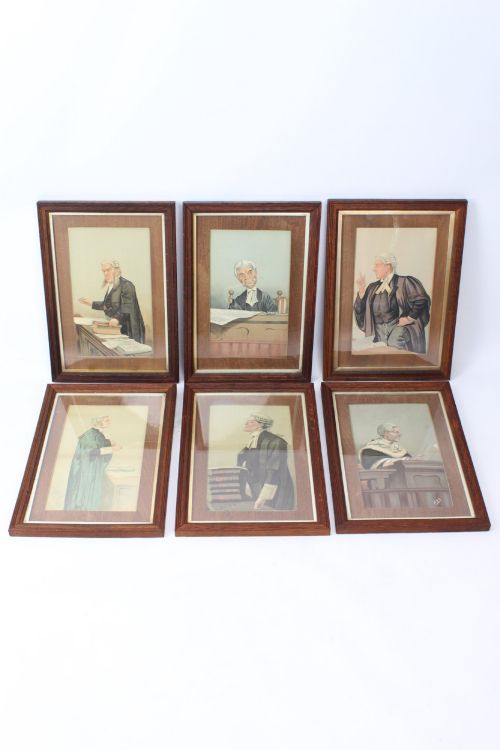
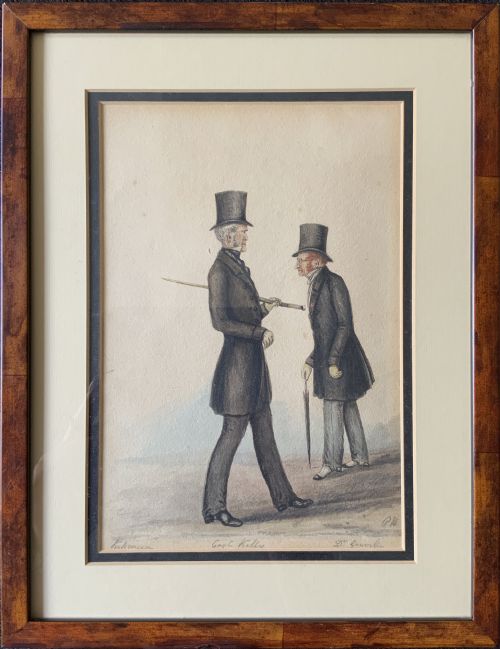
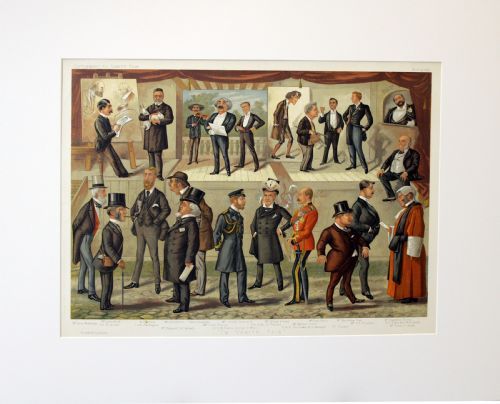
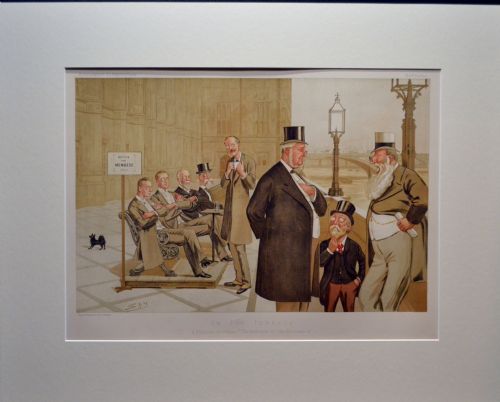
Framed victorian caricatures capture the social and political personalities of the nineteenth century through satirical portraiture and published print series. You encounter these works most frequently as Vanity Fair Spy prints or double-page chromolithographs housed behind glass in wooden frames.
The selection ranges from individual framed artworks to sets depicting politicians, royalty, society figures, and sportsmen. These pieces originate primarily from the Victorian and Edwardian eras, utilising mount board and card to present historical caricature in domestic settings.
How they were made
These works rely on ink, watercolour, and chromolithography applied to paper and cardboard. Publishers produced the periodical plates using colour lithographic techniques, while artists executed original portraits by hand in watercolour and ink.
Framing traditionally involves timber mouldings, glass protection, and internal mount board to secure the paper sheets. Workers assembled these components to preserve the delicate surfaces of nineteenth-century prints and paintings.
Victorian readers eagerly flipped to the back pages each week to see which pompous politician would be skewered next.
What varies in quality
The distinction in quality rests upon the fidelity of the printing process and the retention of strong colour in the chromolithographs. Original watercolour works achieve higher distinction through the finesse of the brushwork and the preservation of the pigment.
Presentation also separates examples, as period framing and clean mount board enhance the visual impact of the caricature. Complete sets maintain greater coherence than scattered individual prints.
The Framed Victorian Caricatures Glossary
- Chromolithography
- A colour lithographic printing process used to produce multi-coloured images. This technique allowed publishers to distribute vibrant satirical plates in large editions.
- Spy
- The pseudonym of artist Leslie Ward, whose caricature portraits defined the Vanity Fair series. His contributions form a major component of nineteenth-century satirical print output.
- Mount board
- Heavy paperboard used to frame and separate artworks from the protective glass. It provides structural support and prevents the print surface from sticking to the glazing.
Framed Victorian Caricatures: Frequently Asked Questions
What subjects do these caricatures show?
The pieces depict prominent figures from politics, law, society, military, and racing circles. Famous series focus on statesmen, royalty, and sportsmen of the period.
Subjects range from single portraits to thematic groups such as politicians of empire and hunting scenes.
How should I hang these framed prints?
Protect the paper and watercolour elements by placing them away from direct sunlight. Consistent indoor temperatures prevent warping in the wooden frames and mount board.
Group related sets together on the wall to maintain the visual narrative intended by the original series.
Are these prints original period pieces?
The listings comprise authentic nineteenth-century and early twentieth-century print material and original paintings. Publishers issued these works in periodicals and special editions during the Victorian and Edwardian eras.
Materials include period paper, card, ink, and chromolithographic pigments consistent with nineteenth-century production.
What is a Vanity Fair print?
Vanity Fair was a weekly magazine famous for publishing satirical full-page lithographs of notable personalities. Artists signed these plates with pseudonyms such as Spy.
These prints were issued as single or double pages and remain collectable records of historical figures.