

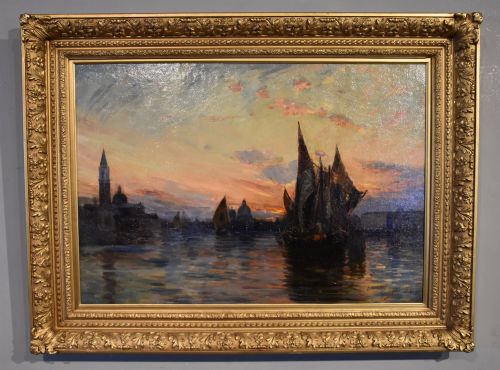


Framed Venice Wall Art
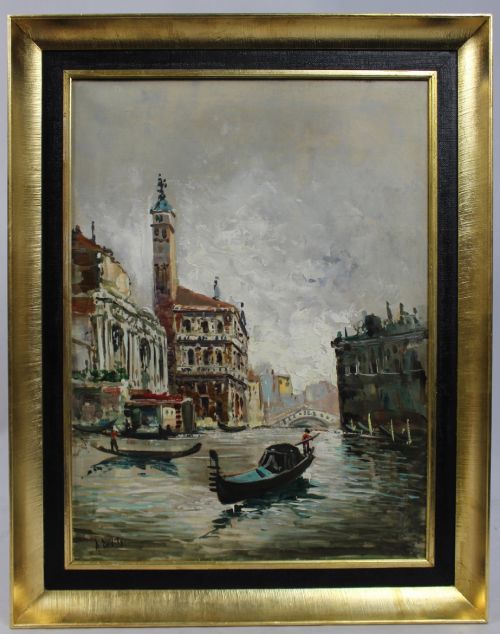
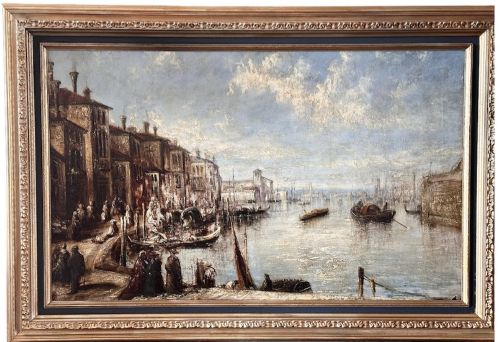
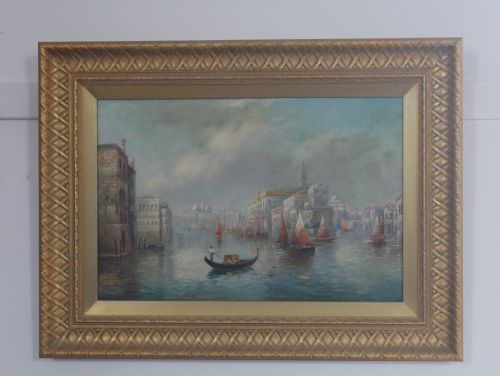
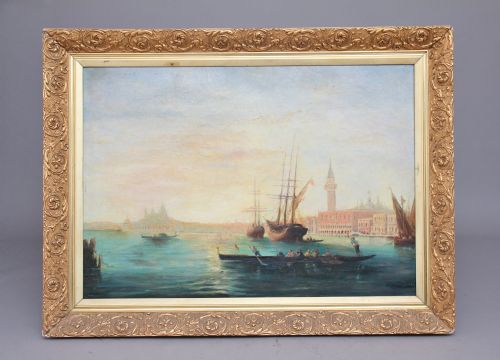
Framed venice wall art captures the light and architecture of the lagoon through oils and watercolours set in wood and giltwood.
Framed Venice Wall Art
Framed venice wall art brings together oil paintings, watercolours, and mixed media works focused on canals, the Grand Canal, and the lagoon. These pieces range from nineteenth-century romantic and Victorian views to mid-century impressionism and expressionism.
The most common formats on this page are oil on canvas and watercolour paintings housed in traditional wood and giltwood frames. Subjects frequently include the Doge's Palace, Santa Maria della Salute, and gondolas on the water.
Materials and construction
Artists painted primarily in oil on canvas or applied watercolour and gouache to paper, capturing the shifting light of the Venetian lagoon. These works are finished with ink pen drawings or pastel details in selected mid-century pieces.
Surviving works are held in wooden frames, often finished in giltwood that complements the maritime subjects and townscapes depicted within the composition.
Several artists painted Venice without ever visiting, relying entirely on postcards and pure imagination.
Distinctions in quality
Quality rests upon the handling of light and atmospheric perspective across the water, separating competent topographical records from more expressive artistic interpretations. The articulation of architectural detail in landmarks like the Doge's Palace or the Dogana further defines the upper tier of works.
The relationship between the artwork and its frame contributes to the overall cohesion of the piece. Period frames that suit the scale and palette of the canvas enhance the visual impact of the subject.
Antonio DeVity·Francis Moltino·Thomas Hodgson Liddell·Claude Jousset·Jane Vivian·Alfred Pollentine·Frank Wasley·William Knox·Emanuele Cappello·Helen Donald Smith
The Framed Venice Wall Art Glossary
- Giltwood
- Wood carved and coated with gold leaf or gold paint. This finish appears frequently on frames encasing nineteenth-century oil paintings.
- Lagoon
- The shallow bay of the Adriatic Sea in which Venice sits. It provides the characteristic watery foreground and light for these townscapes.
- Impressionism
- An art style focused on accurate depiction of light and its changing qualities. Several mid-century and nineteenth-century works on this page adopt this approach.
- Watercolour
- Paint consisting of pigment suspended in a water-based solution, typically applied to paper. It yields transparent washes suited to depicting skies and water.
Framed Venice Wall Art: Frequently Asked Questions
How do I date a framed venice painting?
Dating relies on the frame style, the pigment and canvas preparation, and the artist's recorded working period. Signatures and stylistic movements such as Victorian romanticism or mid-century impressionism offer further chronological markers.
Compare the handling of architectural perspective and medium against documented examples from the same period to narrow down the decade of creation.
Where should I hang a venice wall art piece?
These works suit dining rooms, studies, or hallways where controlled lighting can illuminate the oil canvas or watercolour paper. Keep them away from direct sunlight to protect pigments and paper from fading.
Ensure the room humidity remains stable to prevent wood movement in the frame and degradation of the canvas support.
What is the difference between an oil painting and a watercolour of Venice?
Oil paintings utilise pigments bound in drying oils on canvas, offering rich textures and deep tones suited to dramatic lagoon scenes. Watercolours employ water-soluble pigments on paper, producing lighter, more translucent atmospheric effects.
Oils generally require sturdy wooden or giltwood frames with protective backing boards, while watercolours need glazing to safeguard the paper surface.
How do I care for antique giltwood frames?
Dust giltwood frames gently with a soft, dry brush to remove particulate matter without disturbing the metallic leaf surface. Avoid liquid cleaners, polishes, or damp cloths which can damage the gesso and gold leaf.
Maintain stable environmental conditions to prevent the underlying wood from expanding or contracting, which causes cracking in the gilt finish.