

Framed Silk Textile Art
Framed silk textile art spans centuries of needlework, embroidery, and woven panels preserved behind glass in period wood frames.
Framed Silk Textile Art
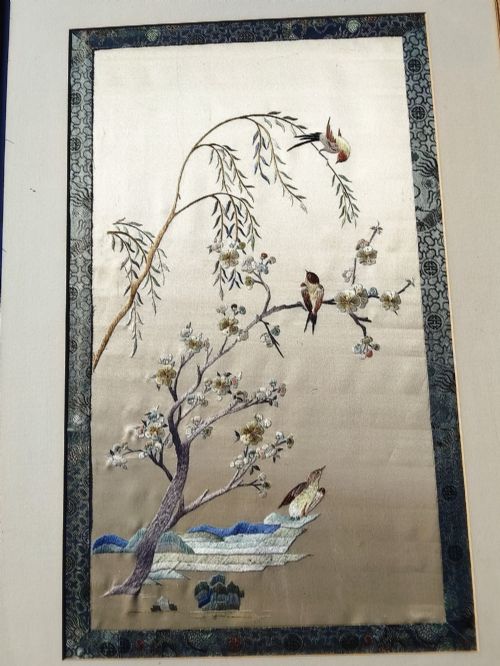
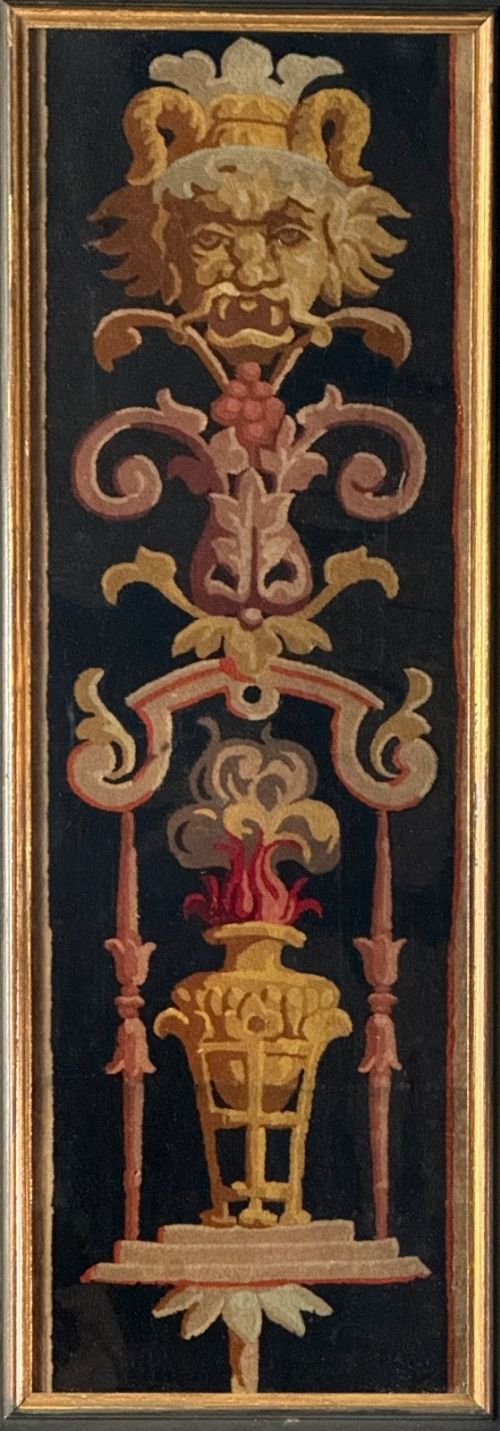
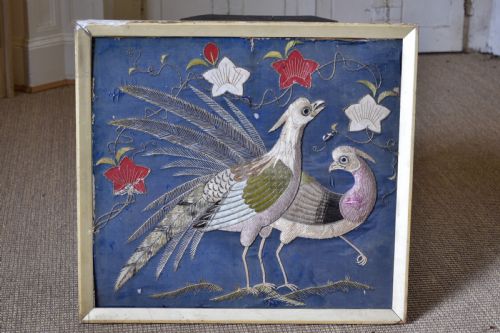
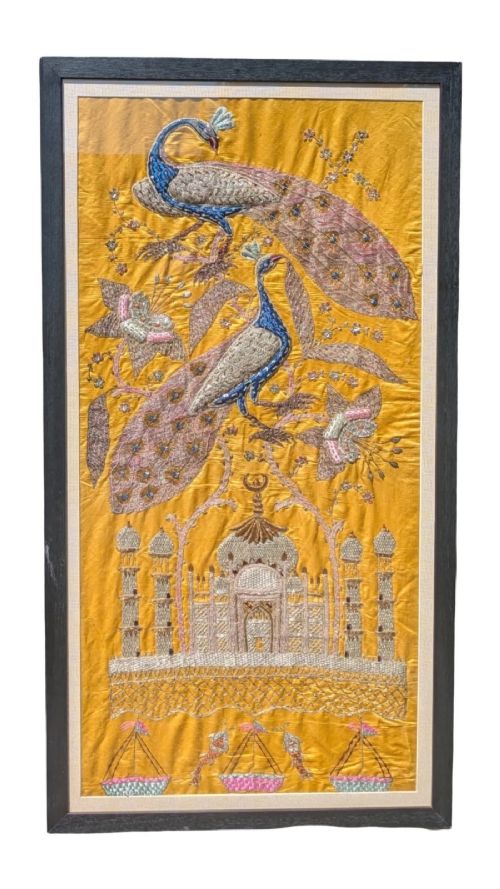
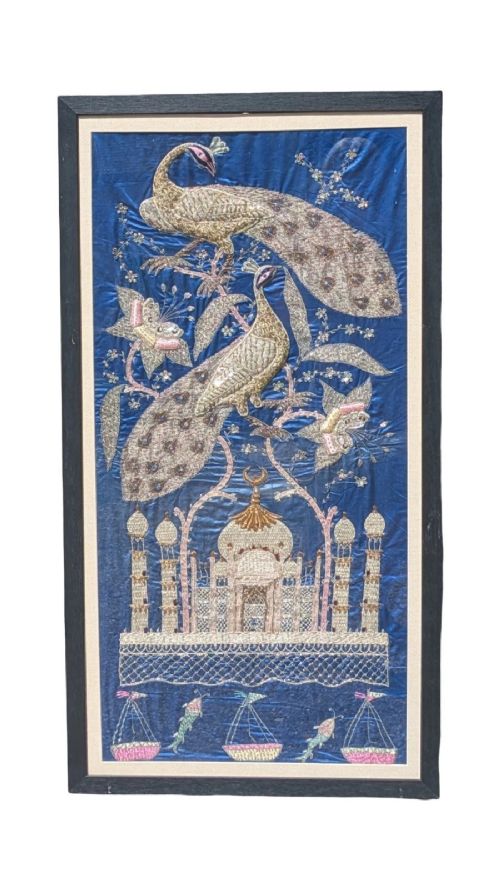
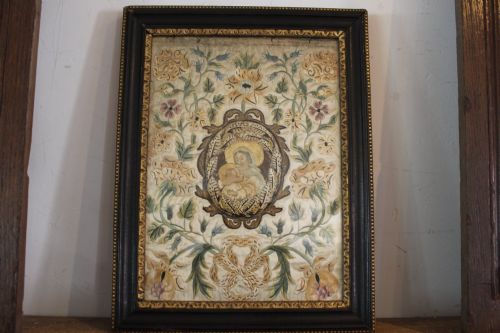
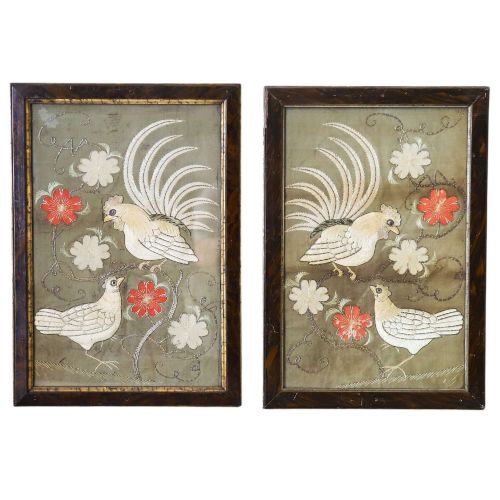
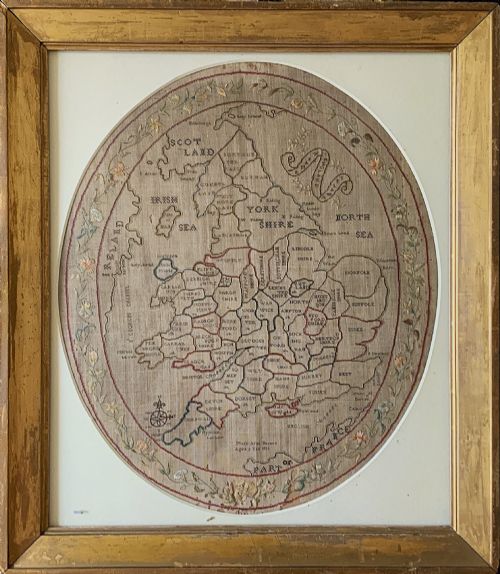
When you search for framed silk textile art, you encounter everything from seventeenth-century Stuart stumpwork panels to nineteenth-century samplers, Ottoman fragments, and Chinese rank badges. The pieces on this page bring together historic hand-stitched fabrics, needlepoint maps, and painted silks mounted behind protective glazing for display on walls.
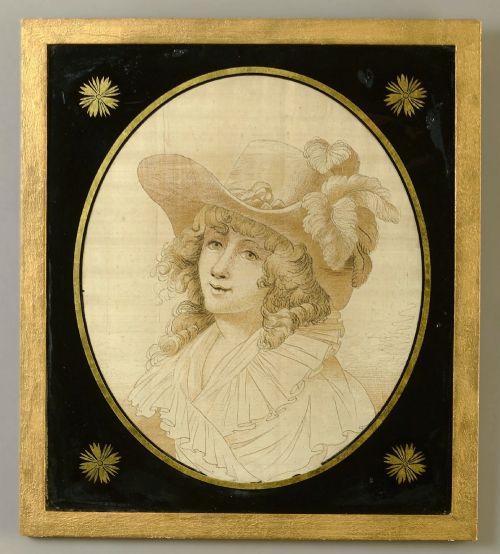
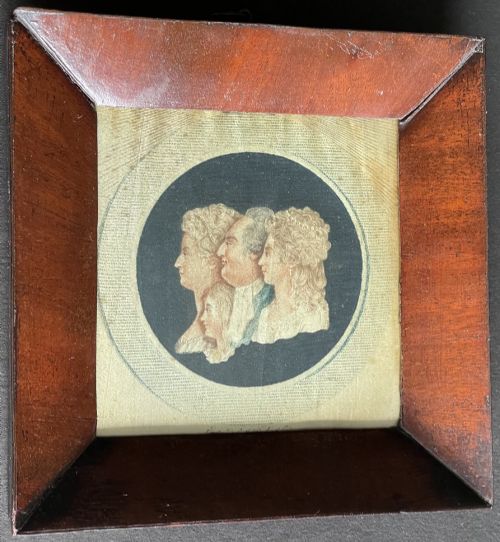
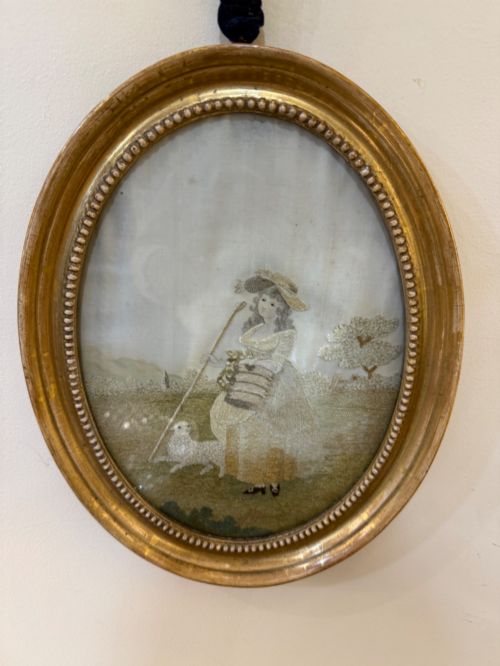
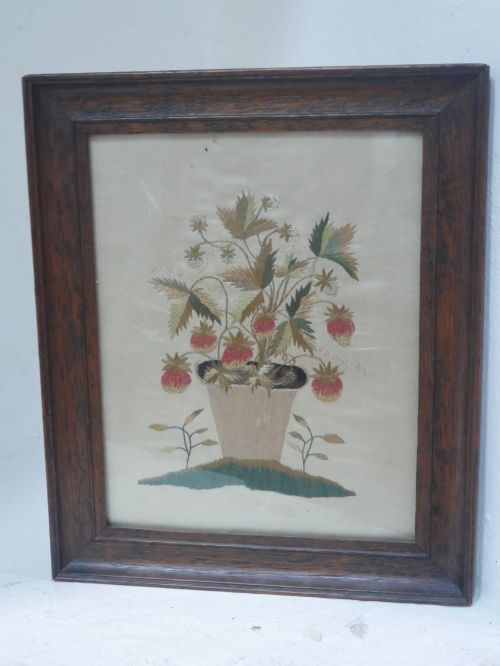
Most examples you meet here are British or European needlework pictures, Chinese embroideries, or Central Asian tribal panels set within wooden frames, often accompanied by original glass. They range from small embroidered portraits and botanical studies to large wall hangings and detailed cartographic samplers worked by young girls.
How they were made
Maker's materials combine natural silk threads, wool, and metallic thread worked onto silk, linen, or cotton grounds using specialised stitches. Embroidery floss, hand-painted details, and silk patchworks appear alongside woven textiles and printed silks.
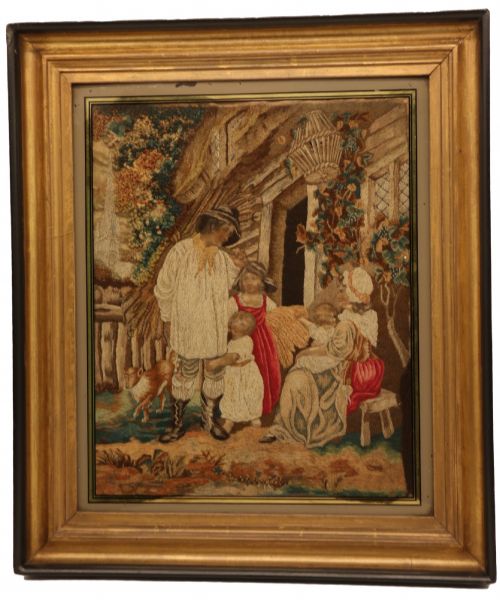
The finished works are secured inside wood frames, frequently utilising gilded wood, faux tortoiseshell, or verre églomisé glass borders to protect the delicate fibres from dust and handling.
Materials documented across the page include silk, metallic thread, wool, cotton, linen, glass, and gilded wood.
What varies in quality
Quality rests in the precision of the needlework, the complexity of the stitch execution, and the preservation of the silk fibres against fading and splitting. Fine shading, intricate stumpwork relief, and tight geometric or pictorial composition set superior panels apart from simpler schoolroom efforts.
The integrity of the mounting also dictates worth, as original frames, undisturbed glass, and stable backing materials preserve the textile far better than later remounting attempts that flatten the stitches.
Stevens of Coventry
The Framed Silk Textile Art Glossary
- Stumpwork
- A raised embroidery style popular in the seventeenth century, using padded underlays to create three-dimensional figures and motifs on silk.
- Sampler
- A piece of needlework produced to demonstrate proficiency in various stitches and alphabets, frequently including maps, dates, and the maker's age.
- Rank badge
- A square embroidered insignia worn on Chinese official robes, depicting birds or animals to denote civil or military status.
- Verre églomisé
- A process of applying gold or silver leaf to glass and engraving a design through it, often used for decorative picture borders.
- Suzani
- A type of embroidered and decorative tribal textile from Central Asia, worked in silk on a cotton or linen ground.
Framed Silk Textile Art: Frequently Asked Questions
How do I hang framed silk art?
Keep textile art away from direct sunlight and high humidity to prevent the silk threads from fading and weakening over time. Hang them on interior walls using secure picture hooks suited to the weight of the wood frame.
Ensure the glass does not press directly against the textile face, as trapped moisture can damage historic fibres and painted silk details.
How are old silk textiles dated?
Dating relies on stylistic clues, framing techniques, and stitched dates or maker signatures embedded within samplers and embroidered panels. Costume details, hair styles, and lettering styles help narrow the period.
Comparative analysis with dated examples from the seventeenth through the nineteenth centuries confirms the likely decade of production.
Why are some panels under glass?
Glass protects fragile historic silk, wool, and metallic threads from atmospheric pollution, dust, and physical handling. Without this barrier, historic textiles degrade rapidly when exposed to everyday environments.
Most antique framed textiles retain their original glass, which often shows characteristic bubbles and waviness consistent with age.
What is a silk bookmarker?
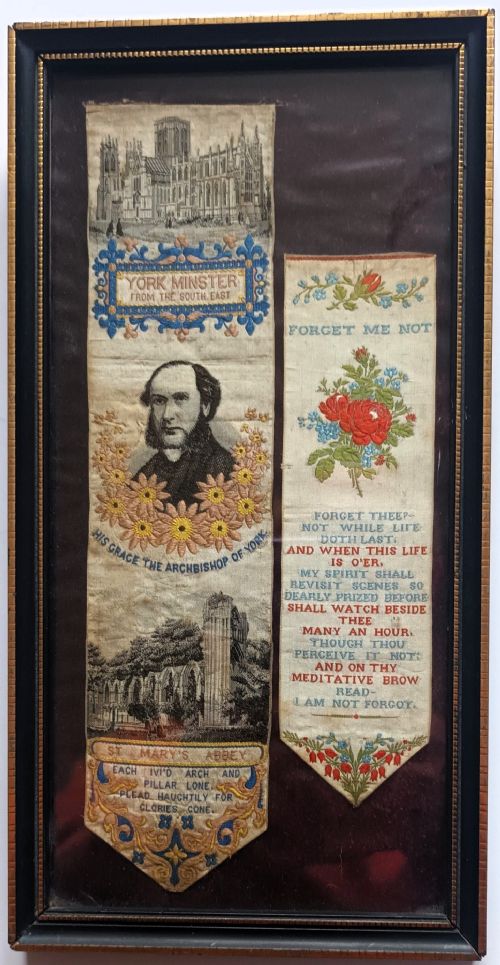
Silk bookmarks are woven ribbons produced on Jacquard looms, featuring detailed pictorial scenes, poems, or commemorative texts. Victorian examples were often mounted and framed behind glass for wall display.
They represent a distinct industrial weaving technique that differs from hand-stitched needlework pictures.