







Framed Sampler Wall Art
Framed sampler wall art brings historic needlework into the room, showing the stitches and alphabets worked by children and adults centuries ago.
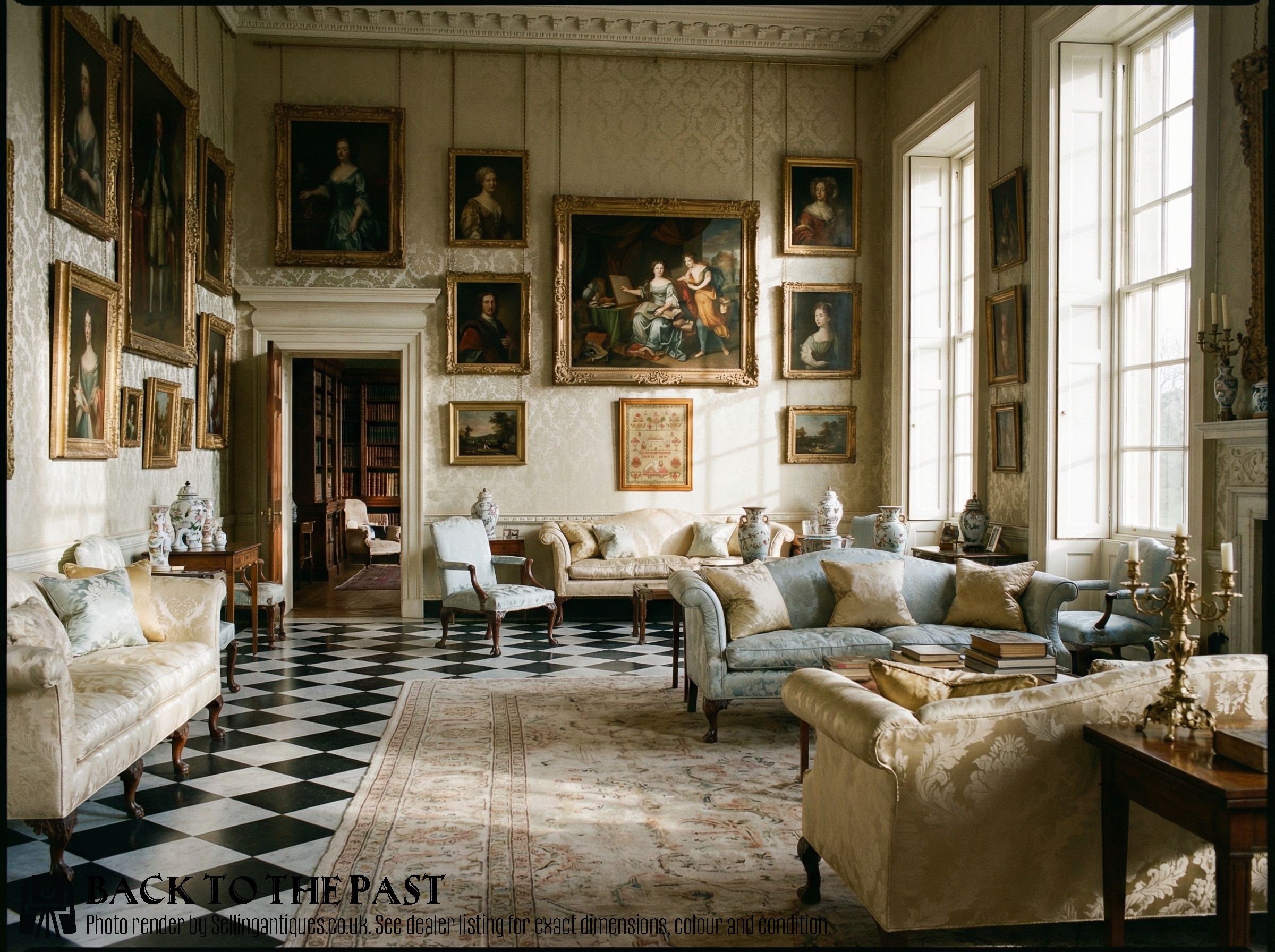
Framed Sampler Wall Art
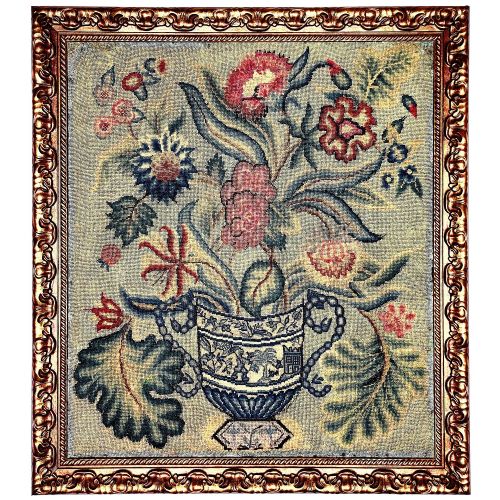
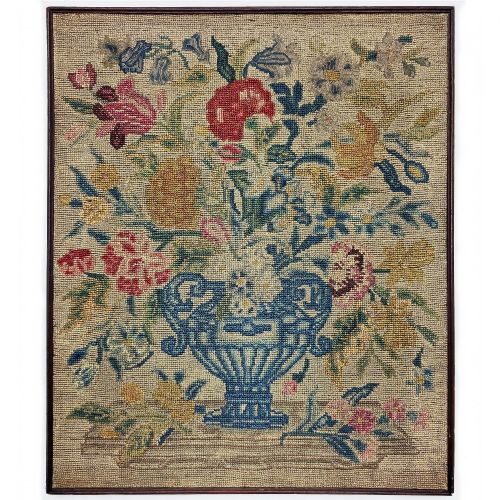
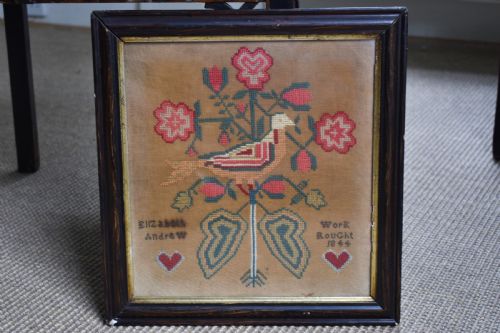
Framed sampler wall art comprises historic textile works, including needlework samplers, embroidered pictures, map samplers, and tapestry panels. These pieces span the eighteenth and nineteenth centuries, featuring works from Georgian, Victorian, Regency, and Folk Art styles.
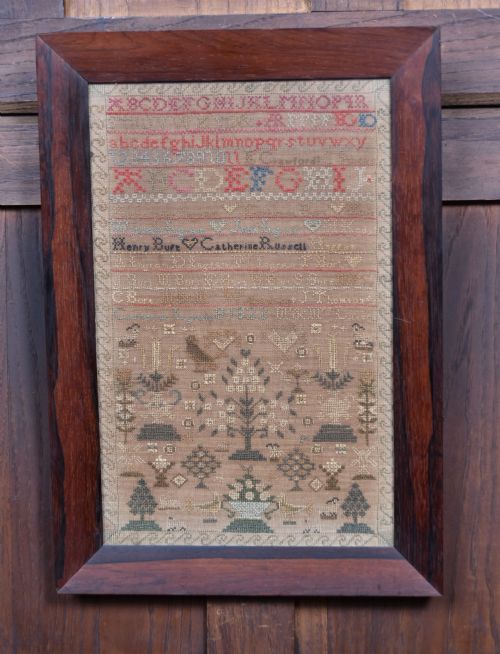
The most common examples on this page are nineteenth-century and Victorian needlework samplers worked on linen or canvas. They frequently record the maker's name, age, and date, alongside alphabets, numbers, motifs, and pictorial scenes.
Materials and construction
These pieces are constructed using linen, canvas, or wool backing materials worked with silk thread, wool, and thread. Stitching techniques encompass traditional needlepoint, gros point, petit point, and intricate embroidery.
Makers utilised silk floss and varied threads to build pictorial details, maps, and alphabets. Completed textiles are housed behind glass within wooden frames, occasionally including period rosewood mouldings.
Framed Sampler Wall Art Retail Price Guide 2026
Typical asking prices for framed sampler wall art among the pieces listed under this phrase on Sellingantiques today, from the lower quarter to the upper quarter. They describe what is for sale here now, not the wider market.
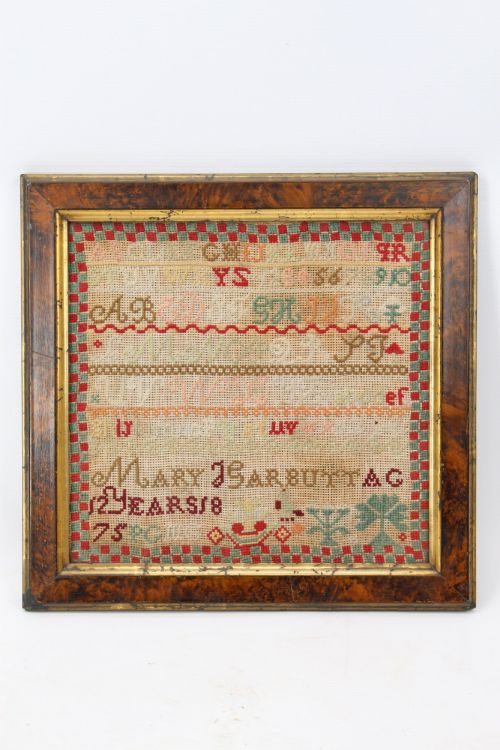
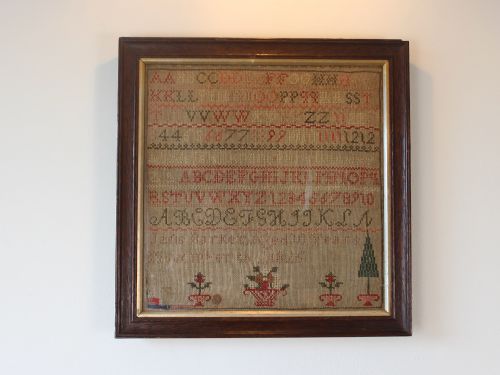
Young Mary J Garbutt recorded her needlework skills here at age twelve in 1875.
Judging quality in needlework
Quality rests upon the precision of the stitching and the complexity of the design. Map samplers, pictorial needlework pictures, and detailed narrative scenes demand greater skill than standard alphabet exercises.
The survival of original materials and contemporary framing influences the integrity of the piece. Vibrant thread colour retention and clear legibility of dates, names, and inscriptions elevate individual works.
The Framed Sampler Wall Art Glossary
- Sampler
- A piece of needlework produced as a demonstration or test of skill in various stitches and patterns. They often include alphabets and numerals.
- Map sampler
- An educational needlework piece depicting geographical maps, such as England and Wales, embroidered with placenames and borders.
- Gros point
- A coarse type of needlepoint stitch worked on canvas, creating a durable and textured surface suitable for pictorial scenes.
- Band sampler
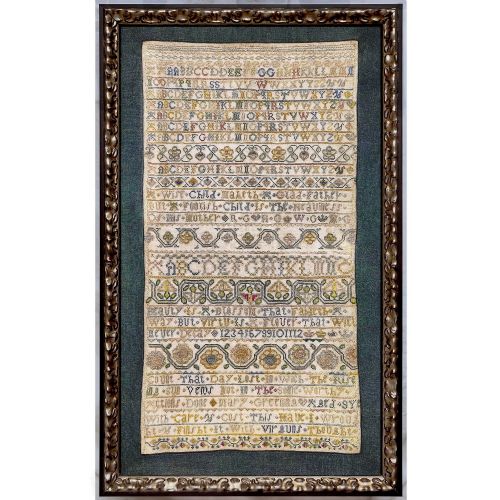
- An early format of needlework featuring horizontal bands of different patterns and motifs arranged in rows.
- Needlework picture
- A framed pictorial textile created with thread to illustrate a specific story, landscape, or portrait rather than rows of letters.
Framed Sampler Wall Art: Frequently Asked Questions
What is a needlework sampler?
A needlework sampler is a textile piece created by stitching alphabets, numbers, motifs, and decorative borders onto linen or canvas. Young makers traditionally worked these to demonstrate their proficiency in various embroidery stitches.
Over time, these exercises were preserved behind glass in wooden frames as decorative household items. They often record specific genealogical details like the maker's name and age.
How do I date an antique sampler?
Many samplers contain embroidered dates, ages, and names that directly indicate when they were made. Stylistic clues, such as the typography of the alphabet or the specific framing materials, also help narrow down the period.
Eighteenth-century examples tend to feature band designs and simpler pictorial motifs. Victorian pieces frequently display denser floral borders and pictorial narratives.
Were samplers made by children?
Historical records and inscriptions show that many samplers were worked by young girls attending school or learning at home. Ages recorded on the linen frequently range from ten to fourteen years old.
These schoolgirl pieces functioned as educational milestones as well as decorative displays of needlework ability. Some institutional examples note the specific school where the work was completed.
How should I hang antique textiles?
Antique framed textiles require placement away from direct sunlight to prevent the silk threads and linen backgrounds from fading. Stable indoor environments with minimal humidity fluctuations protect the fragile fibres inside the frame.
Glass fronts shield the fabric from dust and physical contact. Hanging them on interior walls ensures the materials remain preserved for years to come.