
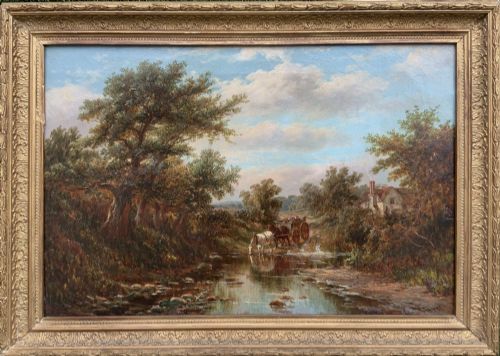
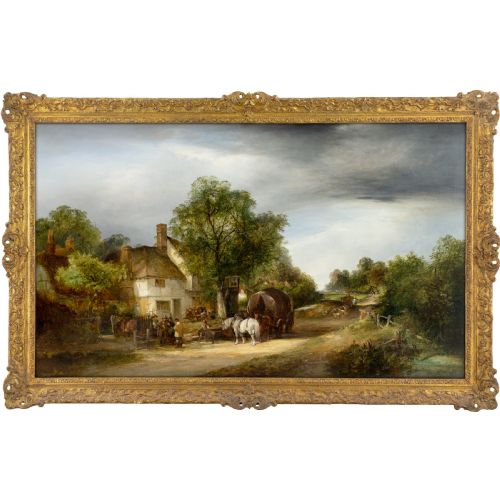


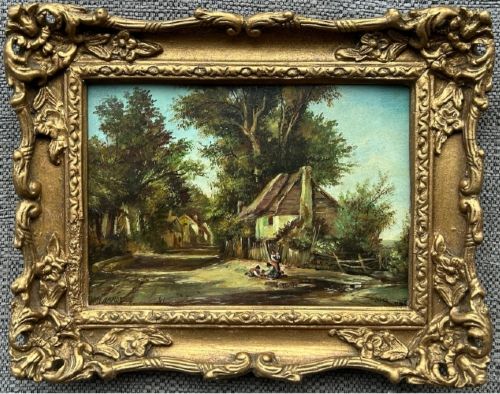
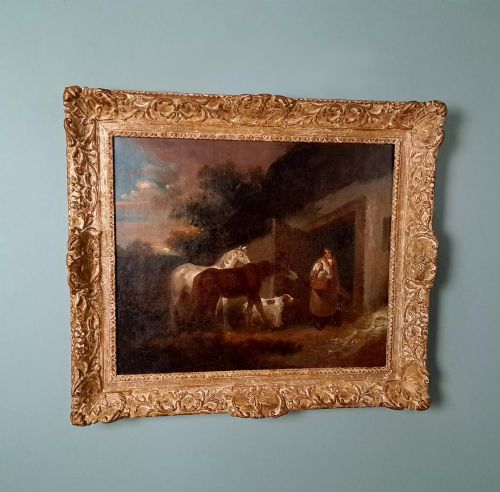
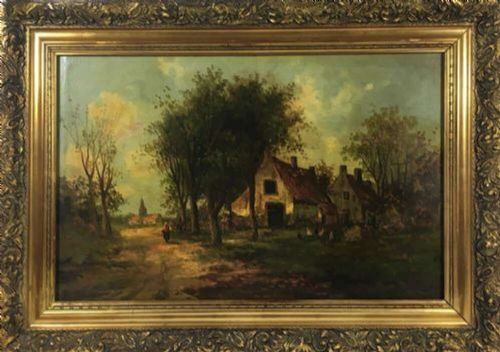
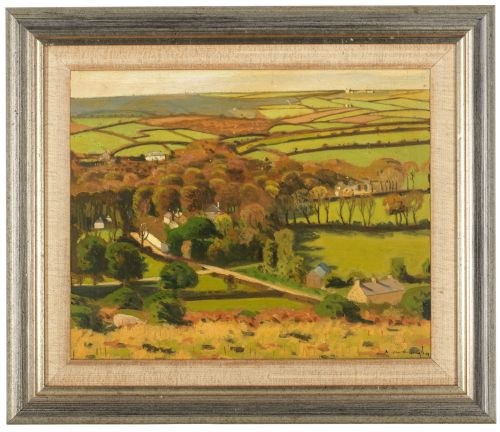
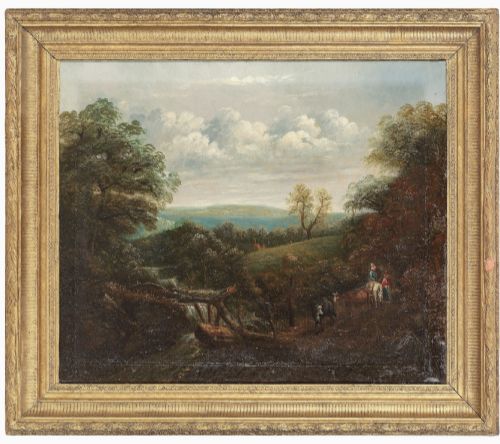
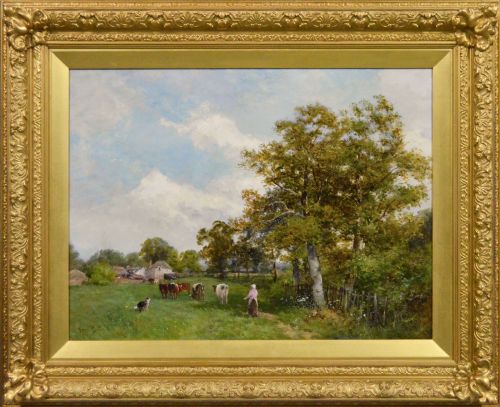
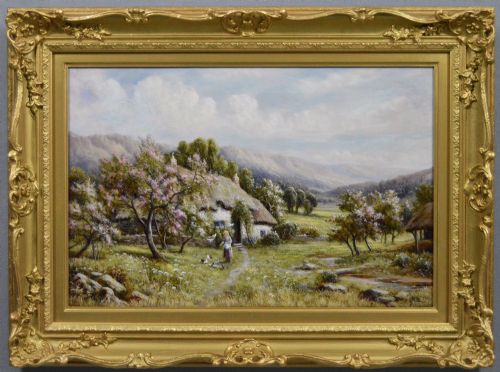
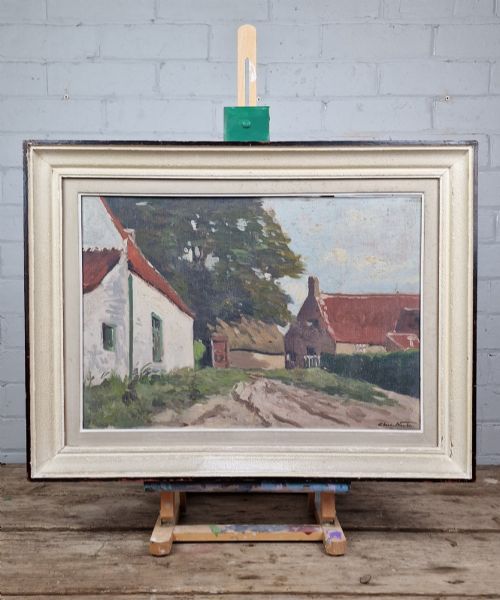
Framed Rural Landscape Oil
A framed rural landscape oil brings quiet fields, farmyards and country cottages indoors through the brushwork of nineteenth and twentieth-century painters.
Framed Rural Landscape Oil
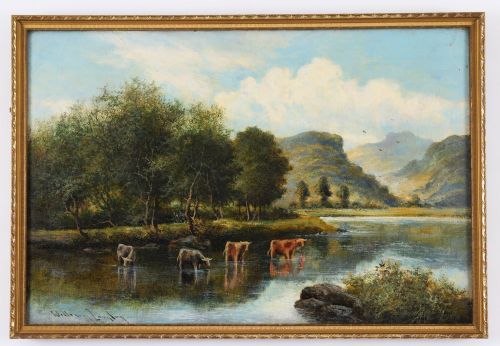
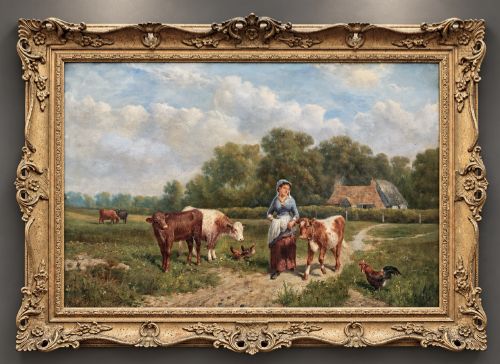
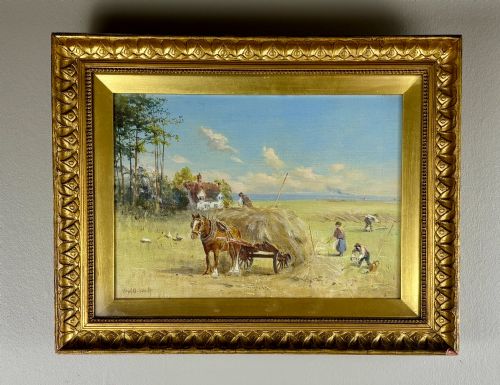
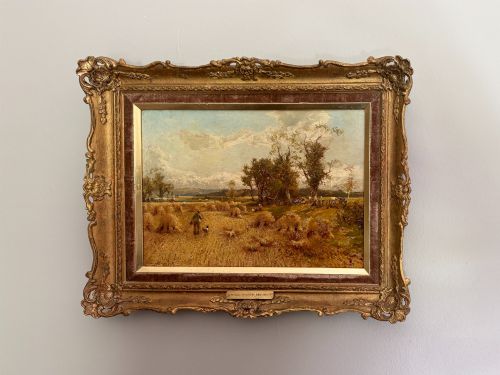
When searching for a framed rural landscape oil, collectors encounter depictions of working farms, river valleys, and pastoral scenes created across the nineteenth and twentieth centuries. The selection spans nineteenth-century canvases, Edwardian river views, and mid-century rustic panels, capturing country life from Britain and continental Europe.
The most frequent pieces on this page are oil paintings on canvas or wood panels, enclosed in period wooden and gesso frames. Common subjects include cottages, harvest fields, livestock, and rural workers rendered by regional schools or individual artists.
How They Were Made
Painters applied oil paint using brushes and palette knives onto prepared supports of canvas, wood panels, card, or board. These materials provided varied surface textures that held pigment and oil binders over decades of display.
Canvases and panels were mounted into moulded wooden frames, often accented with plaster gesso and gilt finishes to complement the domestic interiors of Victorian and Edwardian homes.
Regional British and continental European schools dominate the rural landscape selections.
What Varies in Quality
The distinction between ordinary and accomplished rural oil paintings rests on the confidence of the brushwork and the observation of light and atmosphere. Stronger works convey depth, movement in water or foliage, and subtle tonal shifts rather than stiff, formulaic reproduction.
Frame construction also distinguishes the works, as original period gilt wood and gesso mouldings designed specifically for the canvas reflect the aesthetic standards of the painting's era better than later replacement frames.
William Joseph Shayer Senior·David Bates·Robert John Hammond·Walter Heath Williams·John Horace Hooper·Ernest Higgins Rigg·William Greaves·Miles Birkett Foster·George Morland·Johannes de Haas·Sydney Yates Johnson·Owen Bowen·Charles Clair·Harry Freckleton·Raimond Louis Lecourt·William Henry Mander·Thomas Sidney Cooper·George Graham·William Howard Hardy·Robert Morson Hughes·Charles Houben·Umberto Volpato
The Framed Rural Landscape Oil Glossary
- Canvas
- A heavy woven fabric stretched across a wooden frame to serve as a painting surface. It provides a slightly textured ground for oil pigments.
- Gesso
- A plaster-like mixture applied to wooden frames and moulded into decorative reliefs before gilding. It gives crispness to ornamental details.
- Oil Paint
- Pigment particles bound in a drying oil, typically linseed oil. This medium allows for rich colour blending and slow drying times.
- Panel
- A flat piece of wood used as a rigid support for painting instead of flexible canvas. Wooden panels were common in nineteenth-century cabinet pictures.
- Barbizon School
- A nineteenth-century French movement focused on direct observation of nature and rural farmyard scenes. Artists painted outdoors to capture realistic light and weather.
Framed Rural Landscape Oil: Frequently Asked Questions
What subjects appear in these paintings?
The compositions frequently feature thatched cottages, harvest fields, farmyards, rivers, and livestock with figures engaged in rural labour. Artists captured specific regions across Britain, France, and Belgium, focusing on quiet provincial life.
Animals such as shire horses, cattle, and sheep also feature prominently in pastoral and agricultural scenes.
How do I identify the period of a painting?
Dating relies on the combination of the support material, framing style, stretcher construction, and artist signatures where available. Nineteenth-century works often employ heavier gesso frames and distinct canvas weaves.
Later pieces from the early and mid-twentieth century display different colour palettes and broader impressionistic brush techniques.
Were these always framed?
Most oil paintings from this era were paired with frames intended to protect the edges and complement the domestic display of the artwork. Original frames often show age-related wear that matches the history of the canvas.
Some works have been reframed in later periods depending on previous owner preferences.
How should I hang an oil painting?
Oil paintings on canvas or panel require stable indoor environments away from direct sunlight, dampness, and extreme temperature fluctuations. Using sturdy picture hooks matched to the weight of the wooden frame ensures secure wall placement.
Allowing adequate clearance from heat sources preserves both the wooden stretcher and the oil paint layer.