



Framed Riverbank Oil Artwork
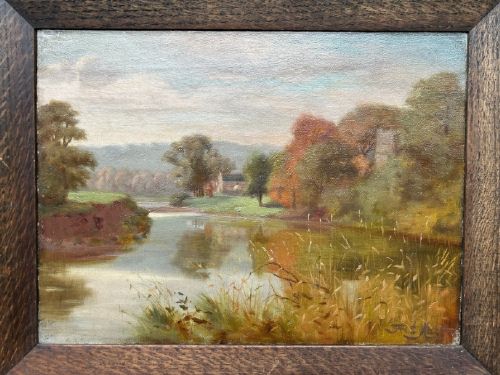
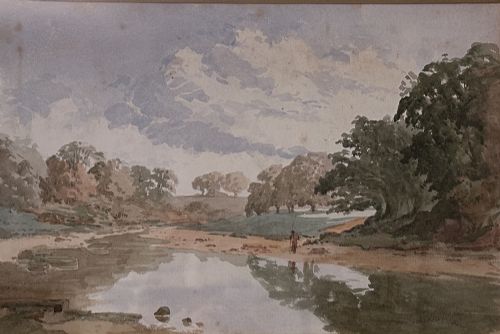
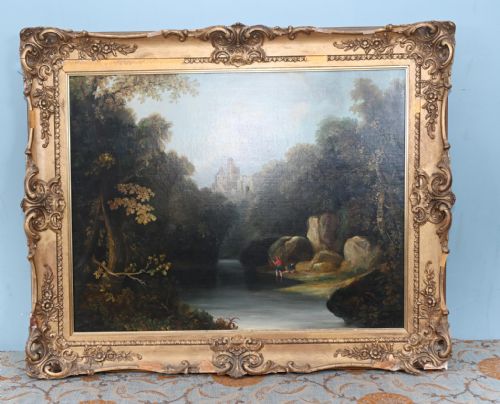
These framed riverbank oil artwork pieces capture watercourses and pastoral scenes through centuries of paint on canvas.
Framed Riverbank Oil Artwork
A framed riverbank oil artwork brings nineteenth-century and mid-century pastoral scenes directly to a wall, focusing primarily on landscapes and riverscapes. Buyers searching this phrase encounter oil paintings on canvas depicting anglers, livestock, boats, and figures beside water. The selection includes Victorian naturalism, impressionist treatments, and English country school pieces.
Most examples originate from the nineteenth century up through the mid-twentieth century, capturing subjects like the Teme, Kennett, and Wharfedale. These paintings frequently measure significant proportions and arrive housed in period wooden or gesso frames. The subjects range from quiet rural tributaries to French chateau settings and Scottish river views.
Materials and Construction
Makers applied oil paint directly onto stretched canvas surfaces using traditional brushes and layering techniques. These canvases are supported by wooden stretchers that maintain tension across the pictorial plane over decades of display.
Surrounding the canvases are frames constructed from wood and gesso, frequently finished with gilt layers. These frames provide structural rigidity and complement the tonal depth of the oil pigments within.
Framed Riverbank Oil Artwork Retail Price Guide 2026
Typical asking prices for framed riverbank oil artwork among the pieces listed under this phrase on Sellingantiques today, from the lower quarter to the upper quarter. They describe what is for sale here now, not the wider market.
Materials documented across the selection include oil paint, canvas, gesso, and gilt wood framing.
Factors of Quality
The distinction between standard decorative pieces and finer works lies in the handling of light, brushwork confidence, and compositional balance. Superior paintings exhibit distinct tonal control across water and foliage, whereas lesser examples rely on formulaic application.
Original framing adds considerable integrity to a piece, particularly when the gilt wood or gesso matches the era of the canvas. The presence of clear signatures and documented artist attributions elevates the standing of individual works.
Frederick Marriott·Archibald Kay·Frank Hyde·William Manners·Constant Ludovic Artz·Henry Cheadle·Robert John Hammond
The Framed Riverbank Oil Artwork Glossary
- Oil on Canvas
- A painting technique where oil-based pigments are applied to a woven fabric support stretched over a wooden frame. This medium allows for rich colour blending and textured impasto application.
- Gesso
- A plaster-like mixture applied to wooden frames as a base for gilding or painting. It provides a smooth surface that takes decorative moulding and metallic leaf effectively.
- Gilt Wood
- Timber treated with a thin layer of gold leaf or metallic powder for decorative effect. This finish characterises many period frames housing nineteenth-century landscapes.
- Impressionist
- A style focusing on the accurate depiction of light and its shifting qualities rather than precise detail. Artists working in this manner use visible brush strokes to capture atmospheric riverbank scenes.
- Victorian Naturalism
- An artistic approach emphasising detailed, realistic representation of the natural world. Works in this vein record flora, fauna, and rural workers with careful attention to botanical and anatomical accuracy.
Framed Riverbank Oil Artwork: Frequently Asked Questions
What periods do these paintings date from?
The works span from the nineteenth century through the mid-twentieth century, encompassing Victorian, impressionist, and mid-century movements.
Dates often correspond to specific stylistic schools such as English country school or French Barbizon traditions.
Are the frames original to the canvases?
Many pieces retain period gilt wood or gesso frames that match the era of the painting itself.
Checking the fit and backing helps determine if the frame and canvas have remained together.
How should I clean an oil painting?
Dust accumulation should be gently removed using a soft, dry brush without applying pressure to the canvas surface.
Chemical cleaners and water must be avoided to prevent damage to the oil pigments and gesso frames.
What subjects appear most frequently?
Common subjects include rivers, lakes, cattle grazing on riverbanks, fishermen, and rural English or French landscapes.
Figures engaged in everyday pastoral activities feature prominently across both nineteenth-century and later works.