
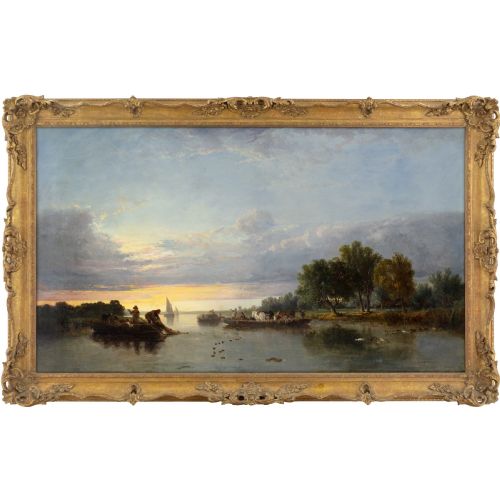
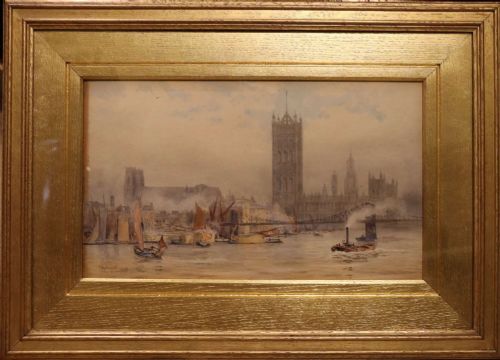
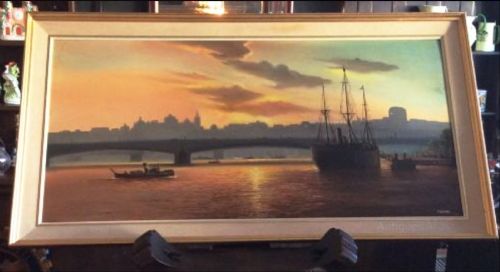
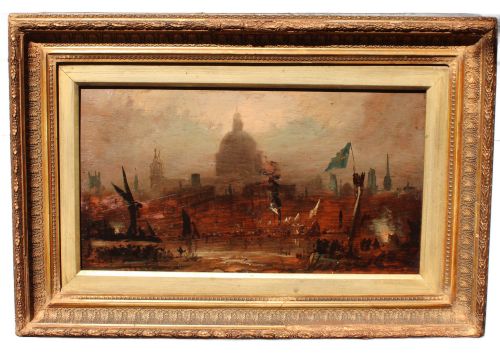


Framed River Thames Landscape
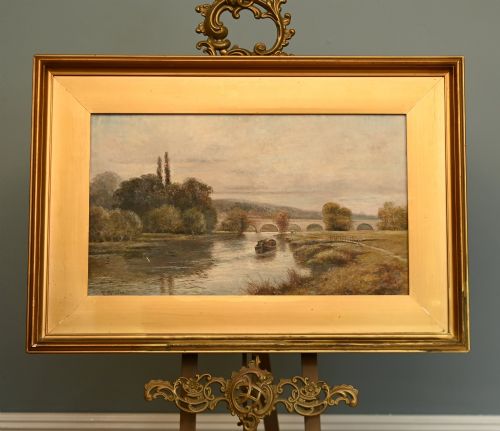
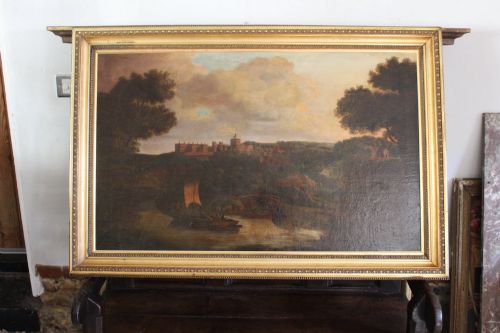
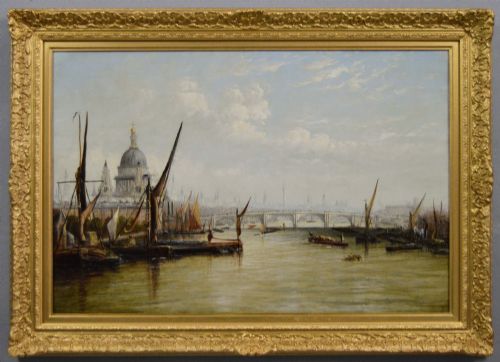
A framed river thames landscape captures centuries of London maritime history, bringing historic bridges, bustling barges and royal castles directly into a room.
Framed River Thames Landscape
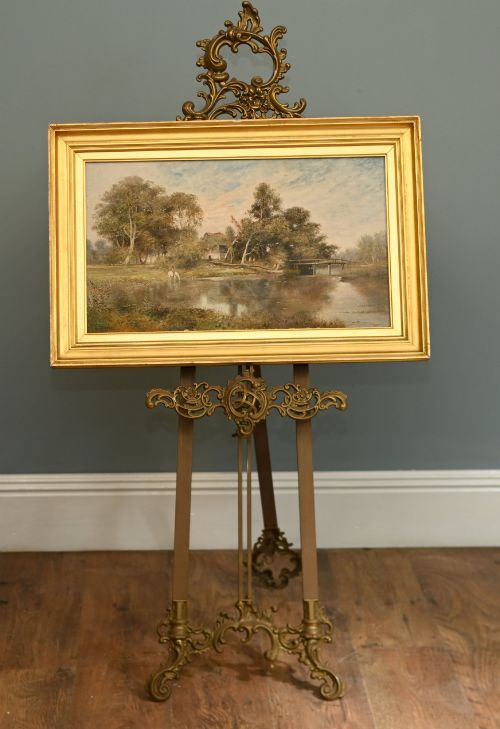
When someone searches for a framed river thames landscape, they are looking at topographical views, marine art and pastoral river scenes spanning from the Georgian period through to the mid-twentieth century.
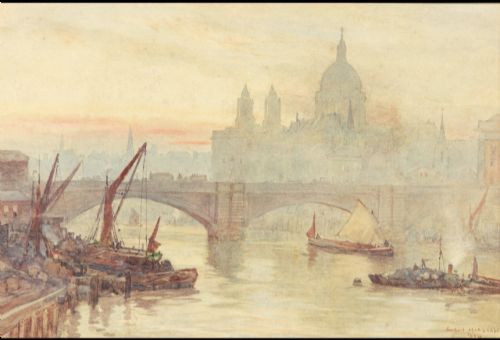
The most common pieces on this page are nineteenth-century and early twentieth-century watercolours and oil paintings depicting famous London landmarks such as St Paul's, Waterloo Bridge and the Houses of Parliament.
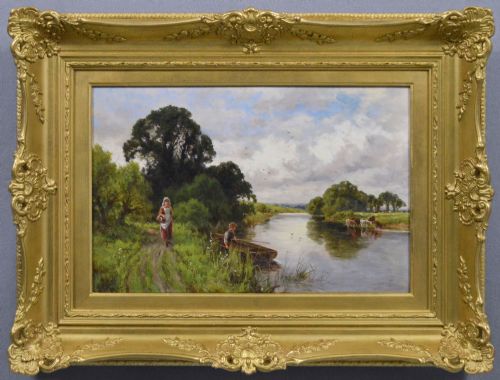
Subjects range widely from urban dockyards and bustling pool scenes to quiet rural reaches near Windsor, Marlow and Wargrave.
Materials and Methods
Artists worked primarily in oil on canvas, oil on board or watercolour on paper, capturing light on water and atmospheric river mists.
Works are typically preserved behind glass for paper mediums or displayed within traditional gilt wood frames that complement the period of the painting.
Materials span oil on canvas, watercolour on paper and gilt wood frames across periods from the Georgian era to the mid-twentieth century.
Evaluating the Pieces
Quality rests upon the artist's handling of light, perspective and atmospheric depth, distinguishing a skilled topographical record from a generic provincial copy.
The strength of the composition and the crispness of the architectural detail in landmarks like bridges and castles determine the distinction of the piece.
Francis Moltino·Charles William Wyllie·Henry John Kinnaird·Edward Henry Eugene Fletcher·Robert Winchester Fraser·Thomas Whittle the Younger
The Framed River Thames Landscape Glossary
- Topographical art
- Depicting specific real places accurately. These watercolours and oils serve as historical records of London's changing waterfront.
- Aquatint
- A printmaking technique that produces tonal effects similar to watercolour washes. Examples include eighteenth-century engraved views of the river.
- Marine art
- Painting focused on ships, shipping and maritime subjects. The Thames pool scenes and barge paintings fall firmly into this tradition.
- Gilt wood
- Wood carved and covered with thin gold leaf or gilt finish. Most period frames utilise this traditional decorative treatment.
Framed River Thames Landscape: Frequently Asked Questions
What periods do these river scenes cover?
The selection spans from Georgian and nineteenth-century works up to mid-twentieth-century interpretations.
Most pieces date from the Victorian and Edwardian eras when Thames painting reached a peak.
Are these works original paintings or prints?
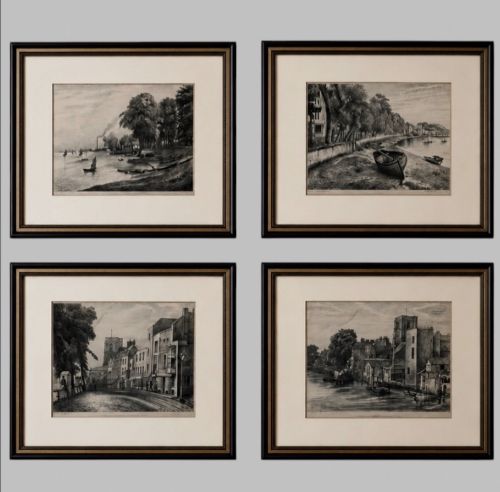
The listings include both original watercolours and oil paintings alongside historical lithographs and aquatints.
Each listing specifies the exact medium used by the artist or printer.
Which London landmarks appear most often?
Common landmarks include Westminster, Waterloo and Blackfriars bridges alongside St Paul's Cathedral and Windsor Castle.
Views also capture specific stretches near Kew, Richmond and the Pool of London.
How should I hang a period frame?
Ensure the wall space supports the weight of traditional wood and gilt frames securely.
Keep pieces away from direct sunlight to protect delicate watercolours and oil pigments.