
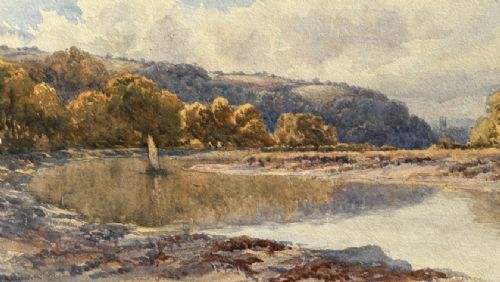
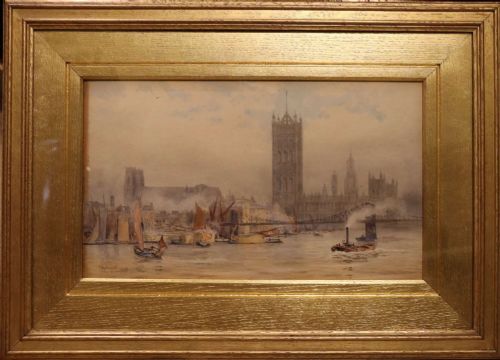
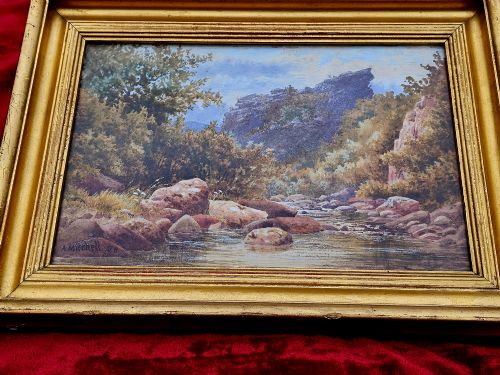
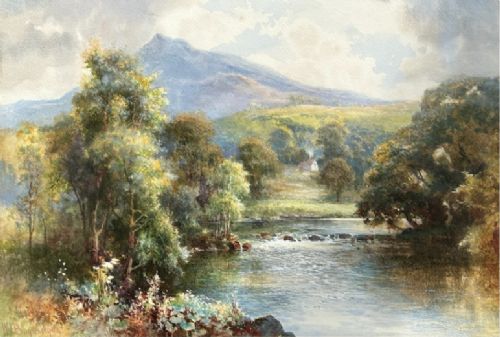
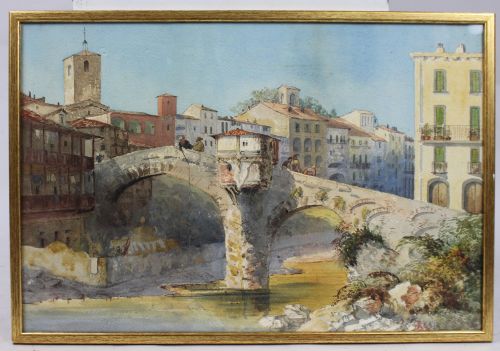
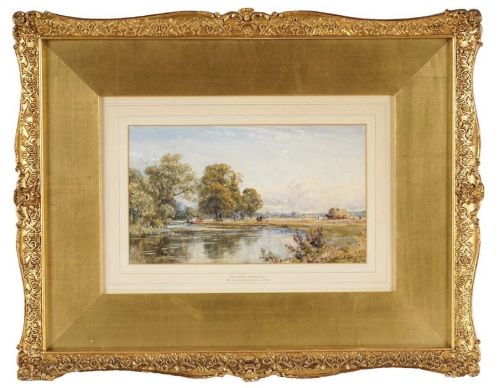
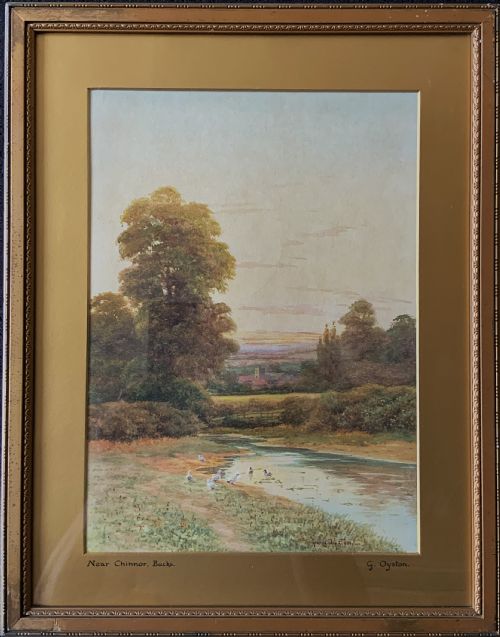
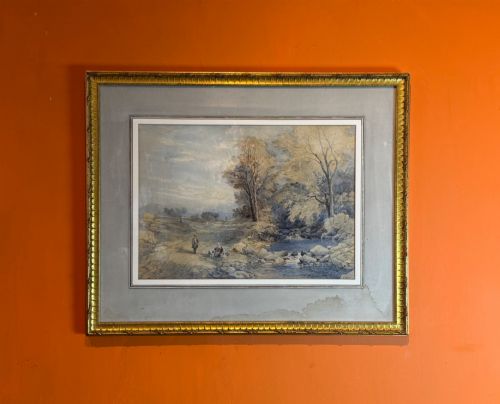
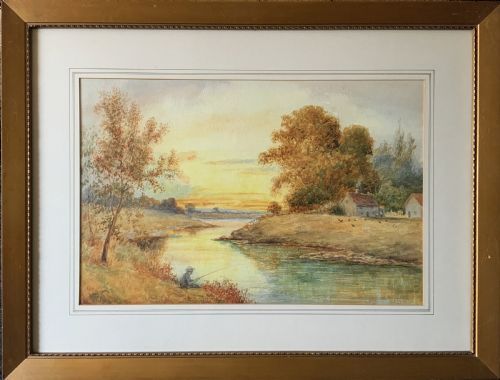
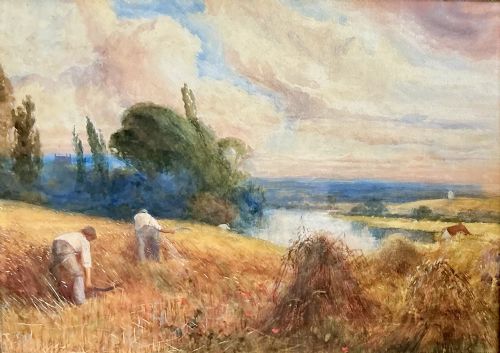


Framed River Landscape Watercolour
A framed river landscape watercolour brings the quiet pull of nineteenth-century waterways and pastoral British scenes directly onto a wall.
Framed River Landscape Watercolour
When you search for a framed river landscape watercolour, you encounter original British and European works on paper spanning from the late eighteenth century through to the early twentieth century. These paintings depict rural banks, tidal estuaries, bustling harbours, and tranquil tributaries observed directly from nature.
The majority of pieces on this page stem from the Victorian and Edwardian periods, reflecting a sustained nineteenth-century fascination with naturalism and topographical scenery. Makers range from Royal Academy exhibitors to skilled regional painters working in watercolor pigment on paper.
Framed securely behind glass in period wood or gilt frames, these paintings preserve delicate washes of colour and fine ink line work. They offer a window into historic waterways, often featuring figures, livestock, or moored boats alongside the flowing current.
How they were made
Artists applied watercolor pigment suspended in water onto heavy rag paper, building the image through translucent washes rather than thick opaque layers. This technique allowed the bright white of the paper to shine through, creating natural luminosity in the skies and water reflections.
Makers utilised gum arabic alongside watercolor paint to deepen tones and add a glossy sheen to darker elements like riverbanks or foliage. Fine details were often rendered with pen and ink or bodycolour to sharpen architectural elements and figures.
Protection came from enclosing the finished sheet behind glass within timber frames, frequently accented with gilt wood mouldings and mounts to isolate the delicate painted surface from atmospheric moisture.
What varies in quality
The standard of a watercolor rests upon the artist's handling of light, atmospheric depth, and fluid brushwork within the water and sky. Superior works capture motion and transient weather effects convincingly, whereas lesser pieces rely on rigid outlines and flat, uniform washes.
Preservation determines longevity, as exposure to direct sunlight causes fading in fugitive watercolor pigments. Pieces retaining their original vibrant hues and crisp paper texture without heavy foxing command greater appreciation.
H. Medlycott·William Joseph Boyes·Robert Thorne Waite·George Oyston·Frederick Hines·Cornelius Pearson·Edwin Lord Weeks·Henry John Kinnaird·Thomas Bush Hardy·Thomas Hunn·David Cox Jnr·Robert Winchester Fraser·George Arthur Fripp·Walter Follen Bishop·Percy Lancaster·Samuel Palmer·William Tatton Winter
The Framed River Landscape Watercolour Glossary
- Watercolour pigment
- Finely ground colour particles mixed with a water-soluble binder, usually gum arabic. This substance allows artists to dilute the paint for delicate, translucent layers.
- Gilt wood
- Timber framing coated with a thin layer of gold leaf or metallic gilt finish. It provides a traditional decorative border that enhances the warmth of antique paintings.
- Foxing
- Brown or reddish spots caused by chemical reactions in the paper over time. It frequently appears on older paper items kept in damp conditions.
- Bodycolour
- Watercolour paint mixed with a white pigment to make it opaque. Artists applied it to introduce highlights and solid areas of colour.
- Wash
- A thin, fluid layer of diluted watercolor spread across the paper. It forms smooth backgrounds for skies and river surfaces.
Framed River Landscape Watercolour: Frequently Asked Questions
How should I hang my watercolour?
Keep the piece away from direct sunlight and damp walls to protect the paper and pigments from fading or mould growth. Use stable wall fixings suited to the weight of the timber frame.
Ensure the room maintains a steady temperature to prevent expansion or contraction of the wood and paper components over time.
Can I remove the glass for cleaning?
Leave the original framing undisturbed to protect the fragile paper surface from atmospheric dust and accidental tearing. Antique watercolours often rely on historic seals behind the glass.
Consult a professional restorer if the interior glass requires attention or if moisture becomes trapped inside the frame.
What subjects appear in these paintings?
Artists frequently recorded rural British rivers, Welsh valleys, Thames backwaters, and continental European ports. Common elements include grazing cattle, modest bridges, fishermen, and historic towpaths.
These scenes reflect nineteenth-century topographical interests and the pastoral tastes of Victorian collectors.
How do I date a painted river scene?
Examine any visible artist signatures, dated inscriptions on the front or reverse, and stylistic clues within the clothing of painted figures. Costume details and architectural landmarks often point to specific decades.
The construction style of the wooden frame and the type of paper stock also offer reliable chronological indicators.