

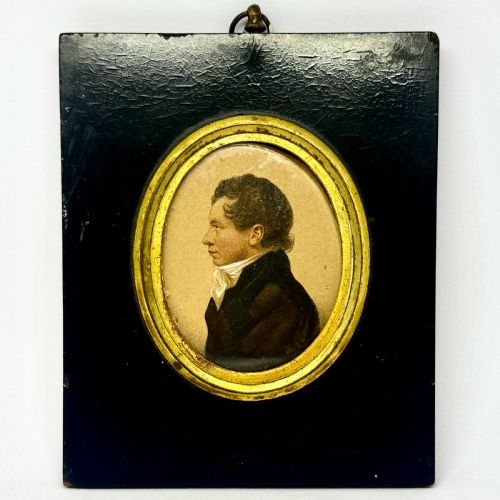


Framed Profile Silhouette
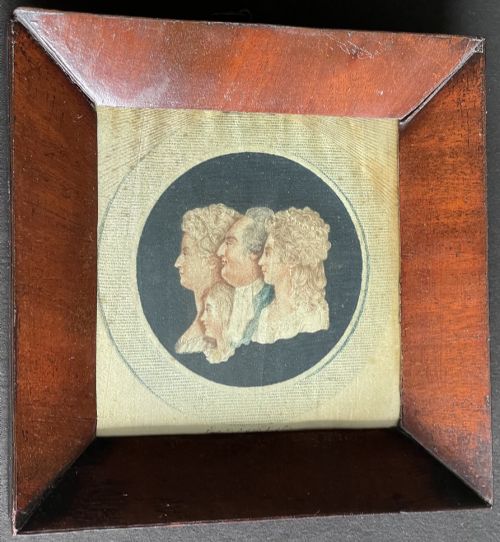
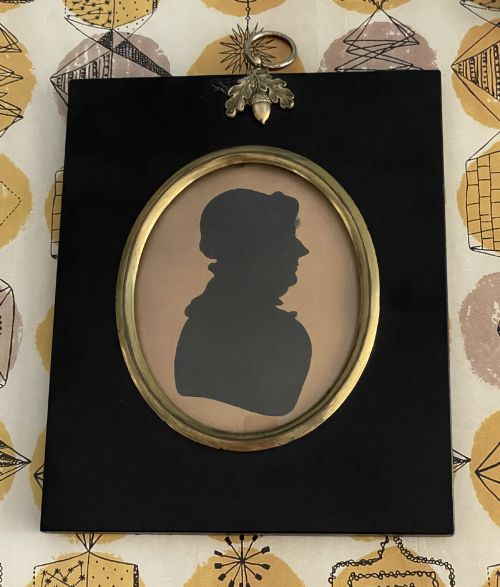
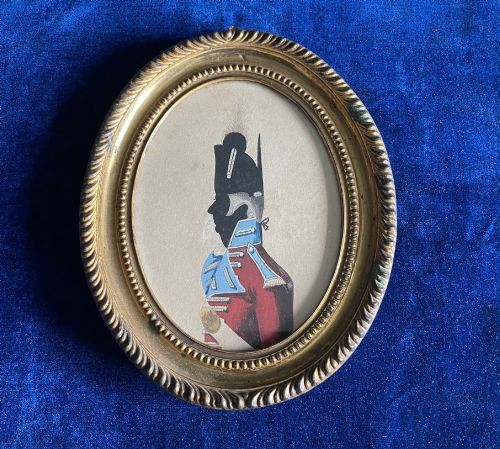
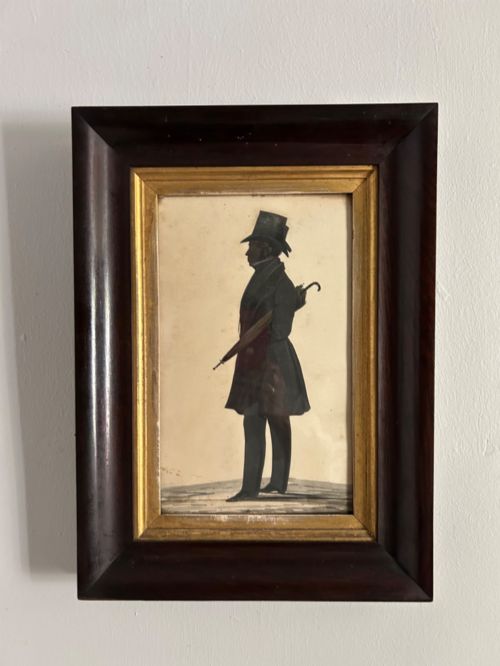
These framed profile silhouette pieces capture likenesses in monochrome ink, paper and paint, offering an intimate glimpse into past centuries.
Framed Profile Silhouette
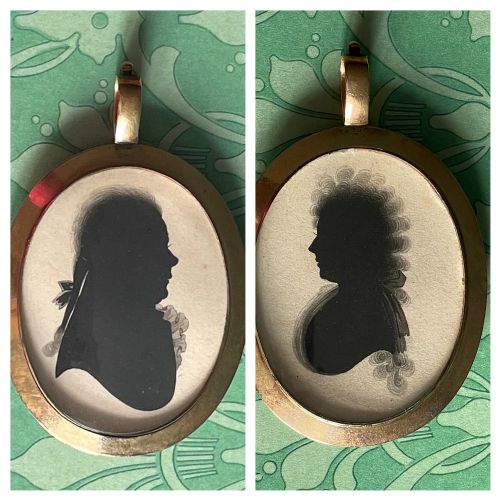
A framed profile silhouette presents a likeness in shadow, capturing the distinct contour of a sitter's face or figure. When you search for this phrase, you encounter wall art, portrait miniatures and framed artwork spanning the eighteenth, nineteenth and Victorian periods.
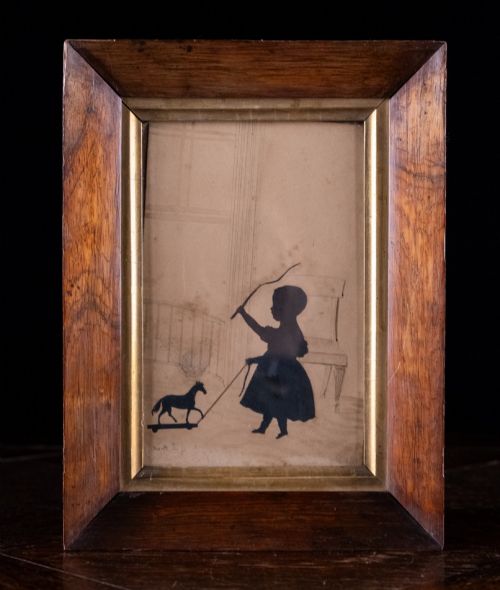
The pieces on this page originate predominantly from Georgian, Regency and Victorian eras, taking the form of single portraits, pairs or conversation pieces. Subjects range from gentlemen and ladies to children, dogs and families.
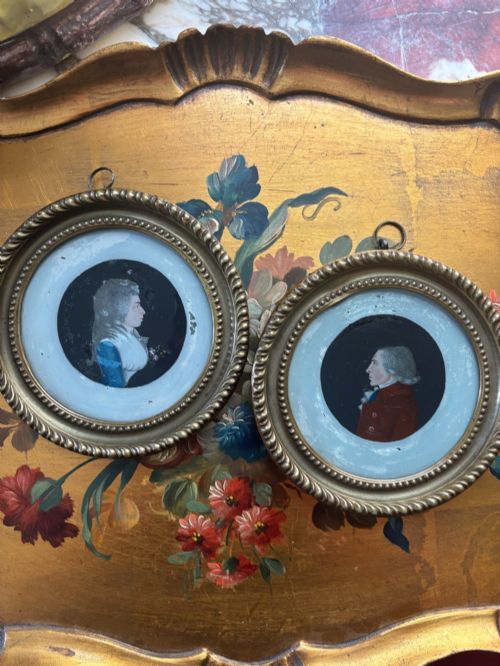
Makers and studios such as John Miers, Augustin Edouart and the Hubard Gallery produced notable works in this field. You meet cut-paper profiles, painted likenesses and reverse-painted examples housed in traditional wooden frames.
How They Were Made
Craftsmen utilised black paper, ink, watercolour and glass, often applying gold leaf highlights to accentuate collars, bonnets and lace. Silhouettes were hand-cut with scissors or painted directly onto glass, plaster or silk.
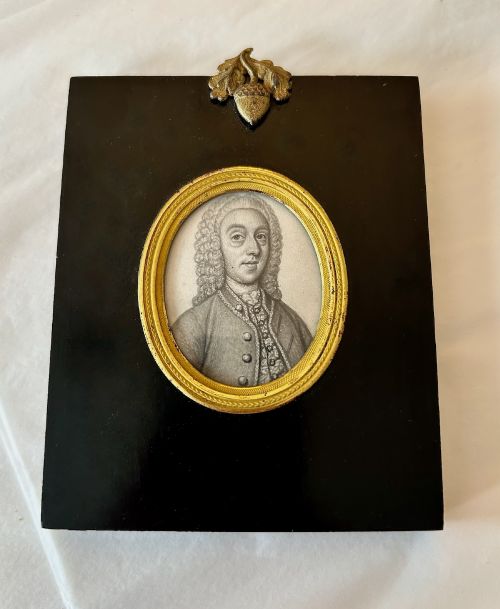
Frames play an essential role in the construction, utilising ebonised wood, rosewood, maple and brass to protect and display the delicate work within. Some pieces feature reverse painting on convex glass, requiring precise brushwork viewed from the front.
Framed Profile Silhouette Retail Price Guide 2026
Typical asking prices for framed profile silhouette among the pieces listed under this phrase on Sellingantiques today, from the lower quarter to the upper quarter. They describe what is for sale here now, not the wider market.
Listings feature silhouettes spanning the eighteenth, nineteenth and Victorian periods, utilising paper, glass, brass and watercolour.
What Varies In Quality
The precision of the cutting or brushwork dictates the distinction between standard examples and superior pieces. Skilled artists captured subtle anatomical nuances and distinct hairstyles within a simple outline.
Materials and framing contribute significantly to the overall merit, with original brass bezels, convex glass and gilded embellishments elevating the piece. Signed works by documented profile-cutters demonstrate greater archival importance.
Bateman·Frith·Augustin Edouart·John Miers·John Smith of Edinburgh·J. Deacon·George Atkinson·Alfred Darbyshire·Thomas London
The Framed Profile Silhouette Glossary
- Silhouette
- A portrait represented as a solid shape of a single colour, usually black, showing the profile of a subject. The form relies entirely on contour rather than internal detail.
- Reverse painting on glass
- A technique where the artist paints the portrait on the underside of a glass panel, viewed through the smooth surface from the front. This method creates a glossy, luminous finish.
- Cut-paper silhouette
- A likeness created by snipping black paper freehand with small scissors before mounting it on a contrasting background. Precision and steady hands defined the maker's skill.
- Plaster
- A fine composite material used as a smooth base for early profile portraits. John Miers famously utilised plaster plaques for his miniature likenesses.
- Conversation piece
- An informal group portrait depicting people engaged in a common activity or interaction. In silhouette form, these show families or children with animals in domestic settings.
- Ebonised wood
- Timber treated with a finish to imitate ebony, commonly used for dark framing. It provides a stark, traditional border that contrasts with gilded highlights.
Framed Profile Silhouette: Frequently Asked Questions
How do I identify a Georgian silhouette?
Georgian examples often feature delicate hollow-cut paper work backed with dark silk, or finely painted details on plaster and glass. They typically date from the late eighteenth to the early nineteenth century.
Frames from this period tend to utilise shallow rosewood or ebonised wood profiles, sometimes featuring handwritten ink identifications on the reverse.
What is a conversation piece silhouette?
A conversation piece depicts multiple figures, children or animals interacting within a single framed scene rather than a solitary head and shoulders portrait. These complex compositions record domestic life and outdoor pastimes.
Artists like Augustin Edouart specialised in these elaborate cut-paper multi-figure arrangements during the nineteenth century.
How were silhouettes displayed historically?
These portraits hung closely grouped on drawing room walls or sat within portable miniature cases for personal carriage. Their compact scale suited the intimate interior spaces of the period.
Many retain their original convex glass and brass hanger rings designed for wall mounting in parlours.
Are all silhouettes signed by the artist?
Most surviving profile portraits remain anonymous because artists often relied on trade labels pasted to the back of the frame rather than signing the image itself. Labels from studios like the Hubard Gallery help identify origin.
When signatures do appear, they are usually written delicately in ink beneath the portrait or inscribed upon the backing paper.