



Framed Pet Portrait
A framed pet portrait preserves the character of a cherished animal through oils, pastels, or textiles set securely within period surrounds.
Framed Pet Portrait
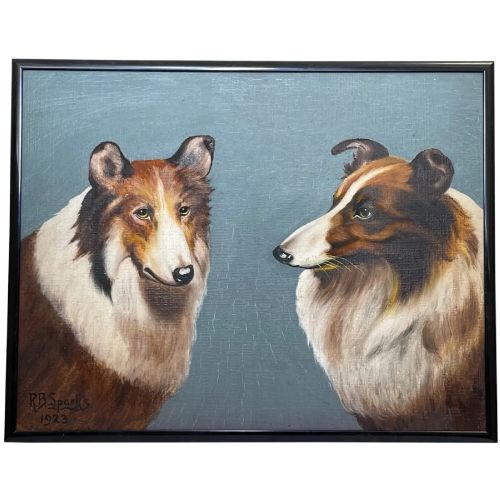
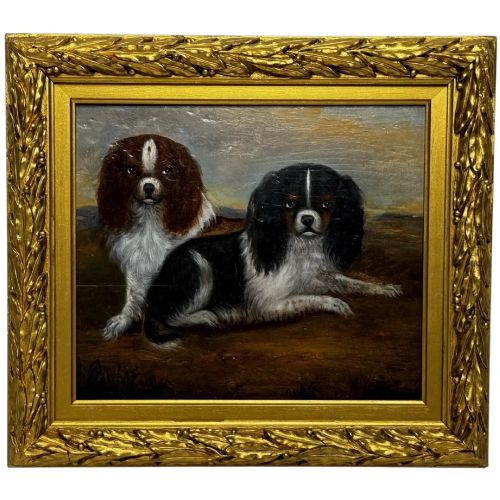
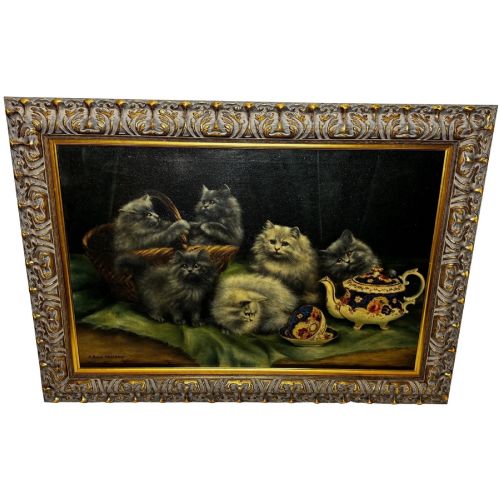
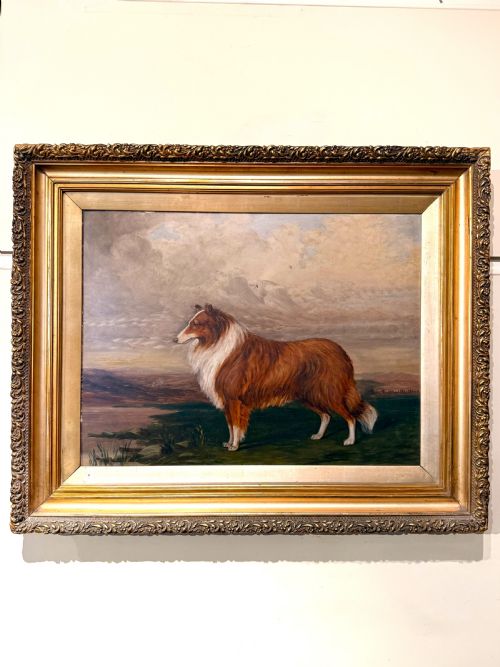
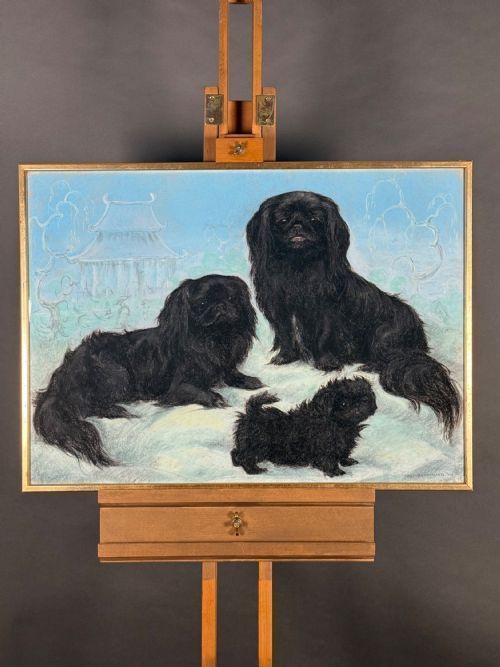
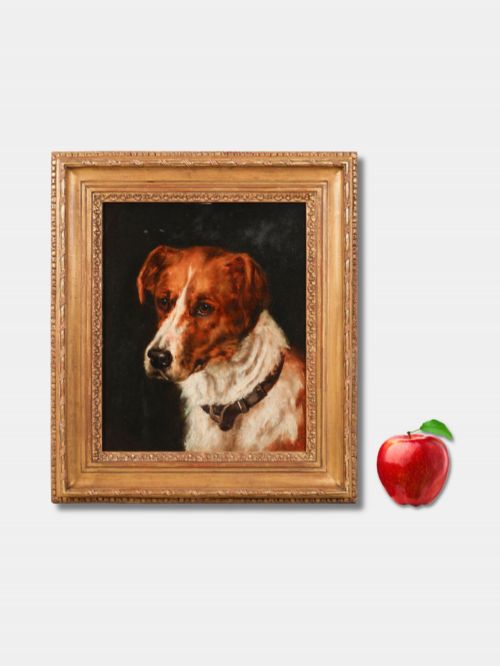
A framed pet portrait captures domestic animals, predominantly dogs and cats alongside rabbits and birds, rendered with specific realism across the nineteenth and twentieth centuries. Buyers encounter diverse breeds from spaniels and terriers to Pekingese and collies depicted in oils, pastels, and needlework.
The prevailing examples on this page span the Victorian era through the mid-twentieth century, utilising traditional realism. Works appear on canvas, board, and paper, housed in original wood, giltwood, or burr maple frames that complement the painted subject.
How They Were Made
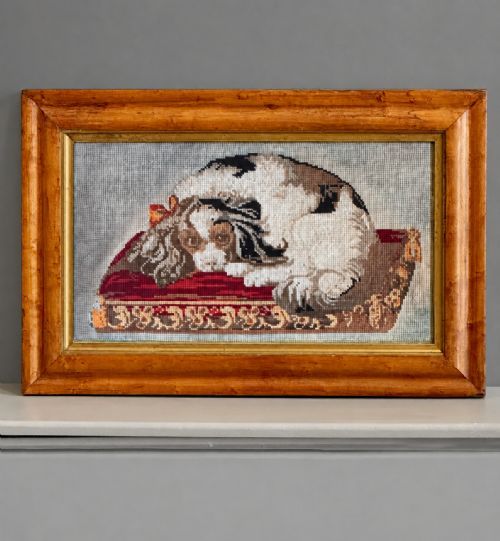
Artists utilised oil paint applied to canvas, panel, or board, often building rich textures for animal coats alongside pastel on paper for softer depictions. Needlework examples such as Berlin wool work employed coloured threads on canvas to build the likeness.
Surrounds utilise wood, gold leaf, and giltwood, sometimes retaining original burr maple frames that frame the artwork. Glass frequently protects delicate pastels and paper drawings from environmental damage.
Framed Pet Portrait Retail Price Guide 2026
Typical asking prices for framed pet portrait among the pieces listed under this phrase on Sellingantiques today, from the lower quarter to the upper quarter. They describe what is for sale here now, not the wider market.
Materials documented across the inventory include oil on canvas, gold leaf, glass, and burr maple.
What Varies in Quality
Anatomy and expression separate accomplished animal painting from stiffer provincial efforts. The best hands capture canine or feline bone structure, light in the eye, and the specific texture of fur rather than generic forms.
The retention of original framing elevates a piece, particularly when burr maple or period giltwood surrounds complement the age of the canvas. Condition of the underlying pigment or paper surface also dictates standing.
Agnes Augusta Talboys·William Barraud·John Henry Dell·M.E.Hankinson·Valentine Thomas Garland·Florence Mabel Hollams·Philip Eustace Stretton·Samuel John Carter·Jules Le Roy·Christian Lindner
The Framed Pet Portrait Glossary
- Berlin work
- A type of nineteenth-century needlework using wool on canvas following charted designs. It allowed makers to create detailed animal pictures.
- Giltwood
- Wood carved and covered with a thin layer of gold leaf or metallic gilt. This material formed ornate decorative frames for fine art.
- Oil on board
- Pigment mixed with drying oil applied directly to a rigid wooden or composition panel. This support provided a stable surface for detailed portraiture.
- Burr maple
- Wood veneer featuring swirling knot formations that create mottled patterns. It was favoured for distinctive nineteenth-century picture frames.
- Traditional realism
- An artistic approach aiming to represent subjects truthfully without artificial styling. It defined most historical animal portraiture.
Framed Pet Portrait: Frequently Asked Questions
How do I date a framed pet portrait?
Dating relies on the style of the clothing in human portraits, the breed popularity, stretcher construction, and the specific characteristics of the timber frame. Pigment analysis and artist signatures also help establish a precise period.
Paintings from the nineteenth century often show distinct canvas weaves and framing methods compared to mid-century works. Examining the backing boards provides further clues regarding age.
What animals appear in these portraits?
Dogs represent the most common subject, ranging from spaniels and terriers to collies, pugs, and Pekingese. Cats and kittens also appear frequently, alongside occasional rabbits and birds.
Artists recorded both working animals and household companions, capturing individual personalities across different breeds. Some works depict prize-winning show animals or specific family pets.
Are original frames important?
Original frames provide context and help confirm the historical period of the artwork. Burr maple and giltwood surrounds were chosen by the original owners to complement the painting.
Matching frames protect the edges of canvases and maintain the visual integrity of the piece. Replacing a period frame alters the historical presentation of the artwork.
How should I care for an oil portrait?
Oil paintings require stable indoor humidity away from direct sunlight to prevent the canvas from cracking or warping. Dusting should be done gently with a soft, dry brush.
Glass fronts on pastels and needlework protect fragile surfaces from moisture and touch. Professional conservation ensures old varnishes remain stable without damaging the pigment underneath.