


Framed Paper Cut Picture
A framed paper cut picture offers a direct window into past lives through delicate handwork.
Framed Paper Cut Picture
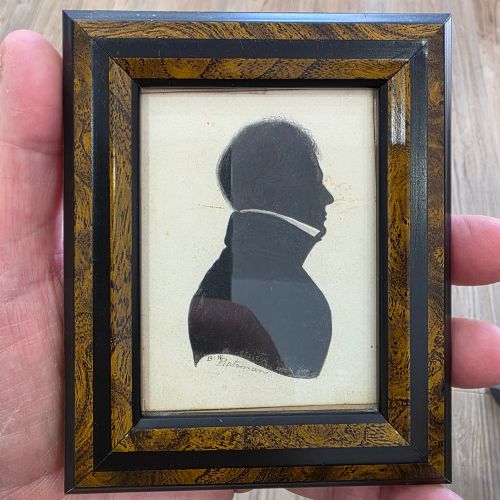
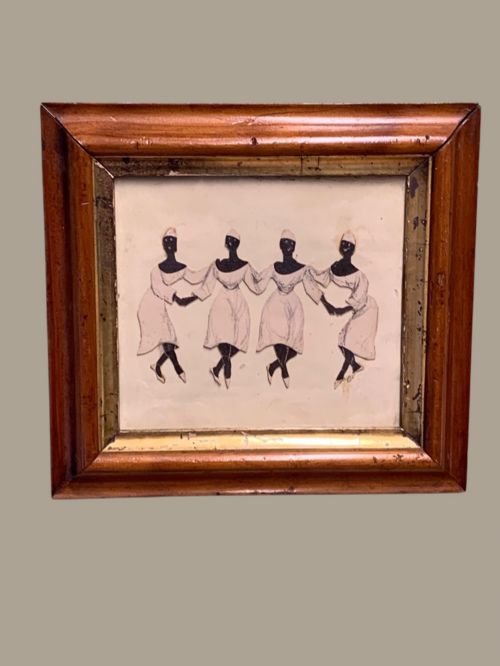
A framed paper cut picture captures likenesses and scenes through careful snips of monochrome paper, often mounted against contrasting backgrounds. When you search for a framed paper cut picture, you find works ranging from simple profile portraits to intricate folk art collages.
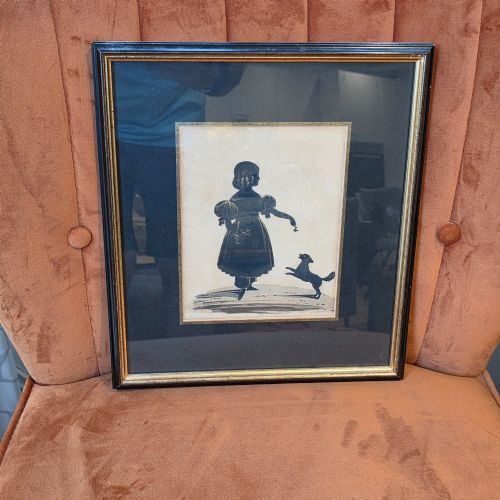
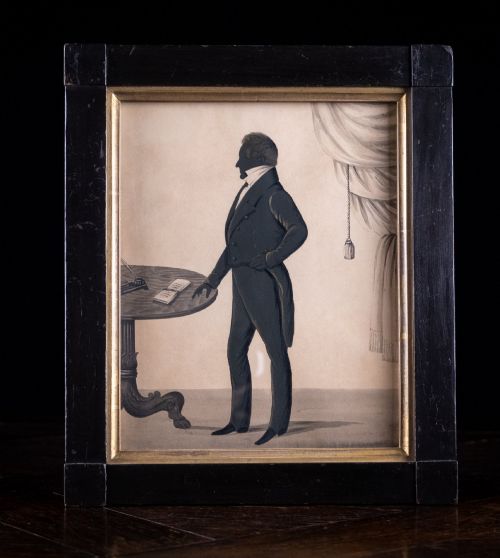
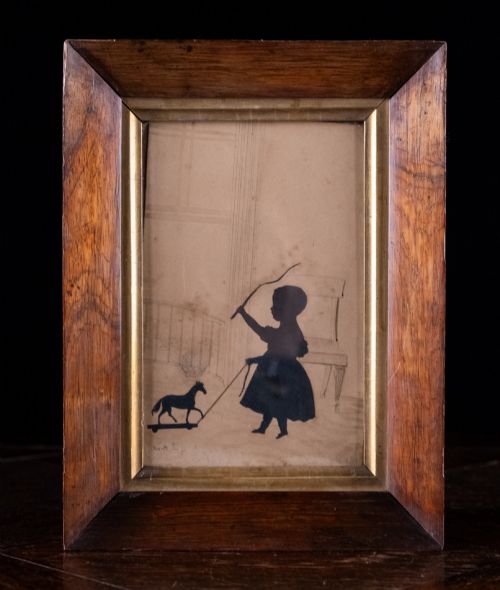
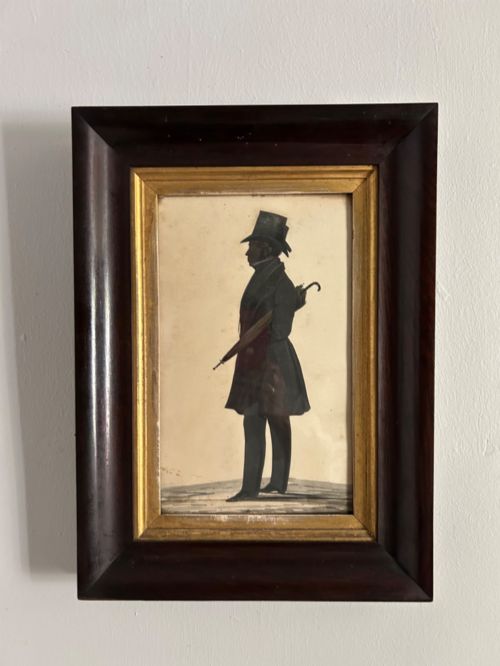
The pieces listed on this page span the 18th century, Regency period, and Victorian era, alongside later 19th-century examples. Common subjects include gentlemen, ladies, children with animals, and floral arrangements.
Makers such as Augustin Edouart and the Hubard Gallery appear frequently among the works, demonstrating the high skill applied to these paper creations. Many examples retain their original wooden frames, ranging from simple maple to ebonised wood with gilt accents.
Assessing quality
The preservation of the paper and the originality of the frame and glass heavily influence the piece. Age-related toning exists across these works, but sharp edges and stable mounting distinguish superior examples.
Early artists occasionally enlisted children and dogs to sit still while their profiles were swiftly captured in snips of black paper.
William James Hubard·Augustin Edouart·Bateman
The Framed Paper Cut Picture Glossary
- Silhouette
- A solid shape representing an outline, usually a profile portrait cut from black paper. This form gained immense popularity in the eighteenth and nineteenth centuries.
- Hollow-cut
- A silhouette technique where the profile is cut out from a sheet of white paper, which is then laid over a dark background. This method creates a crisp, embossed effect.
- Gilt frame
- A wooden frame covered with a thin layer of gold leaf or metallic gilt. These frames often accompany Regency and Victorian paper works.
- Ebonised wood
- Timber treated to resemble ebony, providing a dark, contrasting border for paper silhouettes. This finish appears frequently on nineteenth-century pieces.
- Collage work
- An artistic composition made by gluing various pieces of paper and materials onto a backing surface. Some nineteenth-century examples combine cut paper with watercolor and ink.
Framed Paper Cut Picture: Frequently Asked Questions
How do I date a paper silhouette?
Dating relies on the costume of the subject, the style of the frame, and any inscriptions on the reverse. Early pieces often feature distinct Regency or Georgian attire and handwritten artist signatures.
Paper type and backing materials also offer clues to the decade of creation, as machine-made papers replaced handmade sheets by the mid-nineteenth century.
Were these pictures made by amateurs?
Both skilled professionals and talented amateurs produced paper cut pictures. Travelling silhouettists worked in galleries and town halls, while women at home created decorative conversation pieces.
Signed works and those bearing gallery stamps generally indicate professional execution by established artists.
How should I hang these framed pictures?
Paper cut pictures require protection from direct sunlight to prevent the paper and ink from fading over time. Hang them on interior walls away from moisture and heat sources.
Original glass and backings should remain undisturbed to protect the fragile paper work held within the frame.
What is a conversation piece silhouette?
A conversation piece depicts multiple figures engaged in an activity or interaction within a shared domestic or outdoor setting. These complex compositions show groups of people and animals rather than a single portrait.
Such works required advanced cutting skills and careful arrangement to tell a visual story.