



Framed Paper Botanical Illustration
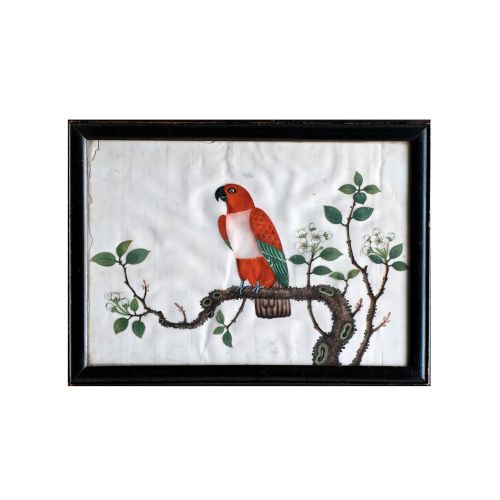
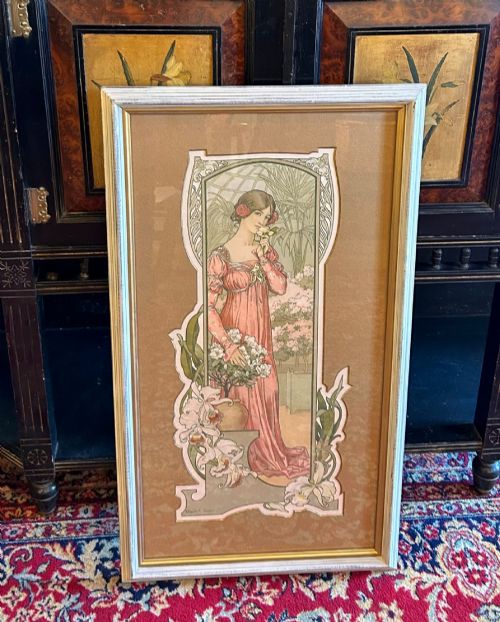
These framed paper botanical illustration pieces capture natural forms in watercolour, ink and hand-coloured engraving, bringing period study straight to your walls.
Framed Paper Botanical Illustration
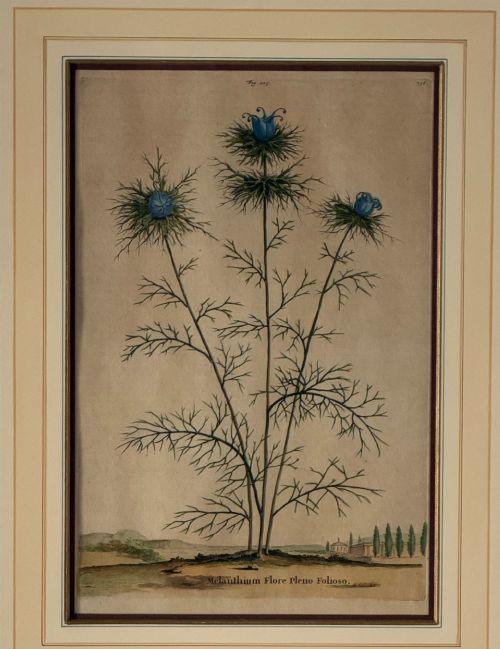
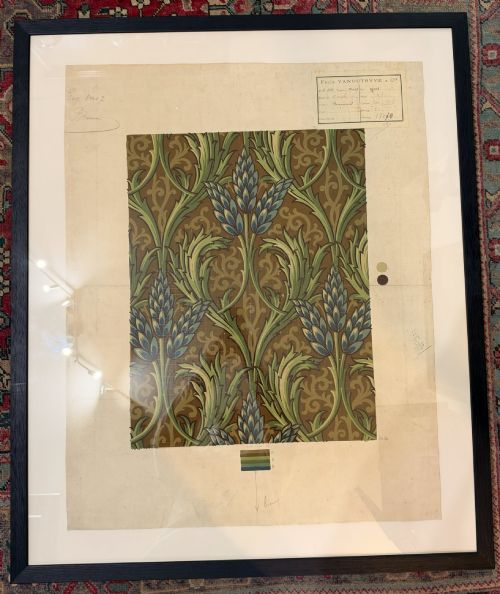
When you search for a framed paper botanical illustration, you are looking at works on paper that record plants, flowers and natural history subjects. The pieces on this page span the Georgian era through the nineteenth century and into the early twentieth century, taking the form of original watercolours, lithographs and hand-coloured engravings.
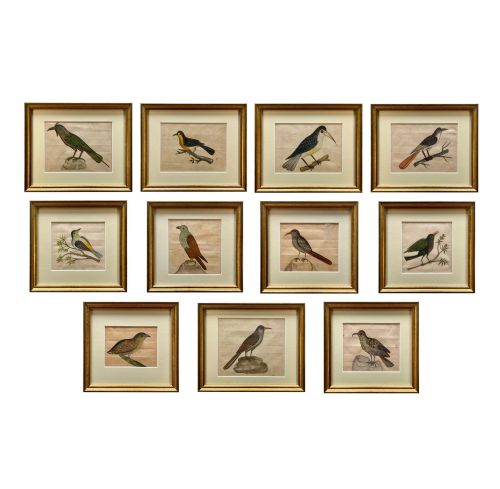
You will most frequently meet nineteenth century watercolours and Victorian natural history prints framed behind glass in wood mouldings. These range from single floral studies of roses and pelargoniums to multi-plate sets featuring insects alongside botanical specimens.
Materials and technique
Makers utilised high-grade paper sheets as the foundation for both delicate watercolours and fine printed editions. Watercolour pigment, ink and gold leaf were applied by hand to build up the detail of petals, leaves and plumage.
Many historical prints began as copperplate or steel engravings before receiving careful hand-colouring. Finished works were then set within wooden frames, frequently enhanced with gilt details, and protected beneath glass.
Framed Paper Botanical Illustration Retail Price Guide 2026
Typical asking prices for framed paper botanical illustration among the pieces listed under this phrase on Sellingantiques today, from the lower quarter to the upper quarter. They describe what is for sale here now, not the wider market.
Listings feature works spanning the Georgian era, the nineteenth century, and the early decades of the twentieth century.
Judging quality
The standard of a piece rests on the precision of the draughtsmanship and the clarity of the pigment or hand-colouring. Works by named artists or established illustrators display a superior handling of light, shade and botanical accuracy.
The condition of the paper surface and the integrity of the original framing also determine the standing of an item. Stronger works retain their original colour vibrancy without excessive fading, foxing or structural damage to the paper support.
Elisabeth Sonrel·Henrietta Creswell·William Hough·George Edwards·Jabez Bligh·Charlotte Isa James·Alice Macallan Swan·John Curtis·Edith Alice Andrews·John Sherrin·Minnie Smythe·George Dionysius Ehret
The Framed Paper Botanical Illustration Glossary
- Hand-coloured engraving
- An intaglio print pulled from an engraved metal plate and subsequently painted by hand with watercolour or wash. This technique ensured each printed sheet received individual artistic attention.
- Lithograph
- A planographic printing method using a flat stone or metal plate that repels ink where water is applied. It allowed artists to produce detailed multi-coloured reproductions of original compositions.
- Watercolour pigment
- Finely ground colour particles mixed with a water-soluble binder for painting on paper. It forms the primary medium for the majority of floral still life studies.
- Gilt wood
- Timber framing finished with a thin layer of gold leaf or metallic powder. It provides a reflective border that complements the delicate tones of the artwork within.
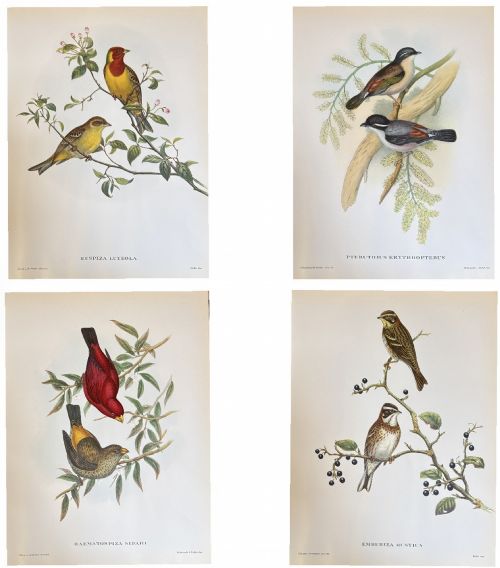
- Ornithological study
- A detailed scientific or artistic rendering of birds, frequently published alongside botanical works in historical natural history folios.
Framed Paper Botanical Illustration: Frequently Asked Questions
How do I date a framed botanical print?
Dating relies on the paper stock, printing technique, and stylistic markers of the period. Georgian engravings often feature distinct plate marks and hand-laid paper.
Later Victorian and Edwardian examples show shifts in typography, framing styles, and pigment composition that help narrow down the decade of production.
Were these originally part of books?
Many fine botanical illustrations and ornithological plates were published in bound folios and scientific periodicals before being separated and framed.
Pets and natural history studies by artists like George Edwards or John Curtis typically originated in multi-plate subscription volumes.
How should I care for antique paper art?
Protect antique paper illustrations by hanging them away from direct sunlight and sources of excessive moisture. UV-filtering glass helps prevent the watercolours and hand-colouring from fading over time.
Maintain a stable indoor climate to keep the wood frames and paper supports from degrading.
What is the difference between an engraving and a watercolour?
An engraving is a printed reproduction created by carving an image into a plate and transferring it to paper, which may then be hand-coloured. A watercolour is a unique, direct painting created by the artist's hand on paper.
Watercolours exist as single original works, while engravings can exist across multiple printed impressions.