


Framed Oval Portrait Drawing
A framed oval portrait drawing brings intimate historic likenesses to your walls, spanning Georgian pastels and Victorian watercolours.
Framed Oval Portrait Drawing
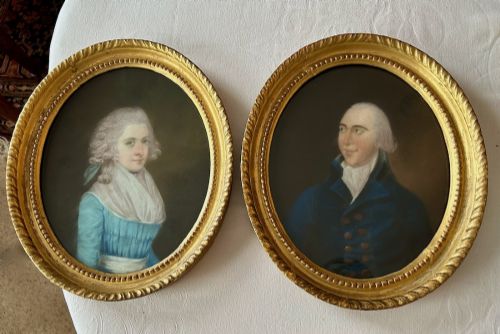
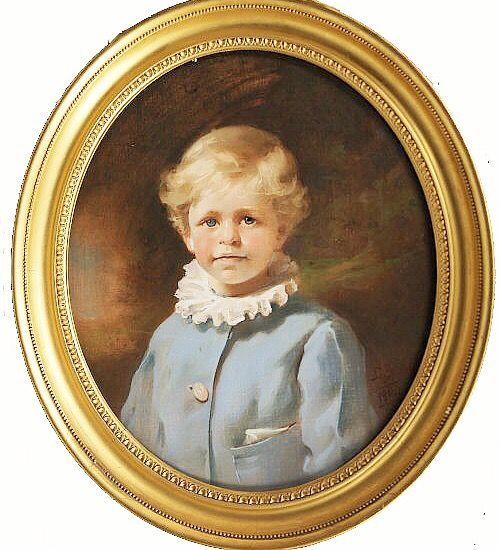
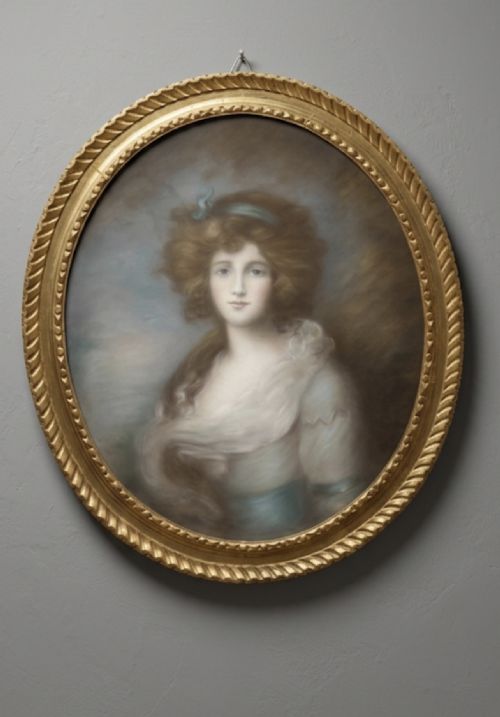
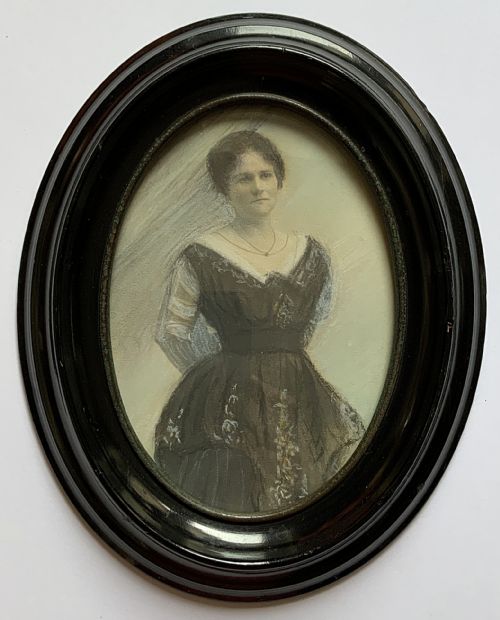
A framed oval portrait drawing captures individual likenesses within curved borders, using media ranging from delicate plumbago to rich pastel and watercolour. These works preserve the faces of past sitters, often set behind glass in wooden or giltwood frames.
The pieces on this page emerge primarily from the eighteenth and nineteenth centuries, taking forms such as pastel portraits, silhouette profiles, and miniature paintings. Georgian and Victorian examples dominate, reflecting changing artistic tastes in portraiture over successive periods.
Buyers encounter subjects ranging from named historic figures and gentlefolk to anonymous sitters rendered by provincial and continental hands. Works appear singly or in pairs and sets, offering varied glimpses into historical dress and physiognomy.
Materials and technique
Artists executed these works on paper using graphite, charcoal, watercolour, and pastel, sometimes combining pencil with subtle washes. Plumbago drawings utilised finely pointed graphite to achieve precise, miniature-like detail on vellum or prepared paper.
Pastel application relied on dry pigments blended directly onto the sheet, capturing soft flesh tones and fabric textures with immediacy. Watercolour and bodycolour introduced translucent depth, while cut-out silhouettes brought crisp contrast to profile likenesses.
Makers housed these fragile works within custom wood, giltwood, and gilded frames shaped to match the oval apertures. Glass protected the delicate pigment surfaces from atmospheric moisture and handling over the centuries.
Listings feature works in pastel, watercolour, and graphite across eighteenth and nineteenth century periods.
Distinctions in quality
Quality rests upon the sureness of the draughtsmanship and the psychological depth captured in the sitter's expression. Master works display precise anatomical structure and subtle gradations of tone that bring the subject to life.
The execution of the secondary elements, such as hands, lace, and hair, distinguishes accomplished hands from routine production. Framing also plays a role, with period giltwood surrounds enhancing the visual harmony of the oval composition.
John Taylor·James Ferguson·George Atkinson·Ozias Humphry·Nathaniel Bermingham·Charles Prosper Sainton·Reginald G. Eves·Robin Watt
The Framed Oval Portrait Drawing Glossary
- Plumbago
- A delicate drawing executed in graphite, taking its name from the Latin word for lead ore. These detailed works flourished during the eighteenth century.
- Pastel
- A dry painting medium composed of powdered pigment and a binder, offering vibrant matte colour. It requires glass protection to prevent smudging.
- Giltwood
- Wood carved and coated with a thin layer of gold leaf or metallic gilt finish. It provides traditional framing for Georgian and Victorian artwork.
- Profile
- A portrait silhouette or outline showing the subject from the side. These works often combine pencil, ink, or cut paper.
- Miniature painting
- A small-scale portrait executed with fine precision on paper, ivory, or vellum. They were frequently housed in small oval frames for personal keeping.
Framed Oval Portrait Drawing: Frequently Asked Questions
How were these portraits displayed?
These works hung in domestic parlours, drawing rooms, and private studies as mementoes of family members or notable figures. Their compact oval format suited arrangement in intimate groupings or symmetrical wall displays.
Today, collectors hang them in similar residential spaces where their historic character complements both traditional and contemporary interiors. Proper placement avoids direct sunlight to protect fugitive pastel and watercolour pigments.
What is plumbago?
Plumbago refers to early graphite drawings characterised by fine, silver-grey linear detail on paper or vellum. Eighteenth-century artists used this medium to achieve photographic clarity before the invention of photography.
These pieces command attention for their meticulous execution and subtle tonal control. They represent a distinct high point in British portrait draughtsmanship.
How do I care for antique pastels?
Antique pastels require secure framing behind glass to protect the dry pigment from physical disturbance and airborne dust. Any vibration can cause loose pigment particles to detach from the paper support.
Owners should keep these works away from high humidity and direct heat sources. Professional conservators handle any necessary frame repairs or stabilization.
How can I tell the period?
Period indicators include the clothing styles, hairstyles, and framing techniques associated with the sitter's costume. Eighteenth-century pieces often feature powdered hair and elaborate lace, while Victorian examples show mid-century silhouettes.
The backing materials, paper types, and framing construction also offer clear chronological clues for dating the object. Signatures and dates inscribed by the artist provide definitive evidence when present.