


Framed Ornithological Illustration
A framed ornithological illustration brings the precision of natural history study and the vibrant colour of bird life directly to the wall.
Framed Ornithological Illustration
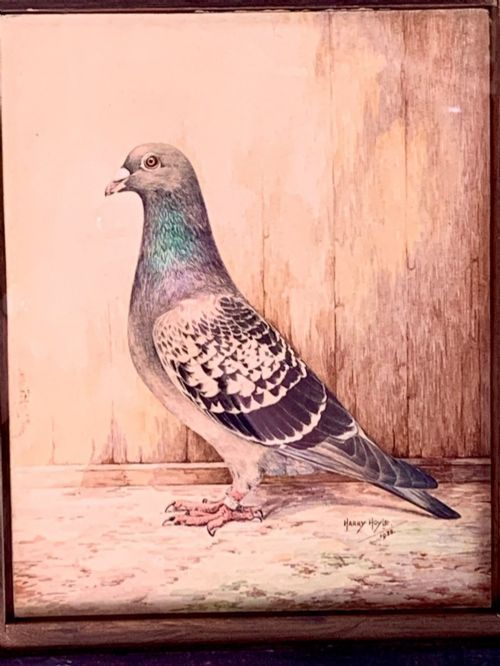
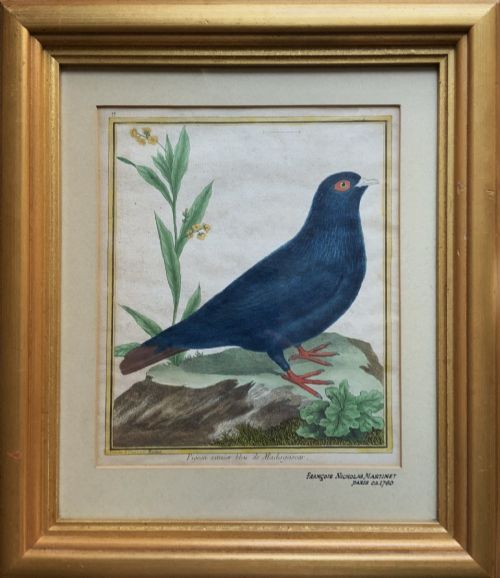
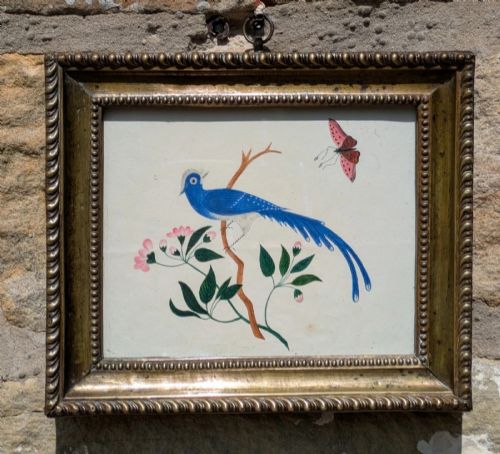
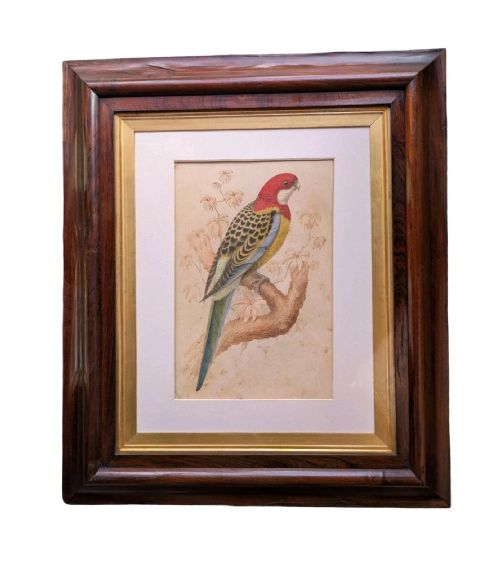
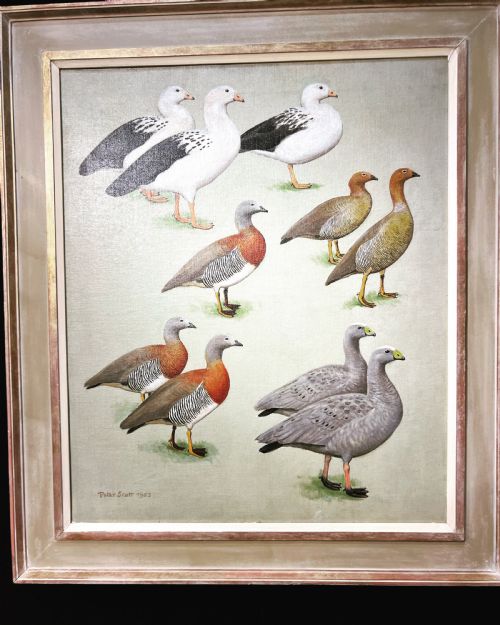
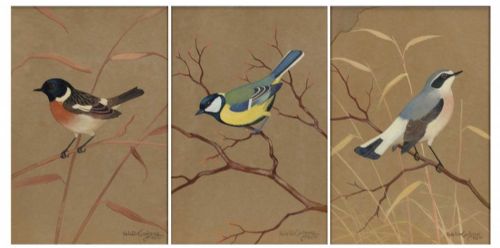
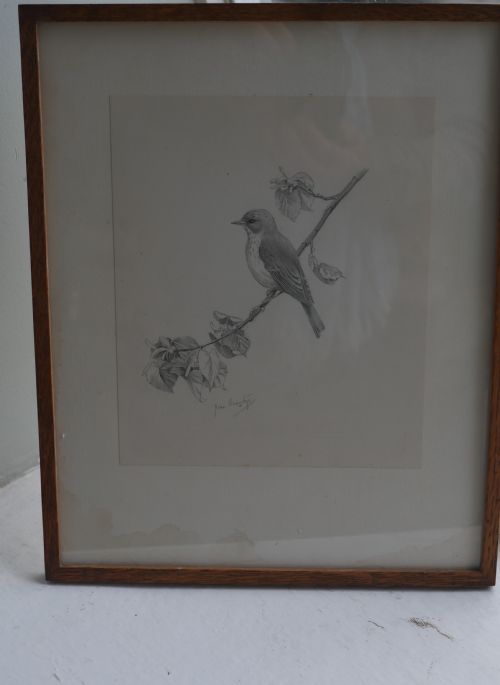
A framed ornithological illustration captures birds in watercolour, pencil, engraving, or lithograph across several centuries of natural history study. These works range from eighteenth-century hand-coloured plates by naturalists to mid-century British bird paintings and nineteenth-century watercolours.
The selections on this page span the Georgian, Victorian, and Edwardian periods, alongside mid-century twentieth-century works. Buyers frequently encounter framed engravings, lithographs, and original watercolour studies of garden birds, parrots, ducks, and raptors.
Materials and techniques
Artists and naturalists applied watercolour paint and pencil to paper, whilst printmakers produced engravings and lithographs that were frequently finished with hand-colouring. These works are preserved behind glass within wooden frames, occasionally incorporating gilt wood mounts or ebonised surrounds.
The combination of paper media and protective glass requires stable framing materials like gold leaf and wood to safeguard delicate pigments and engravings from environmental damage.
Among the feathers and flocks, a pigeon once claimed victory as a royal messenger at a silver jubilee.
The spectrum of quality
Quality rests upon the precision of the ornithological observation, the skill of the artist or engraver, and the preservation of the paper and original hand-colouring. Works by documented natural history artists or skilled contemporary observers command greater attention for their anatomical accuracy and fine brushwork.
The integrity of the framing, from ebonised wood to deep gilt mounts, contributes to the overall presence of the piece, though the primary distinction lies in the draughtsmanship and the clarity of the printed line or pigment.
François-Nicolas Martinet·Sir Peter Markham Scott·Ralston Gudgeon·Charles F. Tunnicliffe·William Andrews Nesfield·Harry Bright·George Edwards·William Swainson·Edward Lear·Robin Hill·Paul-Louis Barruel·Eleazor Albin·Donald Watson
The Framed Ornithological Illustration Glossary
- Lithograph
- A print produced from a stone or metal plate on which an image has been drawn with a greasy medium. This technique allowed for the accurate reproduction of detailed bird illustrations in multiple colours.
- Engraving
- A print created by cutting lines into a metal plate to hold ink, which is then transferred to paper under pressure. Hand-colouring was often applied subsequently by watercolourists.
- Watercolour
- A painting method where fine pigment is suspended in a water-based solution on paper. It remains the principal medium for original bird studies and preparatory field sketches.
- Ebonised
- Wood finished to resemble ebony through a dark staining or painting process. Ebonised frames provide a dark, contrasting border that highlights the colours of the illustration.
- Gilt wood
- Wood coated with a thin layer of gold leaf or metallic paint. It frames the artwork with a reflective, warm edge.
Framed Ornithological Illustration: Frequently Asked Questions
How should I hang these illustrations?
Hang these framed works out of direct sunlight to protect the watercolour pigments and coloured papers from fading over time. Ensure the wall space is dry and stable.
Pair single studies or hang sets in symmetrical arrangements to replicate the traditional aesthetic of natural history galleries and studies.
Are these original paintings or prints?
The listings include both original watercolour or pencil works and antique printed plates, such as hand-coloured engravings and lithographs. Check the title and description to confirm the medium of the specific piece.
Originals feature brush texture and unique hand application, whilst prints display fine grid patterns or plate marks characteristic of reproduction techniques.
How do I identify the period?
Dating relies on the stylistic characteristics of the artwork, the framing materials, and the documented period of the artist or publication. Georgian and Victorian pieces often show distinct hand-colouring techniques and traditional mount styles.
Later twentieth-century works reflect mid-century realism and modern framing materials, while retaining the focus on ornithological accuracy.
What frames do these pieces use?
Many works are preserved in period wooden frames, some featuring ebonised finishes or deep giltwood mounts. These traditional surrounds complement the historical nature of the illustrations.
Glass fronts protect the delicate paper surfaces from dust and handling while allowing clear viewing of the fine detail.