
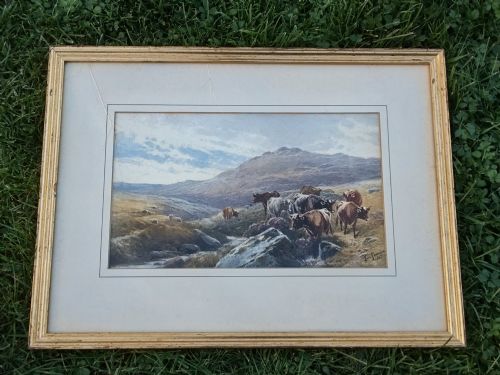
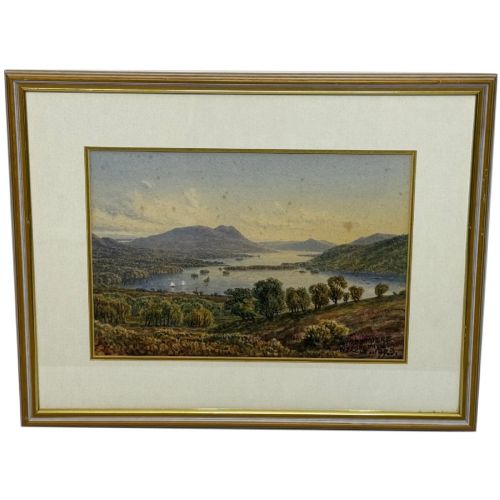
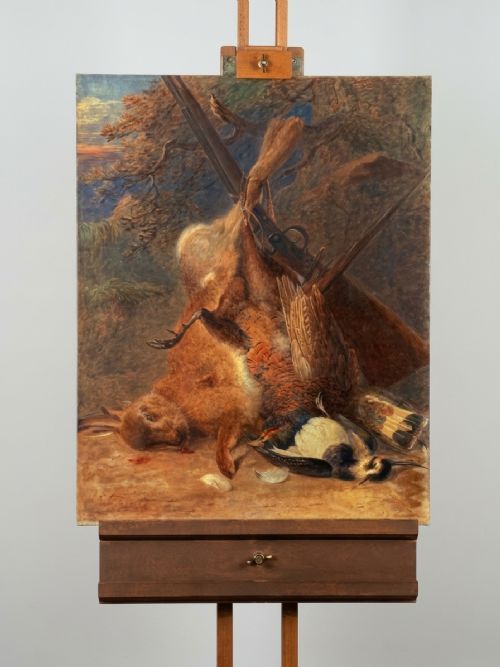
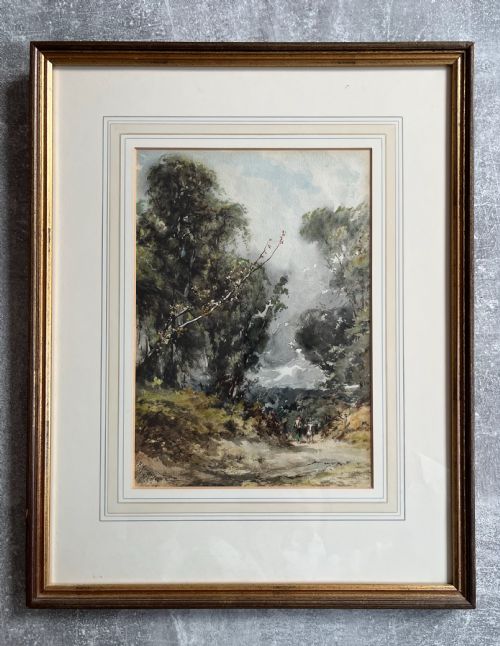

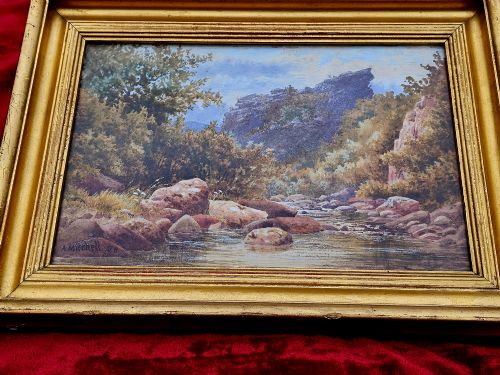
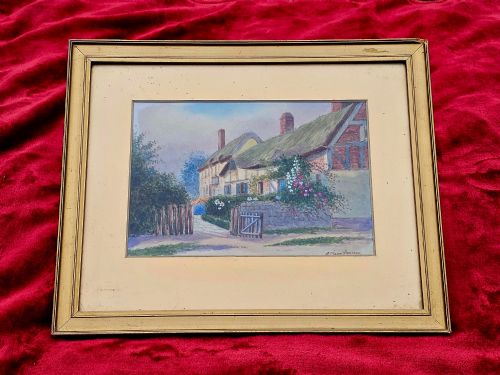
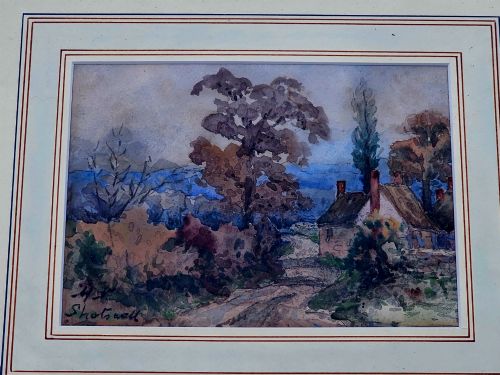
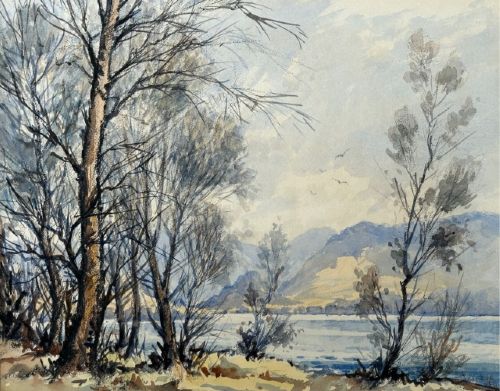
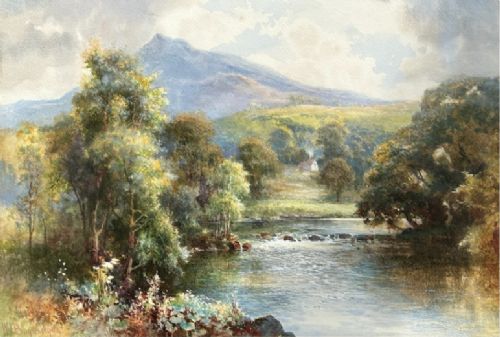
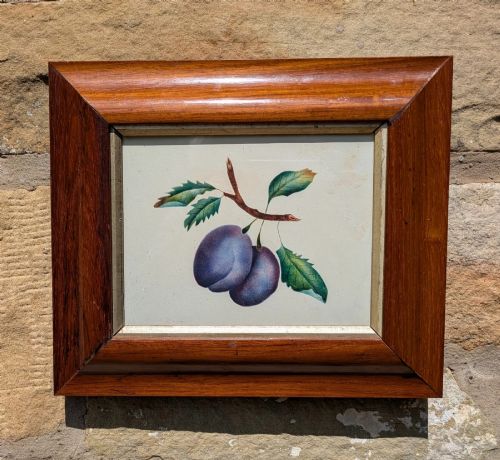
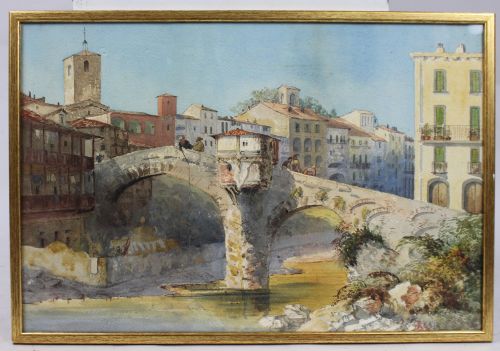
Framed Original Watercolour Picture
A framed original watercolour picture brings hand-painted colour and immediacy to a room through delicate washes of pigment on paper.
Framed Original Watercolour Picture
A framed original watercolour picture is a unique work on paper executed by hand using water-soluble pigments, capturing light and landscape with transparency.
You will most frequently meet nineteenth-century and early twentieth-century examples on this page, spanning Victorian coastal views, Edwardian rural scenes, and mid-century botanical studies.
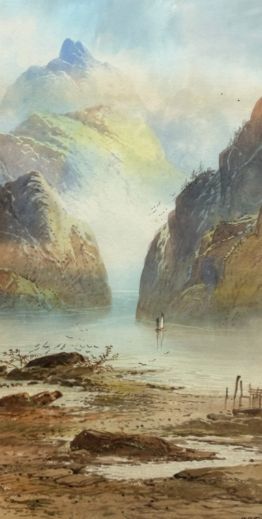
These works range from intimate botanical sketches and portrait miniatures to expansive landscapes depicting Scottish lochs, Welsh valleys, and French harbours.
How they were made
Artists applied finely ground pigments mixed with water onto heavy rag paper or board, building the image through successive translucent washes rather than opaque layers.
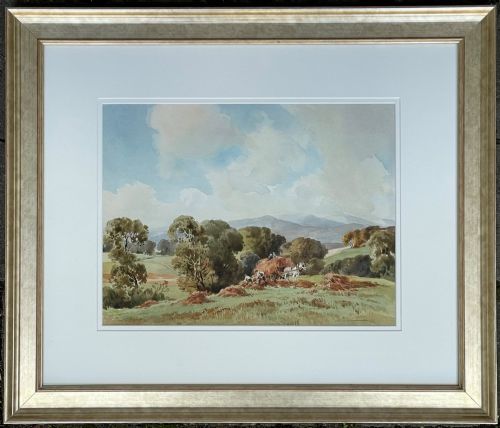
Protection came from framing beneath glass within wooden mouldings, occasionally finished with giltwood or rosewood to shield the delicate paper surfaces from atmospheric moisture and dust.
Several Victorian artists painted parakeets and garden birds with such precision that you can almost hear them chirping from the wall.
What varies in quality
Quality rests upon the confidence of the brushwork and the artist's command of light, where skilled draughtsmanship allows the white of the paper to serve as highlights.
The survival of the pigment's original vibrancy separates superior pieces from those faded by harsh sunlight, alongside the harmony and preservation of the period frame.
George Fotherly Hargitt·William Henry Earp·Percy Lancaster·John Hassall·Ernest Arthur Rowe·Cornelius Pearson
The Framed Original Watercolour Picture Glossary
- Watercolour
- A painting method where natural pigments are suspended in a water-based solution and applied to paper. This medium relies on the reflective quality of the white paper shining through transparent washes.
- Wash
- A thin, fluid layer of diluted watercolour pigment spread evenly across the paper. It is often used to create expansive skies or calm expanses of water.
- Giltwood
- Wood carved and coated with gold leaf or a gold-coloured metallic finish. This material was widely utilised for traditional frames to add warmth and elegance.
- Provenance
- The documented history of a work's ownership and origin. Clear provenance helps establish attribution to a named artist.
- Mount
- A cardboard border placed between the artwork and the frame. It provides a visual breathing space and keeps the paper from touching the glass.
Framed Original Watercolour Picture: Frequently Asked Questions
How do I care for my watercolour?
Hang your framed picture away from direct sunlight to prevent the pigments from fading over time. Maintaining a stable indoor temperature protects the paper from humidity and warping.
Ensure the protective glass remains sealed at the back to keep dust and insects away from the delicate painted surface.
Are watercolours always painted on paper?
Artists traditionally applied watercolour pigments to heavyweight rag paper or occasionally prepared artist boards. This absorbent base allowed the liquid washes to bond effectively with the fibres.
Paper thickness varied according to the scale of the composition and the artist's preferred technique.
Why are watercolours framed under glass?
Glass protects the porous paper surface from airborne dirt, smoke, and moisture damage. It also prevents accidental tearing or creasing of the unvarnished medium.
Traditional framing methods incorporate a mount to maintain a clear gap between the paper and the glass.