



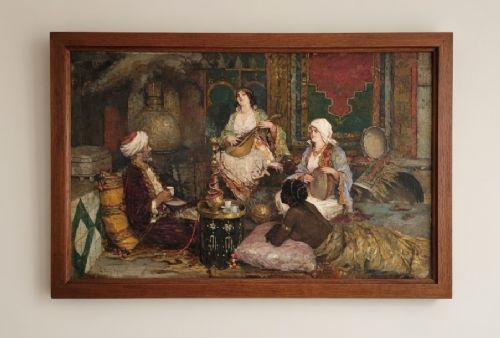


Framed Orientalist Painting
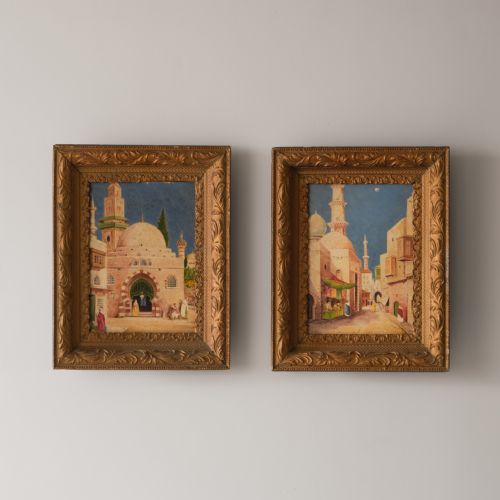
A framed orientalist painting captures distant lands through Western eyes, offering vibrant scenes of Middle Eastern and North African life.
Framed Orientalist Painting
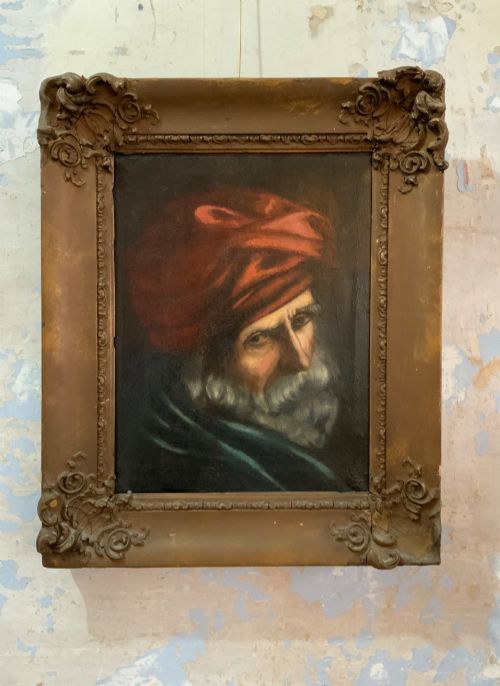
A framed orientalist painting brings together diverse depictions of landscapes, portraits, and architectural studies associated with Near Eastern and Asian subjects. These works frequently record travels, colonial encounters, and romanticised views from the eighteenth century onwards.
The pieces on this page span several decades, featuring oil and watercolour mediums housed within period wooden and gilt frames. Buyers encounter everything from naive village scenes to detailed academic portraits.
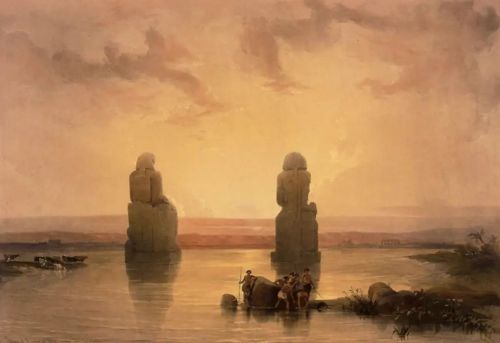
Subjects range from Bedouin tribesmen and desert waterways to bustling Middle Eastern streets and ancient temples. The selection leans heavily towards nineteenth-century outputs alongside early twentieth-century interpretations.
How They Were Made
Artists employed oil paint, watercolour, gouache, and pastel applied to canvas, paper, wood panels, and board. Watercolours often utilised fluid washes, whilst oils achieved rich textures through layered brushwork on stretched canvas or rigid supports.
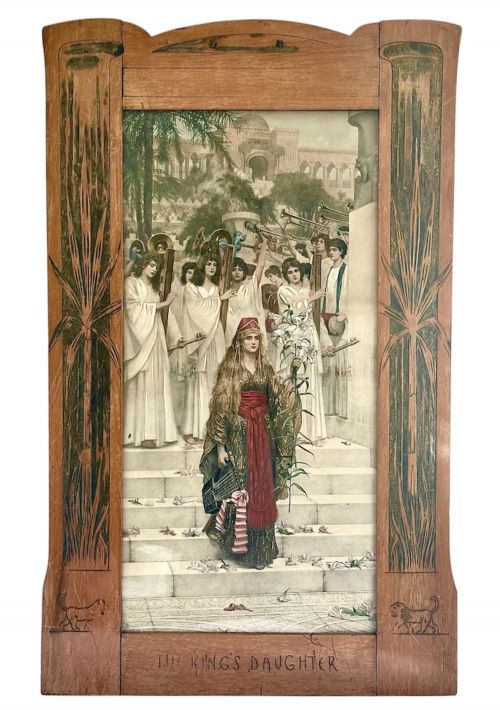
Framing played an integral role in presentation, utilising gilt wood, ebonised moulding, and glass protection to preserve delicate paper and canvas surfaces. Many works retain their original nineteenth and early twentieth-century surrounds.
Listings feature works spanning from the eighteenth century to the mid-twentieth century, executed in oil, watercolour, and gouache on canvas, paper, and wood.
What Varies in Quality
Technical skill separates academic portraiture and accomplished topographical views from naive or provincial output. Masters of the genre demonstrated precise control over harsh desert light, atmospheric haze, and architectural perspective.
The integrity of the original medium heavily influences desirability. Works retaining vibrant pigments without excessive fading or damp damage stand apart from those bearing heavy restoration or degraded paper supports.
David Roberts·Herbert Gustave Schmaltz·Edwin Lord Weeks·Charles Bellay·Frederick Goodall·Gabriel Puig Roda·William James Muller·Abraham Cooper·Abdul Kadir Al Rassam·Alexandre Decamps·Richard Wilson
The Framed Orientalist Painting Glossary
- Orientalism
- Artistic and literary depictions of Near Eastern, Middle Eastern, and North African subjects by Western creators. This style dominated European academic and amateur painting throughout the nineteenth century.
- Gouache
- An opaque water-based paint that dries to a matte finish. Artists combined gouache with watercolour to add highlights and solid colour to landscape paintings.
- Photogravure
- A printmaking technique producing a photographic image on paper from an etched copper plate. This process captured fine tonal details of original artworks for wider reproduction.
- Chinoiserie
- A European decorative style reflecting Chinese artistic influences. The aesthetic appeared across furniture panels and paintings during the Victorian era.
- Encaustic
- A technique involving heated beeswax mixed with coloured pigments. Painters applied this molten mixture to canvas or board to create textured compositions.
Framed Orientalist Painting: Frequently Asked Questions
What is an orientalist painting?
An orientalist painting depicts scenes, people, and landscapes of the Middle East, North Africa, and Asia created by Western artists.
These works reflect nineteenth-century European perspectives on foreign cultures, ranging from documentary travel records to romanticised studio compositions.
How do I date a framed painting?
Dating relies on examining the materials of both the artwork and its frame, alongside stylistic clues and artist signatures.
Paper types, canvas weaves, stretcher construction, and framing techniques help narrow down the period of creation alongside recorded historical dates.
Are these watercolours original?
The watercolours listed are original hand-painted works rather than modern mass-produced prints.
Artists applied pigments directly to paper or board, often signing and dating the sheets upon completion in the nineteenth or twentieth century.
How should I display watercolour art?
Watercolours require placement away from direct sunlight to prevent the pigments and paper from fading over time.
Maintaining stable indoor humidity levels also protects the paper support and prevents degradation within the frame.