
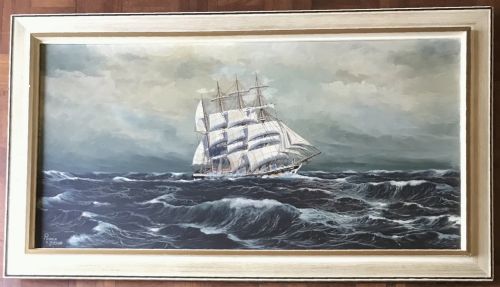

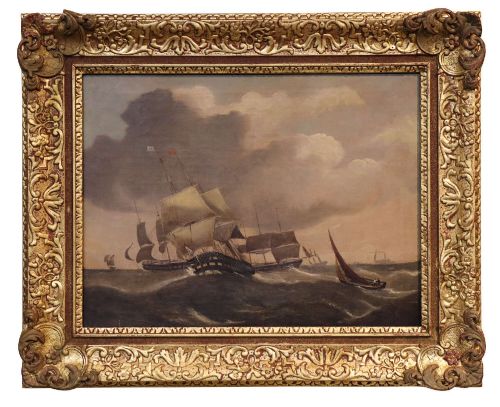
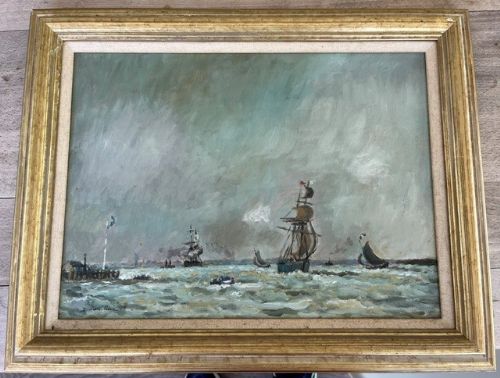
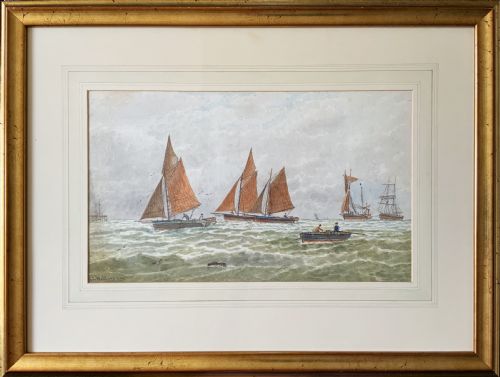


Framed Ocean Seascape Picture
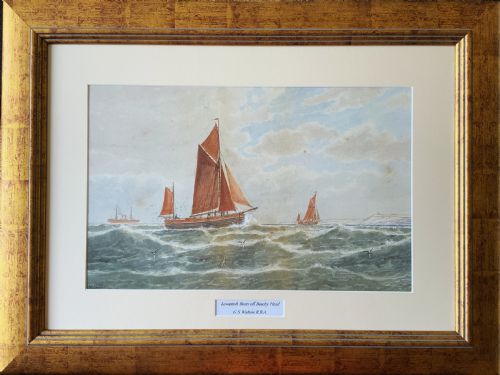
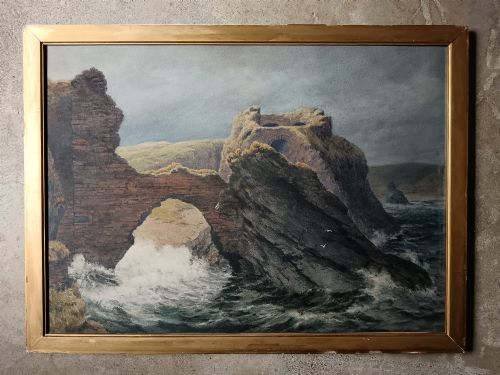
A framed ocean seascape picture brings maritime movement and coastal light into a room, spanning Victorian watercolours to mid-century oil paintings.
Framed Ocean Seascape Picture
A framed ocean seascape picture captures marine views, sailing vessels, and coastal shorelines across the nineteenth and twentieth centuries. These works range from detailed Victorian watercolours of harbours to impressionist oils on canvas depicting heavy seas and open water.
The pieces on this page include British and French watercolours, oil paintings on canvas and board, and charcoal works. Common subjects involve sailing ships, lighthouses, and fishing boats off the coasts of Cornwall, Scotland, and Wales.
Victorian examples often emphasise dramatic shipwrecks or calm coastal bays, while later twentieth-century pieces adopt impressionist and post-impressionist brushwork. Buyers encounter works attributed to named artists alongside pieces from the British and French schools.
How They Were Made
Artists utilised oil paint on canvas or board to build textured surfaces, particularly seen in impasto marine works depicting coastal movement. Watercolours on paper capture lighter atmospheric effects of sea mist and open skies.
Works are presented behind glass in wood frames, frequently finished with gilt detailing. Paper watercolours require glass protection, whereas oil paintings on canvas rely on stretcher frames to maintain tension.
The listings span periods from the 19th century to the 1960s, executed in oil paint, watercolour, and charcoal on paper and canvas.
What Varies in Quality
Quality rests in the artist's handling of light, water movement, and atmospheric perspective. Stronger paintings convey convincing maritime architecture and vessel rigging, supported by confident brushwork or precise watercolour washes.
The integration of the frame contributes to the presentation, where period gilt wood surrounds complement the depth and palette of the marine scene.
George Stanfield Walters·John Moxon·Elisabeth Bardon·Charles Napier Hemy·Gustave De Bréanski·Frederick Stuart Richardson·George Henry Knight·E Tucker·Frank Wood·Owen Bowen·S. J. Lamorna Birch·Herbert James·Edmund Gouldsmith·J Syer·Fred Dade·Thomas Bush Hardy
The Framed Ocean Seascape Picture Glossary
- Impasto
- Paint applied thickly to a canvas, standing out from the surface to give a sense of texture and physical presence. This technique is often utilised in seascapes to render churning water or thick clouds.
- Watercolour
- A paint consisting of pigment suspended in a water-based solution, typically painted on paper. It allows for translucent washes that suit coastal skies and water.
- Oil on Canvas
- Pigment mixed with drying oil applied to a woven fabric stretched across a wooden frame. This medium permits rich colour depth and layered brushwork.
- Marine Art
- Artistic works that focus on or draw main inspiration from the sea, including ships, coastal views, and naval engagements. It encompasses watercolours, oils, and drawings.
- Gilt Wood
- Wood treated with gold leaf or gold-coloured paint to create a metallic finish. Frames of this material are common on nineteenth-century paintings.
Framed Ocean Seascape Picture: Frequently Asked Questions
How do I date a seascape painting?
Dating relies on stylistic evidence, artist signatures, and framing materials. Victorian works often show meticulous maritime rigging, while mid-century pieces display broader impressionist brushwork.
The recorded periods span from the nineteenth century through the 1960s, offering clear stylistic markers for each decade.
What is the difference between watercolour and oil?
Watercolour paintings use water-soluble pigments on paper and require protection under glass. Oil paintings utilise oil-based paints on canvas or board, presenting a heavier textured surface.
Oils generally allow for deeper colour saturation, whereas watercolours excel at capturing luminous coastal atmospheres.
How should I hang a framed seascape?
Hang these pieces away from direct sunlight to protect watercolours and oil pigments from fading. Ensure the wall fixings match the weight of the wood and gilt frames.
Room humidity should remain stable to prevent canvas slackening or paper warping.
Are all these pieces British?
The selection includes British and French works, featuring coastal scenes from Cornwall, Wales, Scotland, and continental ports. School attributions often point to regional artistic traditions.
Artists frequently painted local coastal environments, documenting specific bays, lighthouses, and harbours.