




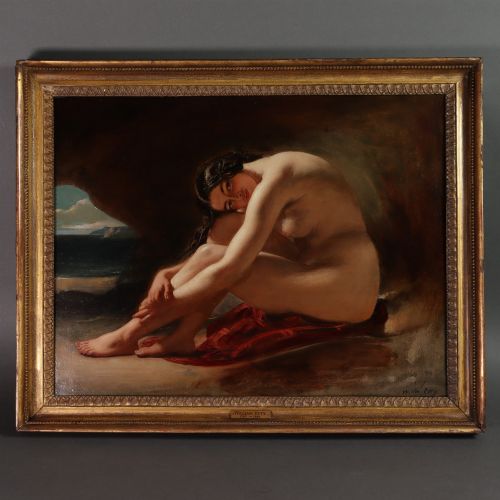
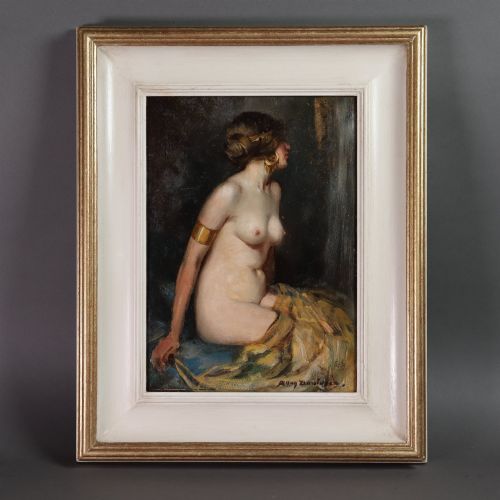


Framed Nude Oil Painting
When you search for a framed nude oil painting, you find works spanning academic studies to modernist interpretations.
Framed Nude Oil Painting
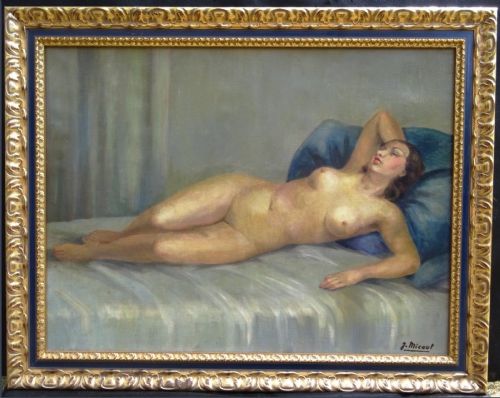
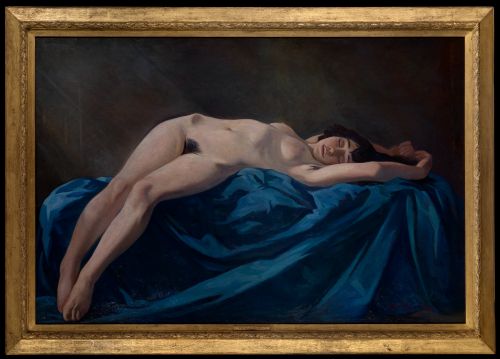
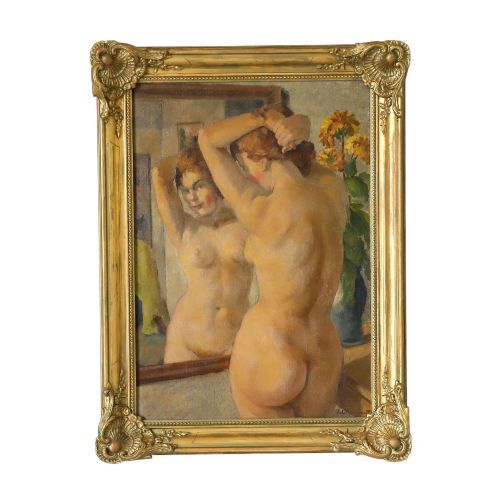
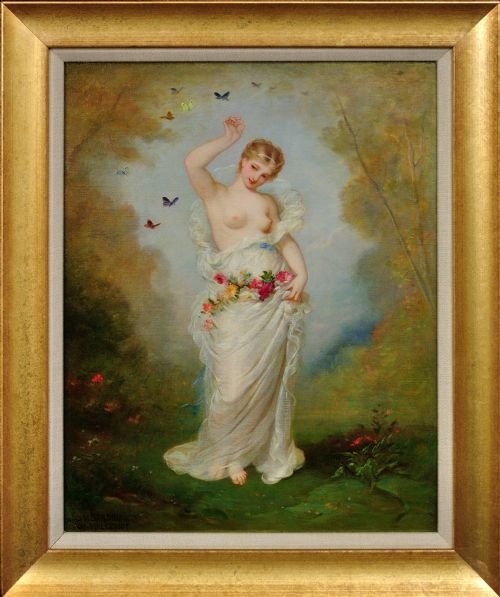
A framed nude oil painting brings the human form into domestic or studio settings through pigment applied to canvas, panel or board. These works range from nineteenth-century academic and mythological scenes to twentieth-century impressionist, post-impressionist and mid-century modernist interpretations.
The selections available here lean heavily into early-to-mid twentieth-century European output, particularly French and British schools, alongside select nineteenth-century examples. Common subjects include studio models, mythological figures, bathers and intimate interiors.
Most pieces arrive ready to hang in period surrounds such as giltwood or painted wood frames that complement the canvas. Collectors choose these works for their painterly brushwork, handling of light and shadow, and the distinct stylistic approaches of individual artists.
How they were made
The physical basis of these works is oil paint applied to woven canvas, wooden panels or paper laid on board. Artists built compositions using brush and palette knife, layering oil pigments to achieve depth of tone and texture.
Framing forms an integral part of the physical object, utilising carved wood, gilt details and giltwood mouldings designed to protect the edges of the canvas and frame the pictorial space.
Listings feature oil paintings on canvas, panel and board spanning the nineteenth and twentieth centuries.
What varies in quality
Quality rests in the handling of anatomy, light and spatial depth by the painter rather than the scale of the canvas. Stronger works demonstrate confident draughtsmanship and tonal control in rendering the human figure.
The integrity of the original frame and the preservation of the paint surface also influence the standing of a piece. Works retaining their period surrounds show a more complete historical context.
Eric Robertson·Philippe de Rougemont·Margaret Maitland Howard·Raymond Moritz·Tony Giles·André Charles Voillemot·Henri Vincent-Anglade·Alexandre-Louis Martin·Gaetan Dumas·William Etty·Allan Douglas Davidson·Cornelis Van Poelenburgh·James Clark·William Edward Frost·Peter Paul Rubens·Jean Hippolyte Marchand·Pinchus Krémègne·Yetta Kane·Raymond Arthur Roadnight
The Framed Nude Oil Painting Glossary
- Oil on canvas
- Pigment suspended in a drying oil, typically linseed, applied to a stretched fabric support. This combination allows for rich blending of tones and visible brushwork.
- Giltwood
- Wood carved and coated with a thin layer of gold leaf or gilt paint. It is frequently found on nineteenth-century and early twentieth-century picture frames.
- Academic style
- A neoclassical approach to painting taught by European art academies, prioritising mythological subjects and polished anatomical precision. Works in this vein display formal composition and smooth finishes.
- Post-Impressionism
- A French art movement developing roughly from the late nineteenth century that rejected strict naturalism in favour of expressive forms and emphatic colours. Artists emphasised symbolic content and distinct personal styles.
- Impressionism
- A nineteenth-century movement focused on capturing light and transient moments through small, visible brushstrokes. Paintings of this type prioritize atmospheric effects over rigid line work.
Framed Nude Oil Painting: Frequently Asked Questions
What periods do these paintings cover?
The selections span from seventeenth-century Dutch works and nineteenth-century academic pieces up through mid-century modernist creations.
Twentieth-century examples from the nineteen-twenties and nineteen-thirties appear frequently alongside post-war compositions.
Are the frames original to the paintings?
Many works retain their period surrounds, such as giltwood or wood mouldings appropriate to the date of execution.
Descriptions note specific framing materials when records indicate a contemporary or later pairing.
How should I hang an oil painting?
Secure wall fixings suited to the weight of the wood frame and canvas should be used with traditional picture wire.
Placement away from direct sunlight and excessive humidity protects both the oil pigment and the wooden support over time.
What subjects are common in these works?
Common subjects include studio interior studies, reclining figures, bathers by rivers and mythological characters such as nymphs and gods.
Artists approached the human form through various lenses, ranging from realistic portraiture to avant-garde abstraction.