
Framed Needlepoint Art
Framed needlepoint art brings together centuries of stitch work, from maps to portraits, preserved behind glass in wood or gilt frames.
Framed Needlepoint Art
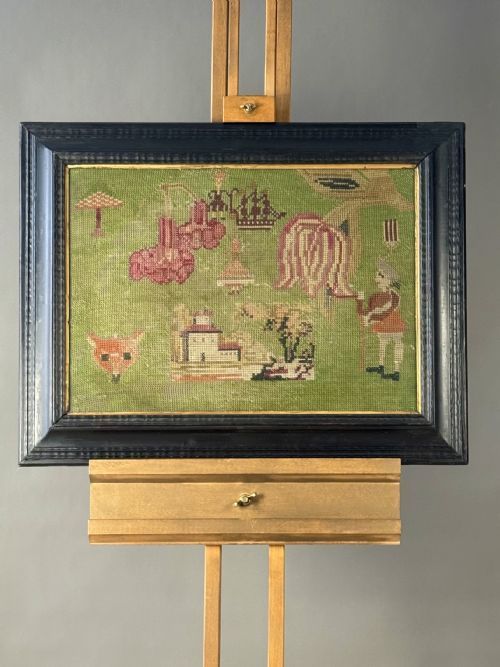
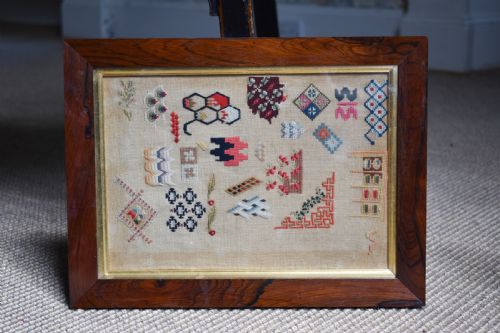
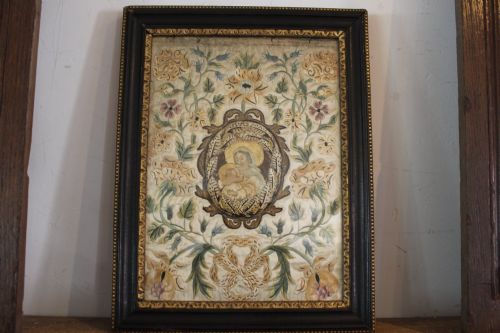
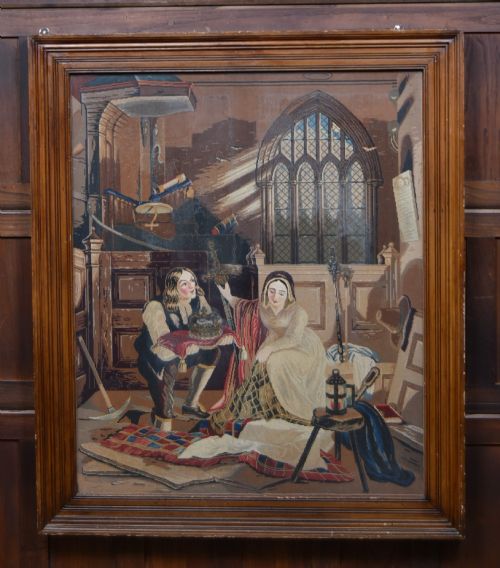
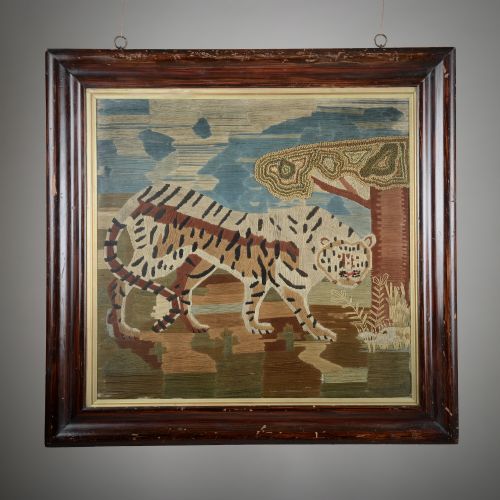
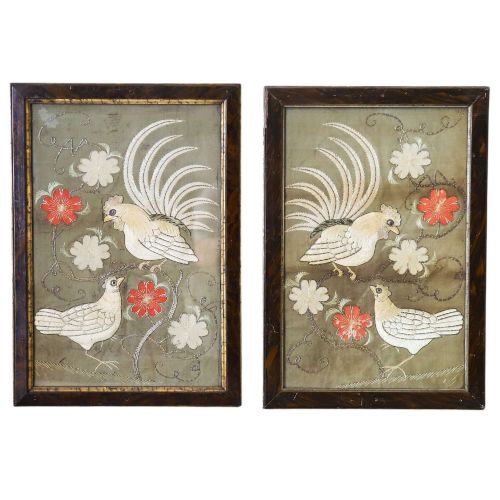
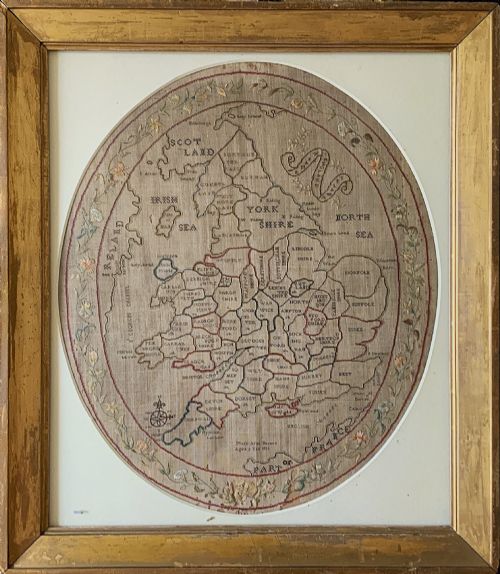
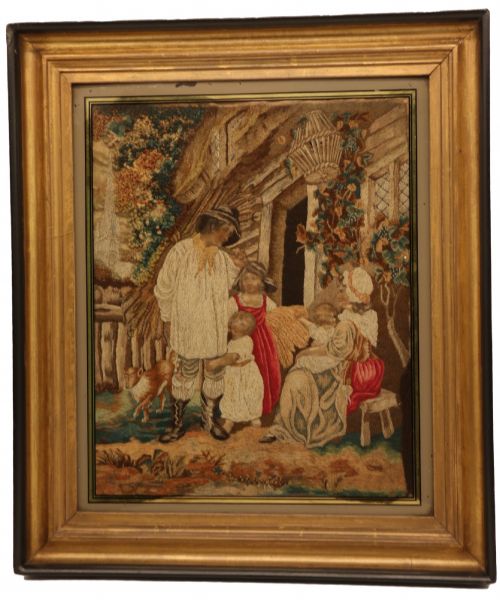
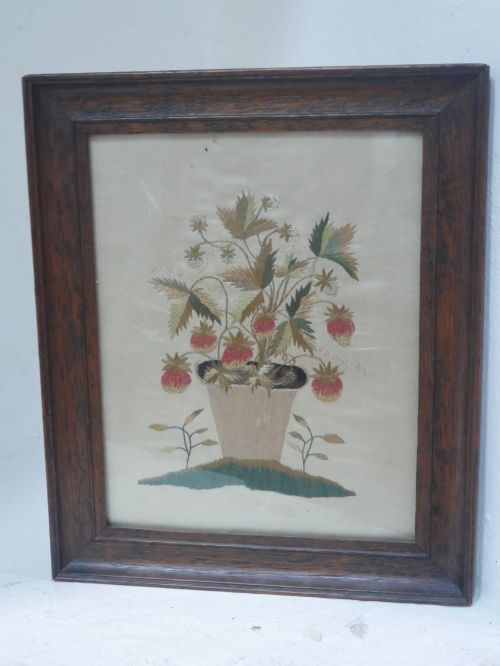
When you search for framed needlepoint art, you encounter textiles spanning several centuries, including Victorian samplers, Georgian silk pictures, and seventeenth-century embroidered panels. The selection on this page relies heavily on nineteenth-century woolwork, Berlin woolwork, and various stitched depictions of animals, figures, and maps.
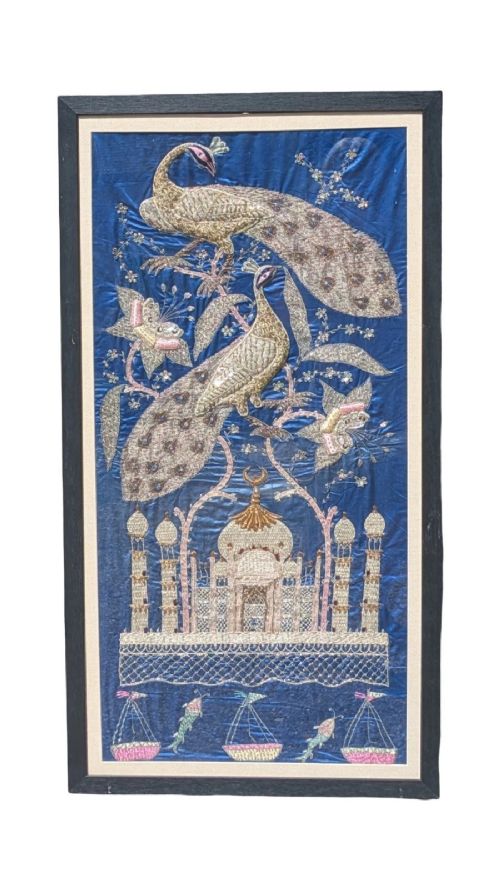
Forms range from small antique miniature samplers to large wall pieces depicting subjects such as the Taj Mahal, horses, and pastoral scenes. Many examples retain their original surrounds, including burr maple frames or glass panels with verre églomisé borders.
How they were made
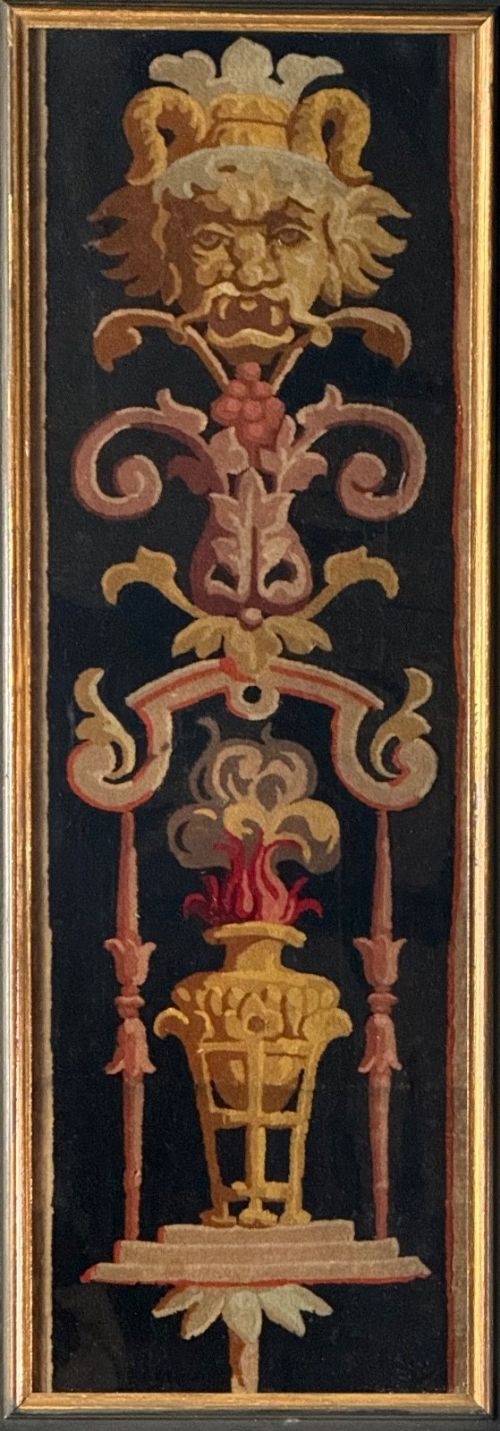
Needlework pieces are constructed using wool, silk, linen, and canvas, frequently incorporating metal thread and beadwork fragments into the design. Silk floss and wool yarns are stitched into ground fabrics to create textured surfaces like plushwork, gros-point, and long stitch.
Finished embroideries are mounted behind glass within wooden frames, occasionally utilising giltwood, faux tortoiseshell, or burr maple to protect the delicate textiles from environmental damage.
Framed Needlepoint Art Retail Price Guide 2026
Typical asking prices for framed needlepoint art among the pieces listed under this phrase on Sellingantiques today, from the lower quarter to the upper quarter. They describe what is for sale here now, not the wider market.
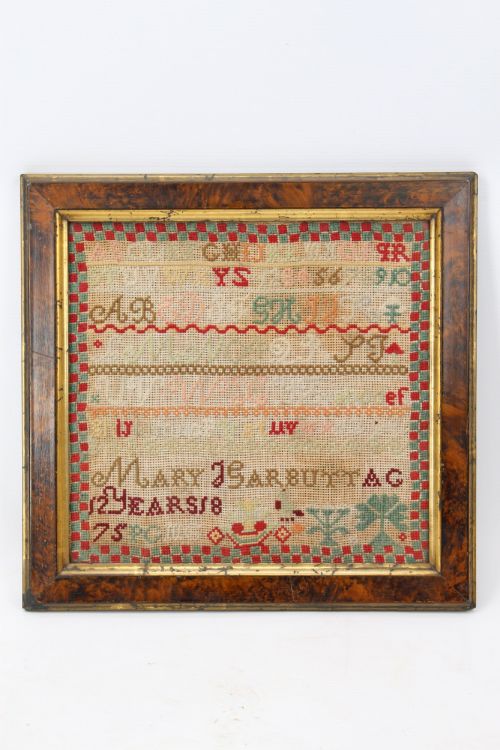
Stitched entirely by young hands, old samplers occasionally contain spelling errors in the alphabet rows that persevered through the centuries.
What varies in quality
The distinction between ordinary and exceptional pieces rests on the intricacy of the stitch work, the preservation of the fibres, and the originality of the mounting. Finely executed shading in silk or wool and complex pictorial subjects indicate higher skill in the maker.
The quality of the enclosing frame contributes significantly to the piece, with original period surrounds such as burr maple or verre églomisé glass holding greater historical integrity than later replacements.
The Framed Needlepoint Art Glossary
- Berlin work
- A popular nineteenth-century style of needlepoint stitched in coloured wools on canvas using charted patterns. It allowed makers to produce vivid pictorial images and elaborate floral designs.
- Sampler
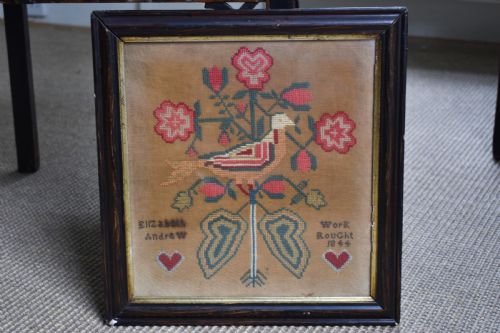
- A piece of textile work produced by a beginner or proficient maker to demonstrate various stitches and patterns. They often include alphabets, numbers, names, and dates.
- Plushwork
- A raised embroidery technique using looped stitches that are cut to create a velvety, tactile pile. This method gives animals and figures a realistic textured appearance.
- Verre églomisé
- A process of applying cold gilding and painting to the reverse side of glass. It provides a decorative border often seen on frames from the Regency period.
- Band sampler
- An early format of needlework featuring horizontal rows of disparate patterns and motifs. These were popular in seventeenth and eighteenth-century English stitching.
Framed Needlepoint Art: Frequently Asked Questions
How do I date an old sampler?
Many samplers include embroidered dates and the age or name of the maker, such as a child stitching a map of England in eighteen eleven. Examining the style of the lettering, framing materials, and fabric ground helps confirm the period when no date is stitched.
Needlepoint techniques also evolved over time, shifting from sixteenth and seventeenth-century band patterns to nineteenth-century Berlin work and woolies depicting ships or animals.
What is Berlin work?
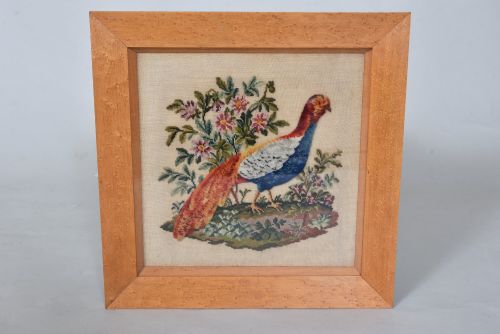
Berlin work is a type of nineteenth-century needlepoint embroidered with brightly coloured wools onto canvas. These pieces relied on printed grid patterns imported from Germany, enabling makers to create detailed pictures.
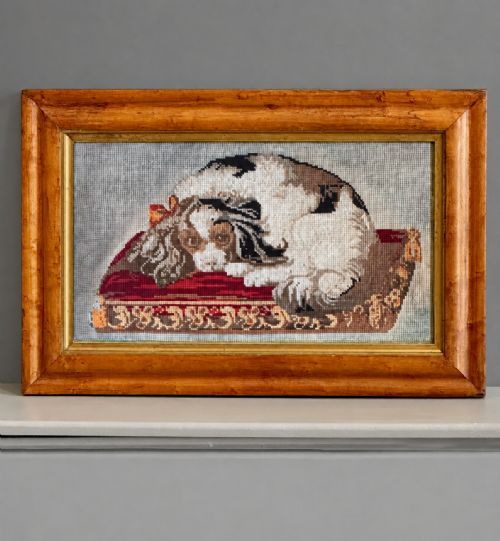
Subjects ranged from biblical scenes and animals like spaniels to large pictorial compositions such as Pharaoh's Dream.
Are these textiles displayed behind glass?
Most framed needlepoint art is kept behind glass to protect fragile silk, wool, and linen threads from dust, moisture, and handling. Original glass and period frames add to the authenticity of the piece.
Care should be taken to keep these framed textiles away from direct sunlight to prevent the coloured wools and silks from fading.
What is a woolie?
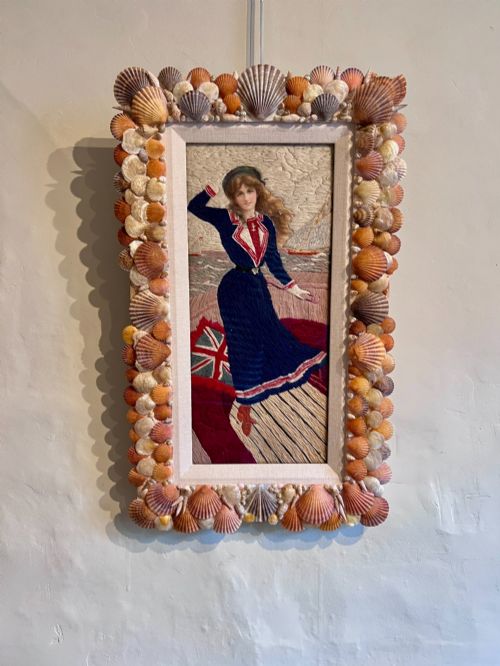
A woolie is a colloquial term for a sailor's woolwork picture, often depicting maritime scenes or vessels made by nineteenth-century sailors at sea. These works utilise various weights of wool yarn on canvas to create textured sea and ship details.
They are typically framed and form a distinct category within nineteenth-century textile art.