




Framed Nautical Oil Artwork
Framed nautical oil artwork captures historical ships and dramatic seascapes through traditional pigment and canvas.
Framed Nautical Oil Artwork
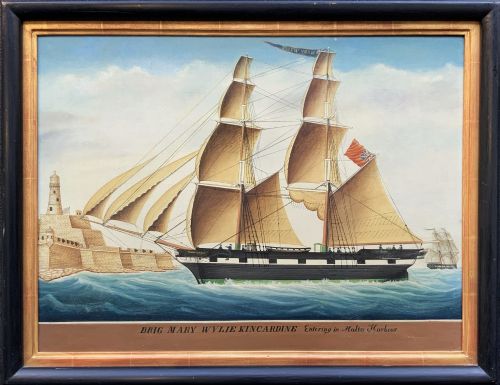
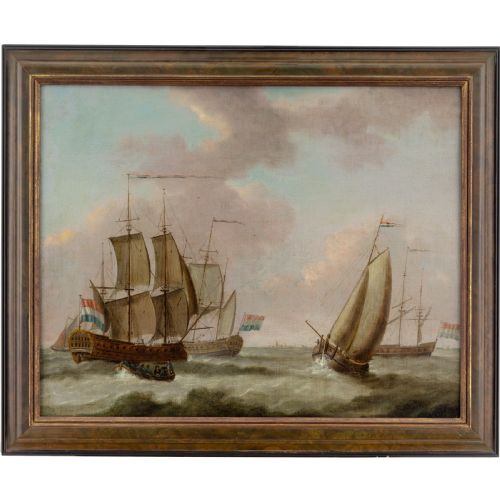
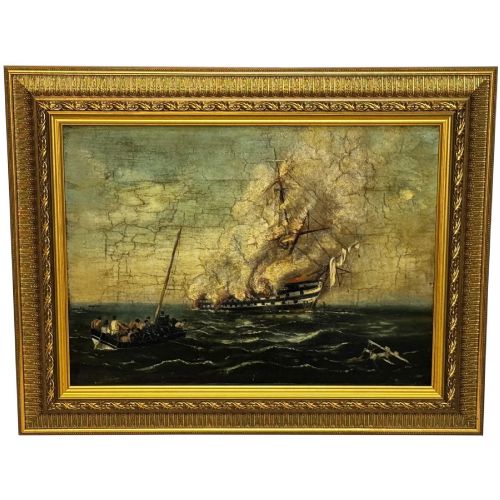
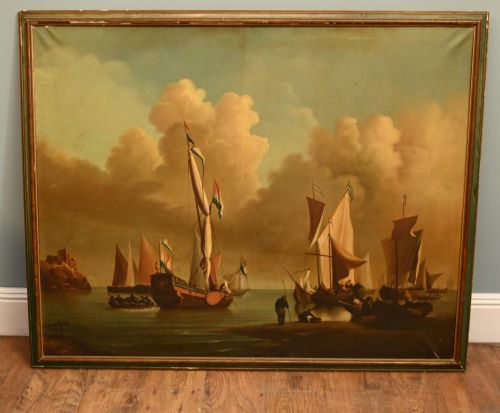
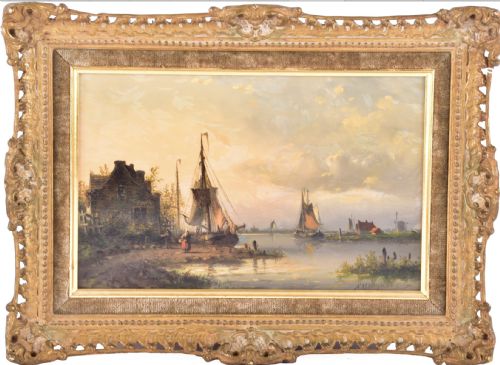
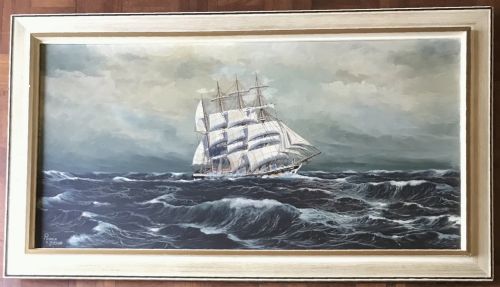
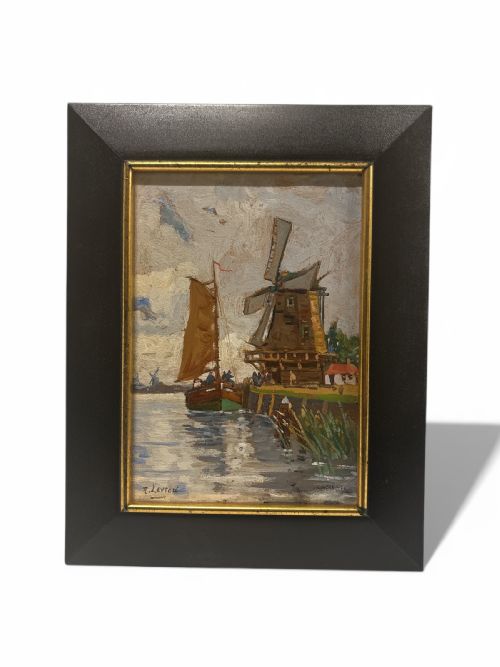
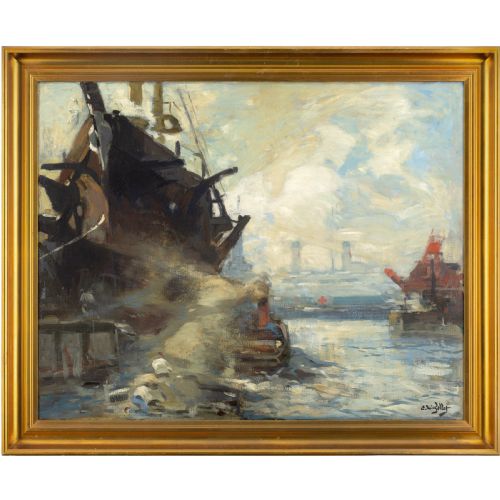
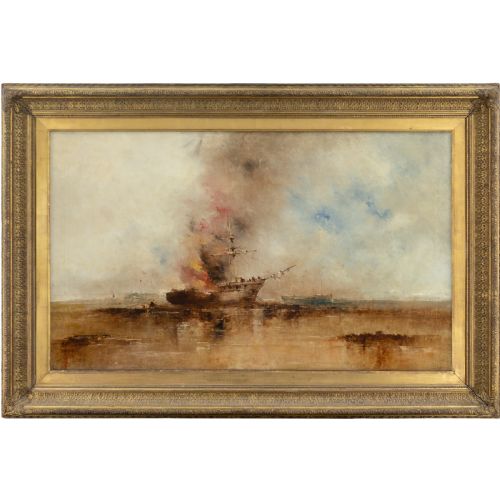
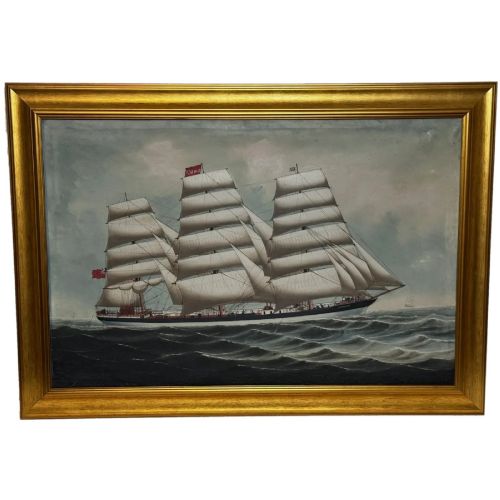
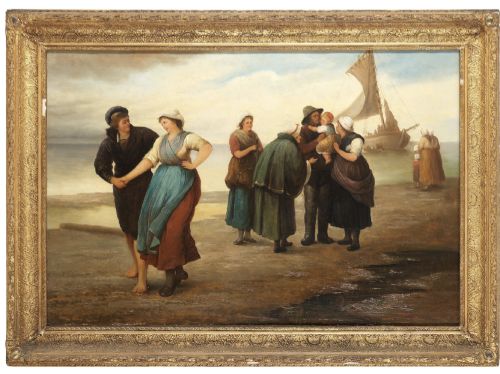
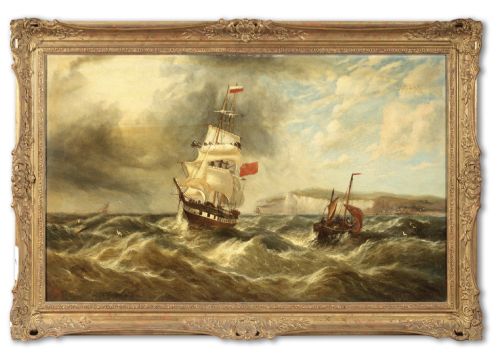
A framed nautical oil artwork depicts marine scenes, coastal harbours, and historical vessels rendered in traditional oil paint. The selections available here span from the nineteenth century through the mid-twentieth century, capturing operational sailing ships, wartime vessels, and peaceful coastal anchorages.
Buyers will frequently encounter Victorian and Edwardian works alongside mid-twentieth-century interpretations of maritime life. These pieces typically present historical records of specific ships or atmospheric studies of coastal weather and rough seas.
The physical presentation relies heavily on period frames, which often incorporate gilt wood complementing the maritime subjects. The subject matter ranges from detailed portraits of named merchant vessels to broader impressionistic coastal views.
Materials and Technique
Artists painted these works primarily using oil paint applied to stretched canvas, wooden panels, or board supports. The medium allowed painters to build texture, known as impasto, particularly when depicting turbulent water or churning waves in stormy seas.
The surrounding frames commonly utilise carved wood finished with a gilt surface to enhance the visual weight of the marine subject. Many canvases remain in their original frames, retaining period characteristics such as moulded plaster details and gilded ornamentation.
Several Victorian captains likely stared at rougher seas than these painted waves while sipping weak tea below deck.
Factors of Quality
Quality in these maritime works rests upon the artist's technical command of light, rigging detail, and water movement. A superior composition demonstrates accurate nautical architecture alongside a convincing atmosphere, whereas lesser examples rely on formulaic waves and generic hull shapes.
The integrity of the original canvas surface and the condition of the accompanying gilt wood frame significantly influence the overall standard. Works that maintain their untouched painted surface without extensive later overpainting represent the stronger end of the selection.
Eugène-Louis Gillot·William McAlpine·Reginald Arthur Borstel·John Rose Miles·James Kay RSW·Bonaventura Peeters·Peter Brannan·Paul Bret·Willem Bos·John Wilson Carmichael·Richard B. Spencer·William Henry Williamson·Bernard Benedict Hemy·Abraham Hulk I·Elisabeth Bardon·Charles Napier Hemy
The Framed Nautical Oil Artwork Glossary
- Giltwood
- Wood that has been coated with a thin layer of gold leaf or metallic gilt powder. This finish is standard for traditional frames enclosing maritime oil paintings.
- Impasto
- Paint applied thickly to a canvas so that the brush or palette knife marks remain clearly visible. Marine artists frequently utilise this technique to render the texture of crashing waves.
- Marine painting
- Artwork depicting ships, boats, naval battles, or coastal views as the primary subject. These works serve as both artistic expressions and historical maritime records.
- Panel
- A rigid support base made from wood used by artists instead of woven canvas. Several nineteenth-century maritime works utilise wooden panels for stability.
Framed Nautical Oil Artwork: Frequently Asked Questions
What subjects do these paintings show?
The artworks depict historical sailing vessels, steamships, wartime ships, and peaceful coastal harbours. Many pieces focus on specific named merchant or naval vessels navigating coastal waters.
Other works capture broader seascapes, stormy weather conditions, and traditional fishing boats operating near the shore.
How should I hang a heavy framed oil painting?
Heavy framed oil paintings require secure wall anchors fixed directly into masonry or wooden wall studs. Using appropriate picture wire and rated wall hooks ensures the substantial weight of the gilt wood frame is safely supported.
Positioning the artwork away from direct sunlight and excessive heat sources protects both the oil pigment and the wooden support from gradual deterioration.
How can I tell the period of a maritime painting?
The period is often indicated by the type of vessel depicted, such as three-masted schooners, early steamships, or modern motor vessels. Clothing styles of any figures included in the harbour scenes also provide clear chronological clues.
Frame styles, canvas construction methods, and artist signatures matching historical records help confirm the specific era of creation.
Do these paintings come with original frames?
Many of the listed marine paintings retain their period gilt wood frames, which were often selected to complement the maritime subject. These frames display nineteenth or early twentieth-century moulding techniques and gilding methods.
Listings specify whether the frame is period-correct to the artwork or a later replacement.