
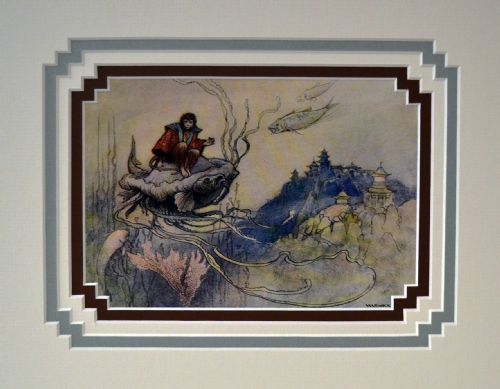


Framed Mythological Art Print
These framed mythological art print pieces bring classical narratives and ancient deities directly to your walls, offering centuries of artistic heritage.
Framed Mythological Art Print
When you search for a framed mythological art print, you encounter a diverse array of works depicting classic tales, deities, and antiquities from multiple historical eras. The selections range from seventeenth-century etchings to Edwardian illustrations and twentieth-century oil paintings.
You are most likely to meet eighteenth-century engravings depicting classical architectural antiquities and deities, alongside Victorian classical works and twentieth-century interpretations of ancient myths. These items span various periods including the seventeenth, eighteenth, and nineteenth centuries, as well as the Edwardian era and the nineteen-thirties.
The physical forms include framed prints, engravings, etchings, and oil paintings on canvas or paper. Subjects extend from Pan and Syrinx to Eros, Aphrodite, and Pygmalion, reflecting enduring artistic engagement with classical themes.
How they were made
The creation of these works relies on traditional techniques such as etching and engraving on paper, alongside oil painting on canvas. Publishers and artists utilised ink to transfer detailed classical imagery onto paper sheets or cardboard supports.
Many of these works are housed in frames constructed from wood, often finished with gilt or gilt resin detailing. Glass frequently protects the delicate paper surfaces of the prints and engravings from environmental damage.
Listings feature paper, glass, wood, ink, cardboard, oil on canvas, gilt, and gilt resin across the eighteenth, nineteenth, and twentieth centuries.
What varies in quality
The distinction between tiers of these works rests upon the clarity of the printed line and the depth of the ink impression. Early impressions from etched or engraved plates display sharper detail than later printings.
Material preservation significantly influences the character of each piece, particularly the condition of the paper, canvas, and the surrounding gilt wood frame. The skill of the execution, whether in the delicate strokes of an Edwardian illustration or the brushwork of an oil painting, dictates the overall impact.
Warwick Goble·Margaret Maitland Howard·Arthur Hacker·Polidoro de Caravaggio·James Basire
The Framed Mythological Art Print Glossary
- Etching
- A printmaking technique where lines are bitten into a metal plate with acid before ink is applied. This method allows for fine, fluid detail in historical prints.
- Engraving
- A process of cutting design lines directly into a metal plate using a burin tool. The resulting plates produce crisp, clear lines on paper.
- Gilt
- A gold leaf or gold-coloured surface application used on wood frames. It provides a reflective decorative border around the artwork.
- Neoclassical
- An artistic style drawing inspiration from the art and culture of classical antiquity. It appears frequently in eighteenth-century and Victorian representations of mythology.
- Mannerist
- A sixteenth-century European art style known for exaggerated forms and sophisticated compositions. It links to works by artists such as Polidoro de Caravaggio.
Framed Mythological Art Print: Frequently Asked Questions
What is a mythological art print?
A mythological art print is a visual representation of ancient gods, heroes, and classical stories, often produced as an etching, engraving, or illustration.
These pieces capture enduring narratives from Greek and Roman traditions, translated through the artistic styles of centuries past.
How are these framed artworks displayed?
Most works are preserved behind glass within wooden frames, occasionally featuring gilt or gilt resin finishes that complement the classical subject matter.
Proper framing protects delicate paper and ink surfaces from dust, moisture, and direct sunlight while hanging on a wall.
How do I identify the period of a print?
The period is typically indicated by the paper type, printing technique, stylistic conventions, and any accompanying documentation or publication dates recorded on the piece.
Comparing the artistic style, such as Edwardian illustration or eighteenth-century neoclassical engraving, helps determine the era of origin.
What subjects appear in these artworks?
Subjects frequently include classical deities, mythological figures such as Eros, Aphrodite, and Pan, and architectural antiquities from ancient Greece and Rome.
Artists across different centuries reinterpreted these traditional stories through varying lenses, from dramatic oil paintings to detailed linear engravings.