




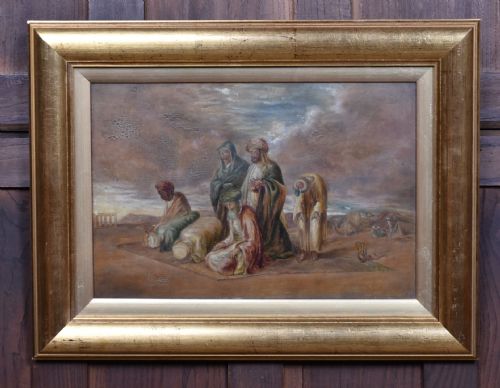


Framed Middle Eastern Art
Framed Middle Eastern art gathers centuries of diverse regional expression into wall-ready works that capture historic landscapes and portraits.
Framed Middle Eastern Art
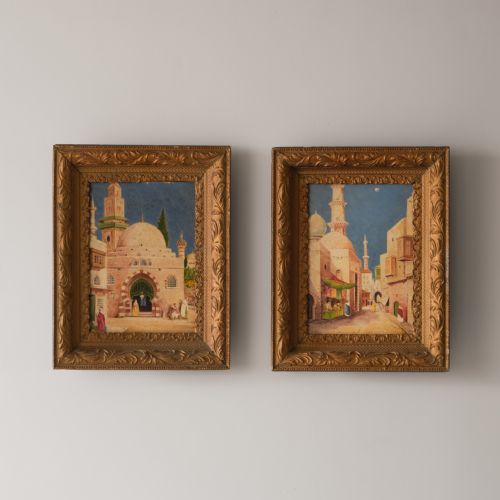
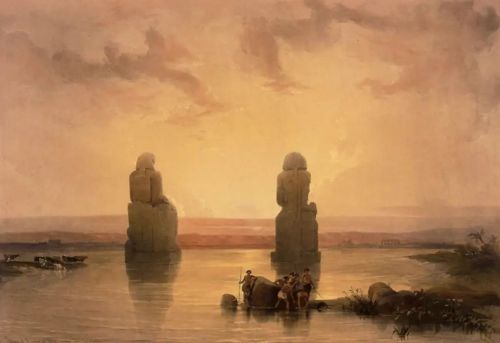
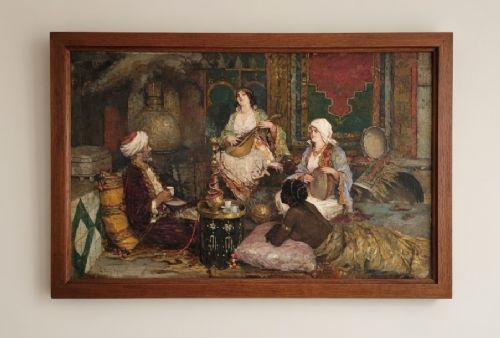
Framed middle eastern art encompasses paintings, watercolours, and textiles originating from regions including Iraq, Egypt, Turkey, and Yemen. Buyers find everything from naive depictions of old Bagdad to detailed nineteenth-century orientalist landscapes.
The selection ranges from Victorian watercolours and coloured engravings to mid-twentieth-century modern works and tribal artefacts. Most pieces arrive ready to hang, set within period wood or ebonised frames.
Subjects frequently centre on desert scenes, bedouin tribesmen, and village life, reflecting both local perspectives and foreign interpretations of the region.
Materials and techniques
Artisans and painters utilised oil paint, watercolour, gouache, and pencil across canvas, paper, board, and cloth. Pigments meet traditional supports, sometimes enhanced by gold leaf and gold embroidery.
Framing materials reflect the period of creation, predominantly featuring wood, gilt wood, and ebonised mouldings fitted with protective glass. Textiles such as embroidered jackets find new life secured behind glazing as wall art.
Camels wander through desert oils and watercolour landscapes, patiently reminding viewers that some desert companions refuse to be rushed.
Judging quality in these works
Quality rests in the precision of the brushwork, the depth of the composition, and the authenticity of the historical depiction. Hand-painted watercolours and oils command greater attention than mass-produced prints.
The integrity of the original frame and the preservation of the paper or canvas dictate the standing of a piece. Materials like gold leaf and fine silk embroidery elevate the craftsmanship of textile items.
David Roberts·Edwin Lord Weeks·Gabriel Puig Roda·William James Muller·V. Zirakian·Otto Pilny·Abdul Kadir Al Rassam·Richard Wilson
The Framed Middle Eastern Art Glossary
- Orientalism
- Artistic style depicting the Middle East and North Africa, often produced by European artists during the nineteenth century. These works heavily influenced Western perceptions of eastern cultures.
- Gouache
- An opaque water-based paint that dries to a matte finish, frequently utilised alongside watercolour for heightened colour intensity. It allows for sharp details on paper.
- Repousse
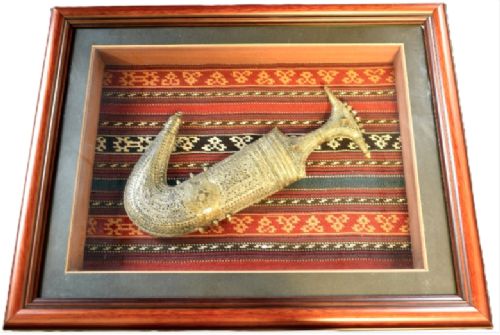
- A metalworking technique where the metal is hammered from the reverse side to form a raised design in relief. This method appears on metal plaques and dagger mountings.
- Ebonised
- Wood treated to imitate ebony, usually through dark staining or painting to create a solid black finish. It remains common on Victorian and early twentieth-century picture frames.
- Jambiya
- A traditional short dagger with a curved blade worn by men in regions like Yemen, often mounted as decorative tribal artefacts.
Framed Middle Eastern Art: Frequently Asked Questions
What periods do these pieces span?
The selection includes works from the eighteenth, nineteenth, and twentieth centuries. Dates range across Victorian productions up to mid-century modern pieces.
Earlier items often reflect European traveller perspectives, while mid-century works showcase regional modernism from local artists.
Are all items paintings?
While oil and watercolour paintings form a large portion of the selection, the category extends further. Buyers also encounter engravings, prints, pencil portraits, and framed textiles.
Textile art includes embroidered garments mounted for display, alongside metalwork artefacts secured in wooden frames.
How should I hang framed textiles?
Framed textiles like embroidered jackets require protection from direct sunlight to prevent fading of the threads and fabrics. Keeping them behind glass shields the material from dust and atmospheric moisture.
Ensure hanging hardware is secured to support the weight of the wooden frame and backing board.
How do I identify a Victorian watercolour?
Victorian watercolours typically employ muted earth tones on heavy paper stock, often housed in modest gilt wood frames. Signatures and dates may appear in the corner, though many remain attributed by style and subject matter.
Subject matter often leans towards romanticised landscapes and architectural studies of ancient monuments.